Fire at Public Archives in Zagreb
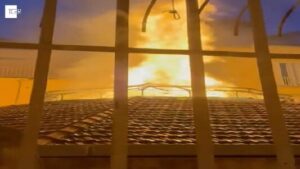
Late on November 17, 2025, a large fire ripped through the Vjesnik skyscraper on Slavonska Avenue in Zagreb, burning vertically across several floors and reaching the roof of the well-known high-rise. The blaze, which started shortly before 11 p.m., triggered a major emergency response involving 93 firefighters and 30 vehicles.
The fire started near the top of the 16-floor building and quickly spread downward, preventing some 100 firefighters from entering. The building was almost completely empty when the fire broke out, and fortunately, no casualties were reported.
By midday Tuesday, Zagreb Mayor Tomislav Tomašević declared that “the damage is unfortunately total”, though the building’s structure appears to have survived the inferno.
What was lost
According Wikipedia, the building was designed by Croatian architect Antun Ulrich in 1957. Construction began in 1963 and lasted nine years, mostly due to lack of financing. Inspired by American business architecture. But the critical issue isn’t only the building—it’s what was inside. The affected floors housed archives from the Ministry of Labour and the Ministry of Finance, including records from the tax authority. Croatian media confirmed that the government’s state archive was stored on the floors where the fire was raging.

The extent of the archival loss remains under assessment, but the incident raises urgent questions about how and where governments store irreplaceable public records.
The building: from media icon to archive storage
The Vjesnik tower has a storied history. Designed by Croatian architect Antun Ulrich and built between 1963-1972, it was inspired by American business architecture—specifically New York’s Lever House building—and at the time of completion was one of the most modern office buildings in Europe. Its recognizable facade of reflective glass in brown and orange tones earned it the popular nickname “Chocolate Tower”.
For decades, it served as the headquarters for Vjesnik, Croatia’s state newspaper during the Yugoslav era. But as media companies relocated over the past two decades, the building fell into partial vacancy. Many of the floors were empty, with only certain sections being used for archive storage.
This trajectory—from bustling newsroom to neglected storage facility—is all too common in historic buildings, and it creates dangerous conditions.
Fire safety considerations
Several concerning factors emerge from this incident:
Inadequate Building Use. Repurposing a largely vacant high-rise as archive storage raises immediate questions:
- Were fire suppression systems maintained and operational?
- Was the building adequately monitored outside business hours?
- Did archival storage meet modern fire safety standards?
Vertical Fire Spread. The flames spread vertically, engulfing several floors and preventing firefighters from entering. This pattern suggests:
- Possible failure of compartmentation
- Inadequate fire barriers between floors
- Compromised fire-rated construction due to age or poor maintenance
Suspected Installation Fault. Early assessments point to a possible fault in the building’s installations. Aging electrical systems in partially occupied buildings are particularly hazardous, especially when combined with inadequate maintenance budgets.
Top-Down Fire Pattern. Starting near the top floor and burning downward is unusual and can be particularly dangerous. This raises questions about whether rooftop mechanical systems or electrical installations were properly maintained.
Legal and archival implications
The fire has intensified scrutiny around how public bodies store sensitive or irreplaceable state records. Across most EU jurisdictions, archival law requires public institutions to preserve official records in facilities meeting safety, fire-protection, and structural standards. The investigation will likely examine whether the Vjesnik tower met archival storage standards, what risk assessments were conducted before storing records there and whether digital backups existed (most modern governments maintain dual-retention systems.
Lessons for heritage fire safety professionals
This incident offers several critical takeaways about vacant or underutilized historic buildings. When landmark structures lose their original purpose and become storage facilities, they often lose the oversight, maintenance, and investment needed to keep them safe. Budget cuts compound the problem.