Fire Safety Lessons from the 2026 Crans-Montana Bar Fire for Heritage and Historic Venues
The New Year’s Eve fire at Le Constellation in Crans-Montana is a tragic reminder that crowd-intensive venues in heritage settings can still fail catastrophically, even when inspections and permits appear to be in order.
Although Le Constellation was not itself a heritage interior, for fire safety professionals working with historic or heritage buildings, this tragedy offers several concrete lessons that go far beyond nightclubs and après‑ski bars.
A fast, toxic fire in a “normal” venue
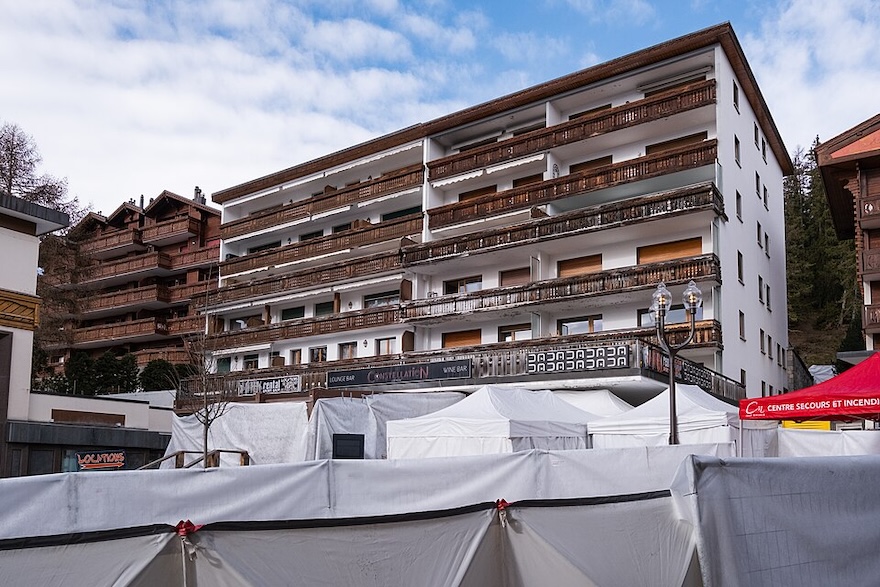
On 1 January 2026, a fire in the basement bar Le Constellation in Crans-Montana killed 40 people and injured 119, many of them severely. More than 100 people were celebrating the New Year in a space reportedly approved for over 300 occupants when the fire developed in seconds, leaving very little available safe egress time.
Witnesses and investigators indicate that sparklers on champagne bottles ignited combustible acoustic treatment on the low ceiling, probably polyurethane “egg-box” foam or similar material. Once involved, the ceiling lining appears to have produced intense heat, rapid flame spread and dense, toxic smoke, with some accounts describing the bar being engulfed within about 10 seconds.
Escape was via a narrow stair and door from the basement, and many people were unable to reach alternative emergency exits before the main route became blocked. Images and survivor reports describe people forced to smash windows and a rescue operation involving more than 150 responders, 40 ambulances and multiple helicopters.
Why this matters for heritage contexts
Several characteristics are directly relevant to historic buildings that host events, exhibitions, worship or tourism:
- Constrained geometry: Low ceilings, basements and narrow staircases are common in historic urban fabrics and create similar smoke and egress challenges.
- Layered refurbishments: Successive decorative and acoustic fit‑outs, sometimes using modern foams and plastics, can radically change fire load and smoke toxicity without altering the “heritage” appearance.
- Crowd‑driven use: As highlighted in discussions on overtourism and crowd safety at heritage sites, high visitor density can convert any fire into a mass‑casualty event if flows and exits are not rigorously managed.
In other words, the Crans-Montana fire illustrates how a relatively small area with an apparently acceptable occupancy can become a lethal trap when combustible linings, ignition sources and restricted egress coincide.
Design and material lessons for historic interiors
For fire safety professionals working on heritage assets, three design‑related lessons stand out:bbc+2
- Combustible linings are critical
- Systematically identify and, where possible, remove or encapsulate combustible acoustic and decorative linings, especially polyurethane foams, textile wall‑hangings and timber paneling near potential ignition sources.
- Where material replacement is not acceptable for conservation reasons, evaluate fire performance (including ageing of flame‑retardant treatments) and compensate with detection, compartmentation and automatic suppression.
- Pyrotechnics and “special effects” policies
- Ban or tightly regulate indoor pyrotechnics, open flames, sparkling candles and similar devices in historic or constrained spaces, particularly where ceiling linings are within easy reach of handheld effects or elevated bottles.
- Integrate clear “no‑effects” clauses into rental and event agreements for historic venues and verify compliance in situ before events start.
- Escape routes sized for real crowds
- Verify that exit width, travel distances and stair geometry match realistic peak occupancies, not just nominal capacities on paper, especially where heritage constraints limit the creation of new exits.
- Consider reversible architectural interventions—secondary doors, external escape stairs, or dedicated “safe rooms” and refuges—to avoid scenarios where a single stair and door must serve the bulk of the occupants.
Operational and management lessons
Beyond design, the Crans-Montana case points to management issues that are very familiar to heritage operators dealing with crowds, events and seasonal peaks.
- From periodic inspection to dynamic risk management
- Reports indicate that the bar had undergone routine fire inspections, yet critical risk factors—combustible ceiling foam, crowding, special effects—remained in place.
- For heritage sites, this argues for dynamic, scenario‑based risk assessments linked to specific uses (concerts, festivals, religious ceremonies, temporary exhibitions), rather than relying solely on periodic compliance checks.
- Crowd density and flow control
- The fire occurred in a crowded festive setting, echoing concerns about overtourism and mass gatherings in historic centres where streets and interiors are narrow and evacuation routes limited.
- Visitor caps, timed entries, controlled queuing and pre‑planned flow patterns can significantly reduce the risk of crush points and blocked exits in heritage buildings and their immediate urban surroundings.
- Training, drills and multi‑agency coordination
- The Swiss response involved large numbers of rescuers and medical resources, yet the severity of burns and smoke inhalation limited what could be done once conditions in the basement had deteriorated.
- Heritage managers should develop and rehearse joint plans with local fire and medical services, taking into account difficult access to historic cores, limited turning radii for appliances and the location of potential safe assembly points.
Implications for fire safety professionals in heritage
For professionals engaged with fireriskheritage.net and similar initiatives, the Crans-Montana fire can act as a trigger for reflection and change in three areas:
- Re‑examining “accepted” decorative and acoustic solutions in historic venues that host events, especially any use of foams, synthetic fabrics or untreated timber close to ignition sources.
- Integrating crowd‑safety thinking—density, flow, behavioural response—into heritage fire strategies, rather than focusing only on protection of the fabric and collections, adopting the fire safety engineering approach to the overall assessment.
- Framing inspections and conservation decisions around available safe egress time (ASET) versus required safe egress time (RSET), with explicit recognition that toxic smoke production from modern materials can reduce ASET to seconds, as appears to have happened in Crans-Montana.
Used in this way, the Swiss resort fire is not an isolated nightclub disaster, but a powerful case study to advocate for more rigorous, people‑centred fire safety strategies also in historic buildings and heritage urban landscapes.