New Year’s Eve Fire in a Historic former Church in Amsterdam
Heritage buildings were designed for a different climate,
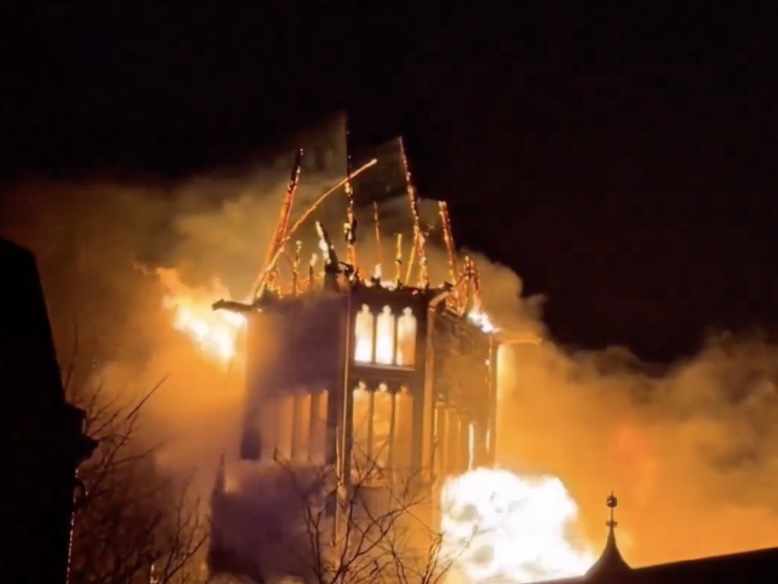
In the early hours of January 1, 2026, a violent fire devastated the Vondelkerk, the neo-Gothic church overlooking Vondelstraat, a few steps from Vondelpark, causing the spire and roof to collapse and the evacuation of dozens of residents.
There were no casualties, but the loss to Amsterdam’s architectural heritage is significant and opens a complex phase of safety measures, investigation into the causes, and decisions on the building’s future.
History, building structure and vulnerability to fire
The Vondelkerk was built between 1872 and 1879 based on a design by Pierre Cuypers, the architect of the Rijksmuseum and Central Station, becoming one of the city’s neo-Gothic landmarks in the new Vondelpark area.
Deconsecrated during the 20th century, it was saved from demolition and restored, passing into the management of monument preservation organizations.
It has since become a venue for concerts, weddings and cultural events, with a strong identity value for the neighbourhood.
Like many 19th-century churches in northwestern Europe, the Vondelkerk combines load-bearing brick walls with an entirely wooden roof and a slender spire, which concentrates combustible structural and decorative elements.
Once the fire started, the presence of tall volumes, vertical voids, and a continuous wooden structure favored its rapid spread to the entire roof, leading to the collapse of the spire and serious damage to the interior spaces, while part of the masonry envelope remained standing.
Fire and rescue operations
The alarm was raised shortly after midnight, with flames visible in the upper part of the church and a column of smoke rose above the center of Amsterdam during New Year’s Eve celebrations.
Firefighters responded with ladder trucks and external attacks, focusing first on containing the blaze and protecting surrounding homes, in a dense urban environment with sparks, burning debris, and smoke threatening the residential area.
Authorities ordered the evacuation of dozens of residents and the setting up of temporary shelters, while the area was cordoned off due to the risk of further collapse and the need for structural checks on the surviving walls.
The church has been declared a “crime scene” for the purposes of investigating the causes, with limited access to investigators and technicians assigned to document the damage and evaluate urgent shoring and safety measures.
Causes of the fire
Police and firefighter sources indicate that the causes of the fire are still subject of investigation; several testimonies point to the presence of fireworks in the area, a hypothesis cited by various media but not yet officially confirmed as the certain origin of the fire.
The context of New Year’s Eve, with massive use of pyrotechnics in the city and other major fires that same night (including a fireworks shop in Hillegom and a gym in Groningen), makes a connection to high-risk festive activities plausible.
Impact on heritage conservation
The loss of the roof and Cuypers’ spire drastically reduces the material integrity of the work, transforming the Vondelkerk into a “wounded shell” that will require selective reconstruction or a new form of reuse, leading to an intense debate between authenticity, memory of the damage, and future functions.
Since the church was already an emblematic example of adaptive reuse of a disused religious building, the fire becomes a test for the capacity of local stakeholders (owners, municipality, foundations for monuments) to combine protection, safety, and economic sustainability in a post-disaster project.
Factors amplifying heritage risk
While the immediate cause of the New Year’s Eve fire at Amsterdam’s historic church remains under investigation, a deeper crisis looms beyond the charred timbers and collapsed roof trusses. As reported by observers this incident was not merely an isolated act of violence or vandalism— it unfolded within a city strained by social deterioration that has quietly increased vulnerability across its cultural landscape.
Emergency response and traffic issues. Emergency response was hampered by narrow streets clogged with vehicles and revelers. As extreme weather events (such as storms or floods) become more frequent, in many cities there is a risk that planners are forced to divert resources from heritage protection toward disaster resilience, leaving historic sites under-monitored and under-insured.
Lessons for fire risk in historic churches
New Year’s Eve and Urban Events as Design Scenarios. The Vondelkerk fire demonstrates how New Year’s Eve—with its intense use of fireworks and risky behavior—must be treated as a specific scenario in risk management plans for historic churches in densely populated areas, not just as an “exceptional event.”
Vulnerability of Towers and Wooden Roofs. The rapid collapse of the spire and roof confirms the typical vulnerability of tall wooden structures and vertical voids: in the absence of effective compartmentalization and early detection, an external or roof-based ignition can quickly turn into a roof fire that is difficult to attack from the inside.
Protection of the Surrounding Urban Context. In a compact residential neighborhood, the operational objective is not just to “save the church,” but to contain the spread of the fire to adjacent roofs, limit the fall of incandescent debris onto streets and courtyards, and manage smoke that invades homes and escape routes. This requires pre-plans that consider interactions between the monumental asset and the urban fabric.
Cultural reuse and fire loads. Use as an event space often involves technical lighting, temporary installations, storage, audio-visual equipment, and the presence of an audience: all elements that increase fire loads and management complexity. The Vondelkerk fire reinforces the need for specific prevention and safety management standards for churches reused as venues.
Post-fire: documentation, stabilization, decisions. The next phase, already underway, requires systematic documentation of the damage, targeted shoring up of the historic walls, evaluation of design alternatives (philological reconstruction, contemporary covering, preservation of traces of the event), and transparent dialogue with the local community.
Essential references
- Historic England, Fire Safety for Traditional Church Buildings (2017): a practical guide to the typical vulnerabilities of historic churches (timber roofs, towers, utility rooms) and the minimum measures for compartmentalization, system control, and management of combustible furnishings.
- Garcia-Castillo, E. (2023), Fire in heritage and historic buildings: a major challenge: a review of the state of the art of research on fires in historic buildings, with analysis of damage scenarios, active and passive protection measures, and critical access for emergency services.
- FireRiskHeritage, Fire Safety Strategies for Historic and Cultural Heritage Sites: An overview of the main structural vulnerabilities, the limitations of traditional systems, and the need to plan prevention based on the contemporary use of historic buildings.
- FireRiskHeritage, Climate Change: the main posts about climate change and new risks to historic and heritage buildings.