Fire at the Former Odeon Cinema in Canterbury (UK)
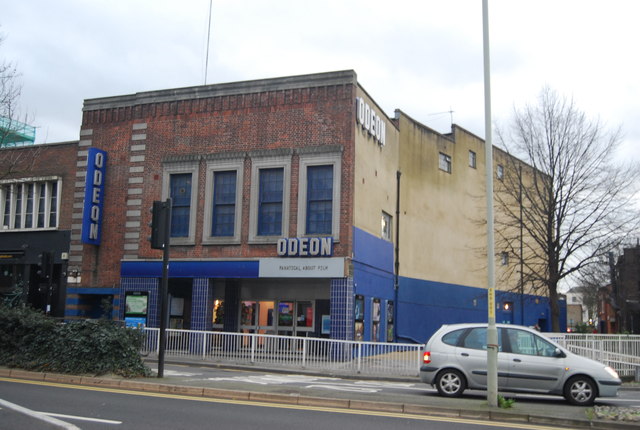
The former Odeon cinema at 43–45 St George's Place, Canterbury (UK), photographed in December 2010 — the 1933 Art Deco building was destroyed by fire on 14–15 February 2026. Photo: Stacey Harris / Geograph Britain and Ireland, CC BY-SA 2.0.
On the afternoon of 14 February 2026, a major fire broke out at the former Odeon cinema on St George’s Place in Canterbury, Kent, sending thick plumes of black smoke across the city skyline and triggering a large‑scale emergency response. The building, a 1933 Art Deco picture house long closed and in a derelict condition, was left heavily damaged after more than 60 firefighters battled the blaze through the night and into the following day.
The Building: A Historic Art Deco Cinema in Long‑Term Disuse
The former Odeon cinema in Canterbury first opened in 1933 as a modern picture house and later underwent internal subdivision and modernisation, but retained its characteristic Art Deco massing and streetscape presence. After closure during the Covid‑19 pandemic in 2020, it was announced in 2022 that the cinema would not reopen, and the building has remained disused and increasingly derelict, reportedly suffering from previous fires, vandalism and anti‑social behaviour.
Although the structure was not a high‑profile heritage icon on the scale of a cathedral or national monument, it formed part of the historic urban fabric of Canterbury and represented an important chapter in the city’s 20th‑century social and architectural history. Its state of neglect, combined with plans for demolition, placed it in a liminal space: no longer an active cultural venue, but not yet redeveloped—exactly the condition in which many heritage‑relevant buildings become vulnerable to major fire incidents.
The Fire and Emergency Response
Emergency calls were received shortly after 14:00 on Saturday 14 February 2026, reporting a serious fire at the derelict cinema. According to Kent Fire and Rescue Service (KFRS), the incident quickly escalated: at the peak of operations, up to 15 fire engines, two aerial/height vehicles and more than 60 firefighters were deployed to the site.
Witnesses and local media described the building as “fully ablaze”, with flames involving large portions of the roof and interior and dark smoke visible from many parts of Canterbury. Crews wearing breathing apparatus fought the fire both externally and internally where conditions allowed, using hose jets to attack the seat of the fire and large fans to ventilate the smoke‑filled structure.
Key emergency management actions included:
- Evacuation of nearby student accommodation and several adjoining businesses as a precaution.
- Establishment of a welfare centre by Canterbury City Council to support displaced residents and students.
- Traffic management and road closures around St George’s Place, with advice to the public to avoid the area and keep windows and doors closed due to smoke.
Despite the intensity and duration of the fire, there were no reported injuries, which underlines the effectiveness of rapid evacuation and inter‑agency coordination between the fire service, local authorities and police.
By around 23:00 on Saturday night, KFRS began to scale back the response, reducing the number of appliances on scene from 15 to 10, while continuing damping‑down operations.
Damage and Structural Condition
At the time of writing, detailed structural assessments and heritage impact studies have not yet been published. However, available images and media reports indicate severe fire damage involving the roof and interior spaces of the former cinema, with significant loss of fabric and potential weakening of the structural frame.
Given the building’s pre‑existing derelict condition, repeated incidents of vandalism and earlier smaller fires, this latest blaze is likely to accelerate any ongoing planning for demolition or redevelopment. From a heritage‑risk perspective, this raises a recurring dilemma:
- On one hand, the building is degraded, unsafe and costly to secure and maintain.
- On the other, it represents a tangible link to the city’s cinema and entertainment history, whose complete loss contributes to the gradual erosion of 20th‑century urban heritage.
FireRiskHeritage has already examined similar tensions in other cases where “ordinary” historic buildings—such as local theatres, cinemas, hotels and community halls—are lost to fire shortly before or during redevelopment processes.
Causes and Investigation
As of 15 February 2026, the cause of the fire remains under investigation. Early statements from Kent Fire and Rescue and local media indicate that:
- The blaze is believed to have started in the roof area, although this has not yet been formally confirmed.
- The building has a recent history of arson‑related incidents; in March 2024 two teenagers were reportedly arrested on suspicion of arson after a previous fire at the same site.
Given the combination of vacancy, dereliction, repeated unauthorised access and previous fire events, the incident illustrates the heightened arson and accidental fire risk typically associated with abandoned heritage‑relevant structures.
FireRiskHeritage continues to monitor official investigation outcomes. If conclusive information on ignition source, contributing factors and regulatory context becomes available, it will be added to this page and, where appropriate, integrated into FireRiskHeritage analyses on multi‑incident sites and pattern recognition in heritage fires.fireprotect+1
Lessons for Heritage Fire Risk Management
The fire occurred just three days before the fire that destroyed the Sannazzaro historic theatre in Naples, highlighting the need for more intensive information about the real risks to the diffused heritage that marks every urban and territorial landscape.
Although the former Odeon cinema in Canterbury is no longer an operational cultural venue, the incident provides several important lessons for fire safety in the broader context of historic and heritage‑relevant buildings:
- Vulnerability of disused heritage buildings
Derelict cinemas, theatres, factories and similar large‑volume structures often retain heritage characteristics (architectural style, urban role, social memory) but lack active management, occupancy and investment in safety measures.
Prolonged vacancy, coupled with limited security, increases the likelihood of unauthorised entry, vandalism and deliberate or accidental ignition. - Need for interim fire‑safety strategies during vacancy and redevelopment
Many regulatory and funding frameworks focus on buildings either in full operation or after adaptive reuse, while the long “in‑between” period is less clearly addressed.
As highlighted by other FireRiskHeritage case studies, interim strategies should consider:- Securing the perimeter and controlling access
- Minimising internal fire load and combustible waste
- Maintaining or adapting detection, monitoring and water supply where feasible
- Planning emergency access for fire crews even on sites awaiting demolition or transformation.
- Community impact, even when “only” an abandoned building burns
The Canterbury fire caused disruption to students, local residents and businesses, and generated strong emotional reactions due to the visibility of the smoke and the symbolic status of the cinema as part of the city’s collective memory.
This mirrors what has been observed in other incidents documented by FireRiskHeritage, where the loss of seemingly modest or peripheral historic buildings still has a significant cultural and social effect. - Importance of training and exercises in complex heritage urban contexts
Large‑scale operations such as the Canterbury incident demand coordination in narrow urban streets, management of evacuations and long‑duration firefighting on complex roofs and volumes.
This recalls the value of targeted drills in heritage environments, such as the major exercise at Canterbury Cathedral in 2009, previously reported on FireRiskHeritage, where over 100 firefighters trained on roof fire scenarios and access/equipment challenges.
Lessons from such exercises can inform tactical planning even for less‑prestigious but structurally complex historic or semi‑historic buildings.
Links to Related FireRiskHeritage Content
This incident highlights once again the vulnerability of disused historic buildings, especially large entertainment venues, to fire, vandalism and gradual degradation. It also raises important questions about how fire safety and heritage protection should be managed during extended periods of vacancy, pending redevelopment or demolition, echoing lessons from other heritage losses documented by FireRiskHeritage.
For broader context on cultural and historic heritage losses and under‑reported incidents in recent years, see the following useful connections:
- Fire Drill at Canterbury Cathedral (UK) – large‑scale exercise on roof fire and emergency response in one of Europe’s most important cathedrals, highlighting operational challenges in historic religious buildings.
- Cultural and Historic Heritage Losses in the World: 2025 List – annual overview of fires and other disasters affecting cultural heritage assets globally, with reflections on under‑reporting and data gaps that are equally relevant for “secondary” sites like derelict cinemas.
- Fire Safety Lessons from the 2026 Crans‑Montana Bar Fire for Cultural Heritage Venues – analysis of a contemporary incident in a leisure/entertainment building, focusing on evacuation, fire load and the vulnerability of nighttime venues.
The former Odeon cinema at 43–45 St George’s Place, Canterbury (UK), photographed in December 2010 — the 1933 Art Deco building was destroyed by fire on 14–15 February 2026. Photo: Stacey Harris / Geograph Britain and Ireland, CC BY-SA 2.0.