Why COST Action C17 still Defines the Agenda for Fire Safety in Historic Buildings
In an effort to mitigate the devastating impact of fires on Europe’s cultural heritage, the European Union funded Cost Action C17 from 2002 to 2006
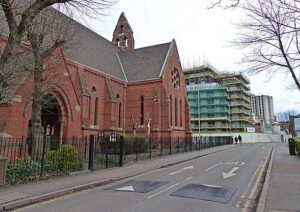
The 2019 Notre-Dame fire and the 2018 Glasgow School of Art disaster revealed a troubling reality: despite decades of advancement in fire safety engineering, Europe’s historic buildings remain critically vulnerable.
Every year, fires—alongside deliberate destruction through warfare and terrorism—erase irreplaceable testimonies of history and culture. Among these threats, accidental fires prove particularly devastating, capable of destroying in hours what took centuries to build.
Recognizing this crisis, the European Union funded COST Action C17 from 2002 to 2006, creating the first—and to date, only—European research network dedicated exclusively to fire loss in historic buildings. This collaborative initiative brought together fire safety scientists, engineers, conservation professionals, and historians under the European Science Foundation’s Cooperation Programme in Science and Technology. Its mission: to systematically address the physical and cultural losses that fires inflict on Europe’s built heritage.
Nearly two decades later, C17’s frameworks continue to define how professionals approach heritage fire risk—a testament to both the Action’s foresight and the persistence of the challenges it identified.
1. Why COST C17 Still Defines the Field
Between 2002 and 2006, COST Action C17 “Built Heritage: Fire Loss to Historic Buildings” delivered the first and, so far, only European‑level COST network dedicated entirely to the specific problem of fire in historic buildings.
Unlike generic fire‑safety actions where heritage appears as a sub‑topic, C17 took as its central premise that Europe’s built heritage forms a distinctive risk class that demands tailored data collection, analytical methods and protection strategies.
The starting point was blunt: accidental fires were suspected of destroying “one important historic building per day” across Europe, yet most countries lacked any systematic way to verify or even track this loss.
C17 was therefore conceived not only as a research programme but as an infrastructure‑building exercise, intended to connect fire engineers, conservation professionals, fire services, insurers and administrators in a durable network.
From a technical perspective, this is what makes C17 outstanding in retrospect: it did not focus on a single technology or on code development, but on the whole chain from incident data and risk evaluation through to technology selection, valuation, insurance and management practices for listed buildings.
Subsequent projects and scientific reviews have generally dealt with slices of this chain; C17 remains unique in the way it tried to hold all these components together under one coordinated action.
2. Objectives, Scope and Working‑Group Architecture
The Memorandum of Understanding set a clear central objective: to define, at European level, the degree of loss to built heritage through fire and to promote remedial actions, emphasising minimally invasive techniques compatible with conservation principles. This was not limited to quantifying losses; it also explicitly covered development and evaluation of technologies and the shaping of management strategies and policy recommendations.
To tackle this, C17 was structured into four Working Groups that effectively mapped the “system” of heritage fire safety:
- WG1 – Data, loss statistics and risk evaluation. Focused on gathering incident data for historic buildings, describing loss patterns, and exploring risk‑evaluation approaches suited to heritage assets. It highlighted how existing national fire‑statistics systems rarely identified “historic” or “listed” status, making proper risk quantification impossible.
- WG2 – Available and developing technology. Surveyed and critically reviewed detection, alarm and suppression technologies (from automatic sprinklers and water mist to hypoxic air and portable appliances), with explicit attention to their physical and visual impact on historic fabric and contents. It sought to define an “appropriate range” of passive and active equipment tailored to different heritage typologies.
- WG3 – Cultural and financial value. Addressed how cultural significance and financial valuation interact in risk‑management and insurance decisions, including issues such as under‑insurance, valuation of irreplaceable fabric and the economics of reconstruction after loss. This group gave the Action a clear link into economic and policy discussions rather than leaving fire safety as a purely technical domain.
- WG4 – Property management strategies. Concentrated on organisational, training and planning aspects, advocating for “fire performance plans” for individual buildings, damage‑limitation teams, liaison protocols with fire services, and improved guidance for owners and managers. WG4’s outputs firmly embedded management and human factors in heritage fire protection.
This architecture is not just administrative; it reflects a systems view that still feels advanced today: heritage fire safety is treated simultaneously as a problem of data, technology, value and management, with feedback loops between these domains.
3. Data, Loss Statistics and the Heritage Fire “Visibility Gap” (WG1)
A core technical contribution of C17 is its diagnosis of the data gap surrounding fires in historic buildings. WG1 documented that national fire‑incident reporting schemes in Europe generally lacked fields identifying whether a building was listed, protected, or of recognised heritage value, meaning that heritage fire incidents were “hidden” within general building statistics.
On this basis, the Action:
- Collected and collated available incident case‑studies and partial statistics from participating countries for the 2000–2006 period, later synthesised into dedicated compilations of fire incidents in historic buildings.
- Highlighted recurrent scenarios: roof and tower fires, fires in churches and large assembly spaces, museums and archives, and complex historic urban complexes, all with difficult access, limited compartmentation and rapid fire spread.
- Proposed that national fire‑incident databases should introduce mandatory fields to tag heritage status and important building characteristics, enabling later queries and comparative analysis at European level.
In technical terms, C17’s diagnosis is still valid: without such structured data, quantitative risk models for heritage will remain poorly calibrated, and frequency–consequence estimation will rely heavily on case‑study extrapolation. Many later vulnerability and indicator‑based studies explicitly reference this limitation and cite C17 when discussing the scarcity and fragmentation of heritage‑fire data.
4. Technology for Historic Buildings: Minimally Invasive but Effective (WG2)
WG2’s remit was to identify an appropriate range of passive and active technologies for heritage fire protection, with critical assessment rather than uncritical promotion. The group reviewed existing and emerging systems, paying particular attention to installation constraints in listed structures and to conservation ethics. Key technical themes include:
- Automatic detection and alarm: the need for reliable detection in complex volumes (naves, domes, attics) with reduced visual impact, addressing issues such as cabling routes, detector placement in visually sensitive areas, and resilience to environmental conditions (dust, temperature gradients).
- Suppression systems: evaluation of conventional sprinklers, early‑suppression fast‑response heads, and fine water‑mist technologies in terms of water damage, installation constraints, hydraulic requirements and acceptance by conservation authorities.
- Hypoxic air and inerting systems: exploration of their potential for archive and storage areas, including questions of continuous operating cost, human occupancy, and long‑term effects on materials.
- Passive protection and compartmentation: realistic options for upgrading fire resistance in historic structures (lining, limited compartmentation, fire‑resistant doors) without unacceptable intervention in significant fabric.
WG2’s work made it clear that for many historic buildings there is no single “ideal” system; instead, solutions must be bespoke, with multi‑criteria assessments balancing life safety, property protection, conservation constraints, and long‑term maintainability. Later national projects, for example on water‑mist systems in churches and heritage buildings, can be seen as in‑depth explorations of precisely the technology issues that C17 had sketched in a pan‑European context.
5. Cultural and Financial Value, Insurance and Ethics (WG3)
WG3 tackled an often‑overlooked dimension: how we value historic buildings and how that valuation interacts with fire‑risk decisions, insurance, and post‑loss strategies. The group explored both direct financial impacts (repair costs, business interruption) and intangible cultural‑heritage values that are not easily quantified but heavily influence reconstruction debates. The Action:
- Emphasised that many significant historic buildings are under‑insured relative to the actual costs of repair or reconstruction, especially when specialist materials and crafts are required.
- Discussed the limits of financial compensation when unique fabric and authenticity are lost, making a strong case for prevention as a primary strategy rather than relying on post‑loss “restoration.”
- Addressed the “ethics of loss recovery” by asking to what extent reconstruction can or should attempt to replicate destroyed fabric, and under what documentation conditions.
This framing has significant consequences for technical practice: if we accept that many heritage values cannot be monetised, then conventional cost–benefit calculations for fire‑protection measures need adaptation, often warranting higher levels of investment than would be justified for ordinary commercial properties. Later guidance, including UNESCO’s fire‑risk management materials, echoes these arguments and directly or indirectly draws on C17’s treatment of value and insurance.
6. Property Management, Performance Plans and Human Factors (WG4)
A particularly influential outcome of C17 is the insistence that fire safety in historic buildings is as much about management as it is about technology. WG4 focused on how owners, managers and authorities organise, document and maintain fire‑safety measures, and how they prepare for response and salvage. Among its key proposals:
- Fire performance plans for individual buildings, including: statement of cultural values, description of structural fire‑resilience and vulnerabilities, inventory of protection systems, roles and responsibilities, and salvage priorities.
- Establishment of damage‑limitation teams, trained and coordinated with fire services, to manage salvage operations during and after incidents.
- Specific guidance for owners and managers of historic properties on integrating fire‑safety management with general conservation planning and maintenance.
- Clarification of regulatory responsibilities for fire safety in listed buildings, including the need for authorities to provide or support guidance and possibly financial incentives for upgrading protection.
These recommendations influenced the production of national guidance, notably Historic Scotland’s Technical Advice Note 28 “Fire Safety Management in Heritage Buildings” and related supporting documents developed with Norwegian partners, which were consulted on by C17 members. In practice, many of the management templates and concepts now used in heritage fire‑safety guidance can be traced back to WG4’s work.
7. Publications, Associated Outputs and Network Legacy
C17’s tangible outputs go far beyond a single report. The Action produced:
- A three‑volume Final Report (Parts 1–3) plus an Executive Summary of Recommendations, covering the technical findings and policy messages.
- Four volumes of conference proceedings arising from the Varna (2004) international workshop and other meetings, published as “Built Heritage: Fire Loss to Historic Buildings” (171 pp, SKALA).
- A CD/DVD compilation (often distributed via members and networks) containing the reports, proceedings and 16 associated volumes prepared by members, including national guidance and research that aligned with C17’s remit.
According to the overview now hosted on FireRiskHeritage, at least 16 new publications produced by members can be attributed directly to the influence of C17’s activities. These include the development of Historic Scotland’s TAN 28, supplementary Nordic and UK guidance, and various technical and policy papers on heritage fire safety.
The Executive Summary notes that the Action created a “unique synergy” by bringing together senior practitioners, policy‑makers, academics and fire services across multiple countries, many of whom had not previously engaged in European‑level joint work on this topic. That network, while no longer formally funded under COST, provided the personal and institutional connections that underpin many later initiatives and research collaborations.
8. Position of C17 in the Last Two Decades of Research
From today’s standpoint, COST C17 retains a special status. It is, as far as current documentation shows, the only COST Action whose entire mandate was fire loss to the built heritage, and the only one that systematically integrated data, technology, valuation and management for historic buildings at European scale. Later work has indeed moved the field forward—through national projects on sprinkler and water‑mist installation in historic churches, advanced vulnerability‑indicator frameworks, and methodological work on multi‑criteria risk assessment—but these efforts remain fragmented, often national or topic‑specific.
Recent reviews of “fire in heritage and historic buildings” identify C17 as a key milestone and still draw on its diagnosis of the data gap, its categorisation of vulnerabilities, and its call for integrated risk‑management approaches. International guidance, such as UNESCO’s fire‑risk management guide, reflects the same core messages: the need for reliable incident data, heritage‑sensitive technologies, and strong management structures.
Objectives achieved
Over its four years of activity, the project focused on several key objectives. By achieving these objectives, Cost Action C17 played a crucial role in advancing the field of fire safety for historic buildings in Europe. The project’s efforts have helped mitigate the devastating impact of fires on cultural heritage, ensuring that future generations can continue to appreciate and learn from these valuable structures.
- Documenting Existing Technical Expertise: Cost Action C17 gathered a comprehensive survey of the latest fire protection technology to inform future developments in the field. This included evaluating existing passive and active safety measures for historic buildings.
- Developing Countermeasures: The project team defined an appropriate range of technical equipment countermeasures to protect cultural heritage from fires. These included both active and passive fire protection measures.
- Alternative Approaches: Cost Action C17 explored alternative strategies to combat the current rate of loss in historic buildings due to fires. This involved considering new approaches and technologies to improve fire safety in these structures.
- Conferences and Workshops: The project organized several conferences and workshops to share knowledge on effective risk assessment techniques and mapping using insurance company and other data. These events brought together experts in the field to promote the exchange of ideas and best practices.
- Disseminating Findings: Cost Action C17 published proceedings and recommendations to disseminate its findings and benefits to a wider audience. This included making recommendations for property management and fire safety practices tailored to historical buildings.
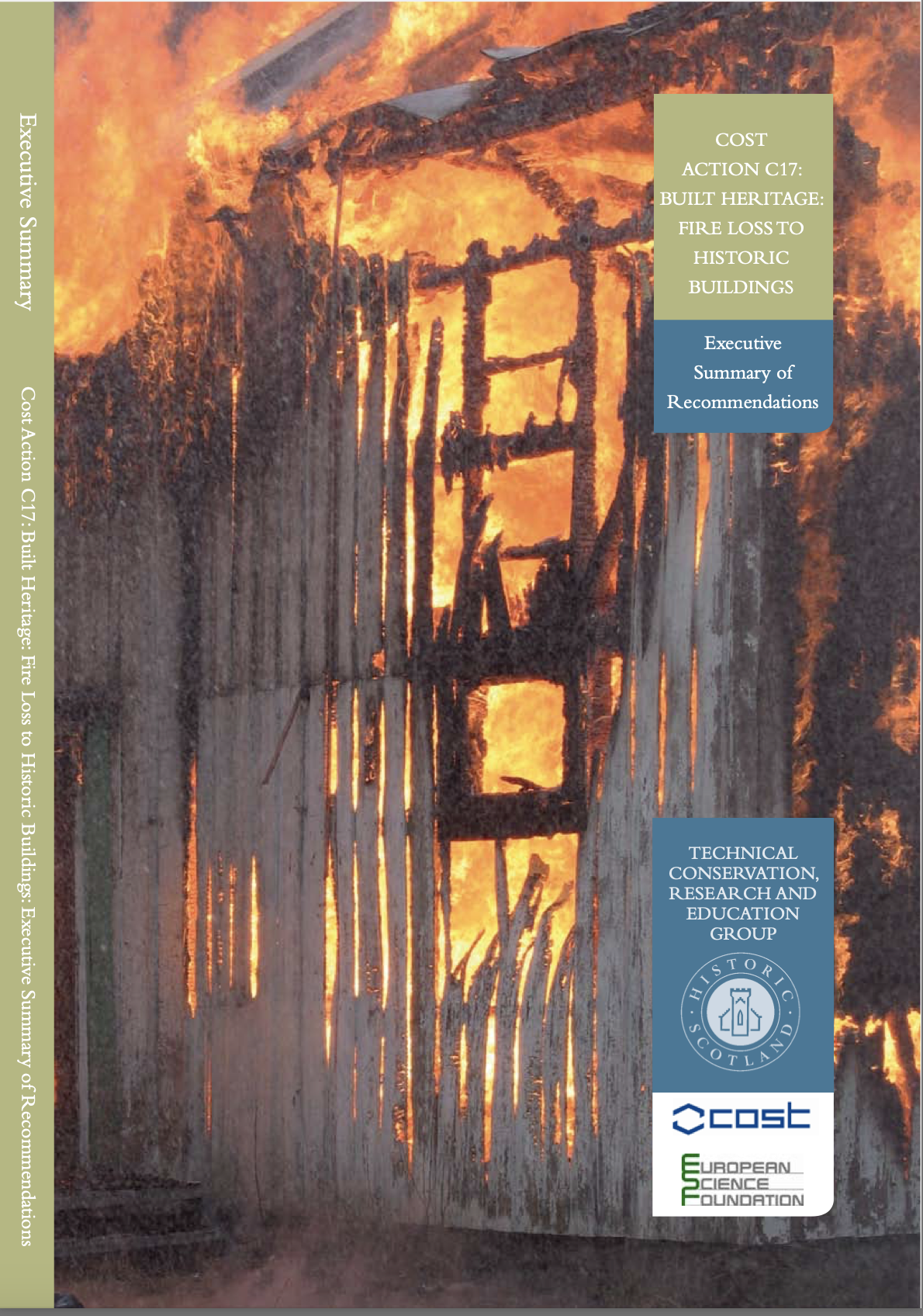
The Final Report brochure of the Cost Action C17 may be downloaded here: COST Final Report Brochure
Standards development processes do not appear to frequently address heritage applications. On the other hand, performance-based codes are more likely to introduce new systems.
For example, in the case of water mist the COST Action C17 reported on basic knowledge about its use for the heritage community. Challenges, implications and perspectives of the technology were outlined, in order to ensure the best protection of the European heritage possible.
A guide on how to accept or approve of mist systems in heritage is given in the white paper (dated July 2004) from Riksantikvaren – The Norwegian Directorate for Cultural Heritage (RNDCH).
In addition to the Three Volume Final Report and the Four Volume Conference Proceedings produced during the duration of Cost Action C17 (2002-2006), various Members have published relevant publications that significantly contribute to the conversation on fire loss in historic buildings across Europe. These new materials offer valuable insights and fresh perspectives, furthering the debate on fire safety management in cultural heritage sites.
At the outset of the Action, Members were consulted on the production of Historic Scotland’s Technical Advice Note TAn 28: Fire Safety Management in Heritage Buildings, published in 2005. Colleagues from Riksantikvaren (The Norwegian Directorate for Cultural Heritage) and Historic Scotland collaborated on three supporting documents, while the directorate also produced an additional volume in support of C17’s remit during 2006.
In total, 16 new volumes can be attributed to the influence and work of Cost Action C17, which are now available in PDF format on this CD. These publications demonstrate the extensive efforts of Members to advance the discussion on fire safety management in cultural heritage sites, contributing to a more comprehensive understanding of the subject across Europe.
In the “CDbooklet” (produced by the Cost c17 Action) it is possible to read the list of the publications associated to the action: CDbooklet
📚 How to Cite This Resource
Suggested citation format:
Fire Risk Heritage. (2026, January 7). Why COST Action C17 still Defines the Agenda for Fire Safety in Historic Buildings. Retrieved January 31, 2026, from https://www.fireriskheritage.net/publicationsand-research-documents-of-risk-to-cultural-heritage/cost-action-c17-built-heritage-fire-loss-to-historic-buildings/ ▶ Show additional citation formats
APA 7th Edition:
Fire Risk Heritage. (2026). Why COST Action C17 still defines the agenda for fire safety in historic buildings. https://www.fireriskheritage.net/publicationsand-research-documents-of-risk-to-cultural-heritage/cost-action-c17-built-heritage-fire-loss-to-historic-buildings/
MLA 9th Edition:
“Why COST Action C17 still Defines the Agenda for Fire Safety in Historic Buildings.” Fire Risk Heritage, Scientific Department, 7 Jan. 2026, www.fireriskheritage.net/publicationsand-research-documents-of-risk-to-cultural-heritage/cost-action-c17-built-heritage-fire-loss-to-historic-buildings/.
Chicago 17th Edition:
Fire Risk Heritage. “Why COST Action C17 still Defines the Agenda for Fire Safety in Historic Buildings.” January 7, 2026. https://www.fireriskheritage.net/publicationsand-research-documents-of-risk-to-cultural-heritage/cost-action-c17-built-heritage-fire-loss-to-historic-buildings/.
Suggested citation format:
Fire Risk Heritage. (2026, January 7). Why COST Action C17 still Defines the Agenda for Fire Safety in Historic Buildings. Retrieved January 31, 2026, from https://www.fireriskheritage.net/publicationsand-research-documents-of-risk-to-cultural-heritage/cost-action-c17-built-heritage-fire-loss-to-historic-buildings/