Results of H2020 STORM Project in the Assessment of Damage to Cultural Heritage Buildings Following Seismic Events
The CNVVF has started experimenting with the use of laser scanner systems in the quick assessment of the stability of buildings by inserting, from the first moment, the flow of 3D images acquired in an emergency within a technological platform designed to allow sharing information and data with the other institutions involved in the assessments.
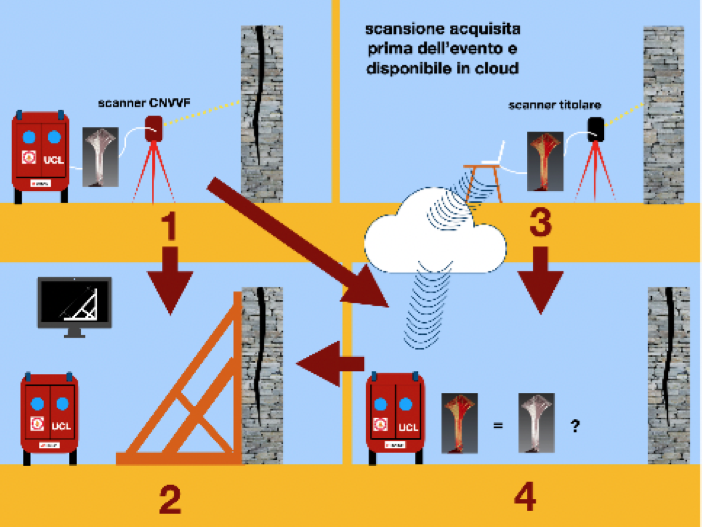
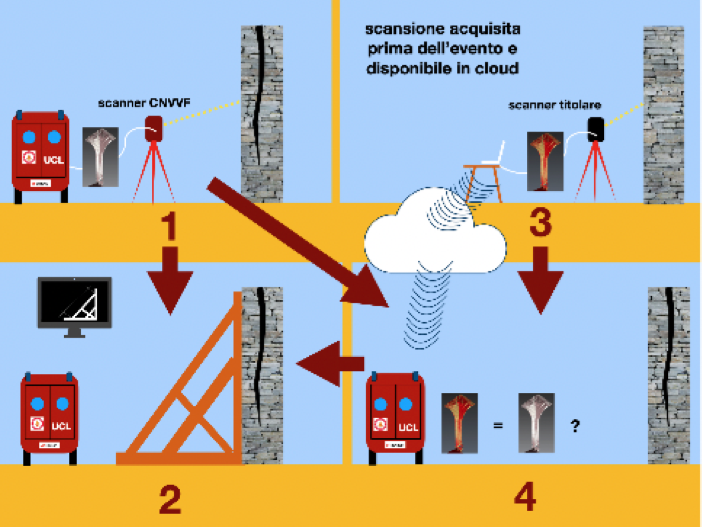
perating hypothesis developed in the STORM project relating to the use of the laser scanner to support the assessment of the stability of buildings. The general hypothesis (1) provides for the CNVVF to intervene and use the survey carried out on the scenario for risk assessment and the design of the provisional structure (2). In the event that a scan of the building acquired in ordinary conditions is available in the cloud (3), the CNVVF could compare it (4) with that scan acquired on the scenario (1) for a more precise risk assessment and the design of the provisional structure (2).Note that “scansione acquisita prima dell’evento e disponibile in cloud” can be translated as “scan acquired before the event and available in the cloud” and that “scanner titolare” means “property manager scanner” (Image: Vigilfuoco.it – Progetti Europei)
Updated January 2026
Introduction
STORM (Safeguarding Cultural Heritage through Technical and Organisational Resources Management) was a groundbreaking research and development project initiated by the European Union in early 2016 and funded under the Horizon 2020 program (Call: DRS-11-2015: Disaster Resilience & Climate Change, Topic 3: Mitigating the impacts of climate change and natural hazards on Cultural Heritage sites, structures and artefacts).
With a total budget of €7,297,875, the project ran from 2016 to 2020 and represented one of the most ambitious European initiatives to address the critical challenge of protecting cultural heritage from climate change and natural disasters.
Project Overview and Objectives
The STORM project focused on investigating the effects of climate change on cultural heritage and developing strategies to mitigate these impacts on buildings and artefacts. Starting from previous research experiences and tangible outcomes, STORM proposed a set of novel predictive models and improved non-invasive and non-destructive methods of survey and diagnosis for effective prediction of environmental changes and for revealing threats and conditions that could damage cultural heritage sites.
STORM provided critical decision-making tools to all European Cultural Heritage stakeholders charged with facing climate change and natural hazards. The project improved existing processes related to three identified areas: Prevention, Intervention, and Policies, Planning & Processes.
Prevention Objectives
Objective 1: Select, evolve, and integrate innovative environment assessment methodologies to effectively and accurately process, analyze, and map environmental changes and/or natural hazards.
Objective 2: Define and implement an innovative supporting service for the mitigation of natural hazards and climate change, and the assessment/management of corresponding threats while minimizing their impact.
Intervention Objectives
Objective 3: Provide innovative, cost-effective, non-invasive, and non-destructive methods and processes, as well as applications for survey and diagnosis based on the study of materials properties, particular environmental conditions, and profile of the cultural assets to be assessed.
Objective 6: Define a collaboration and knowledge-sharing framework for the community of stakeholders to co-create, share, and maintain improved practices, knowledge, and experience on cost-effective and eco-innovative solutions for sustainable management and conservation of Cultural Heritage in Europe.
Policies, Planning and Processes Objectives
Objective 7: Propose adaptations and changes in existing policies and validation of new knowledge in government processes.
Objective 8: Conduct cost analysis for sites protection against natural hazards using STORM data analytic tools.
Multidisciplinary Approach and Consortium
The project involved a carefully chosen multidisciplinary team with diverse expertise to ensure the successful implementation of a functional and effective solution, supporting all stakeholders involved in managing and preserving Cultural Heritage sites. Sites and consortium were carefully selected to adequately represent the rich European Cultural Heritage, while associate partners assisted with liaisons and links to other stakeholders and European sites.
The project coordinator stated: “The project started with the great ambition of building a common motivation framework among a wide group of varied competences. After the first period of STORM, we know that the methodology could work and now it is time to apply it in the field”.
Key Findings from STORM
Innovative Technologies and Methodologies
One significant outcome of the STORM project was the collaborative platform designed to collect and enhance knowledge, processes, and methodologies related to sustainable and effective safeguarding and management of European Cultural Heritage. This platform proved capable of assessing risks posed by natural hazards, considering both environmental and anthropogenic factors, and utilizing Complex Events processing.
LiDAR Technology for Safety Assessment
A particularly notable achievement was the successful verification of LiDAR technologies to support safety assessment of damaged cultural heritage buildings following seismic events. This project made it possible to verify, with a positive outcome, the possibility of using LiDAR technologies for rapid, non-invasive assessment of structural damage—a critical capability in post-disaster scenarios when time is of the essence and traditional assessment methods may be too slow or dangerous to implement.
Integrated Sensor Systems
STORM implemented an integrated system incorporating multiple cutting-edge technologies:
- Intra-fluorescent sensors for detecting material degradation
- Wireless acoustic sensors for structural health monitoring
- LiDAR platforms for three-dimensional documentation and damage assessment
- UAVs (Unmanned Aerial Vehicles) for remote inspection of inaccessible areas
- Crowdsourcing techniques for community engagement and distributed monitoring
This system provided applications and services over an open cloud infrastructure, enabling real-time data collection, analysis, and decision-making.
Addressing Material Vulnerabilities
The project determined how different vulnerable materials, structures, and buildings are affected by different extreme weather events together with risks associated with climatic conditions or natural hazards, offering improved, effective adaptation and mitigation strategies, systems, and technologies. Specific material categories analyzed included:
- Wood: Particularly vulnerable to moisture, biological degradation, and fire
- Bricks and Masonry: Subject to freeze-thaw cycles, salt crystallization, and seismic damage
- Stone: Affected by weathering, pollution, and thermal cycling
Social Impact and Community Engagement
The society benefited from the project outcomes since STORM solutions foster safety and protection of cultural heritage, one of the most relevant patrimonies of Europe. Historical assets represent the cultural identities of societies and play important roles in transferring cultural belongings to next generations. The level of protection of such structures from natural hazards will be an indication of the socio-economic positions of societies in the future as well as their economic and social recoveries in the aftermath of disaster.
Practical Tools and Outputs from the Project
The STORM Integrated Platform
One of the most significant practical outputs was the integrated platform for heritage monitoring and risk assessment. This platform enabled:
- Real-time environmental monitoring through distributed sensor networks
- Predictive modeling of climate-related threats
- Risk assessment combining environmental and anthropogenic factors
- Decision support tools for heritage managers and conservators
- Data visualization and mapping of vulnerabilities across heritage sites
Non-Invasive Survey Methods
Building on prior research experiences, STORM provided improved non-invasive, non-destructive survey and diagnostic methods for predicting environmental changes and identifying potential threats to cultural heritage sites. These methods allowed heritage professionals to:
- Assess structural conditions without damaging historic fabric
- Monitor ongoing deterioration processes
- Identify hidden defects or damage
- Track environmental parameters affecting conservation
Training and Capacity Building
A key practical output was the development of training programs for heritage professionals, as demonstrated by the STORM Academy initiative (discussed in detail below).
The STORM Academy: Training for Heritage Protection
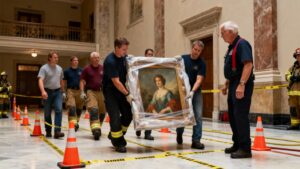
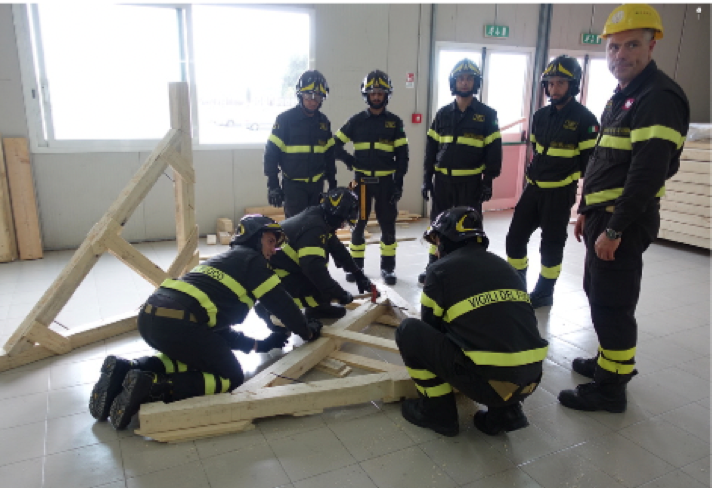
One notable achievement in the first year of the project was the “STORM 2017 Summer School,” held in Rome from September 11-13, 2017. This course, focusing on preparedness and first aid for Cultural Heritage, served as a test for the subsequent 2018 edition. The training program evolved into the comprehensive STORM Academy 2019, held in Rome and Viterbo between January and February 2019.
Academy Structure and Content
The STORM Academy was held at two prestigious locations:
- National Fire Academy (I.S.A.) in Rome
- Tuscia University in Viterbo
Lessons were delivered by teachers selected from among the partners of the project, ensuring direct transfer of project research findings to practitioners.
The STORM Academy aimed at training professional figures and students through the implementation of both onsite training activities and lessons. The added value of the Academy was the interdisciplinarity between different fields and the cooperation between different areas of knowledge involved in Cultural Heritage conservation and management. The provided training was the direct consequence of achievements gained during three years of research project and testing in the five project pilot sites.
Training Topics Covered
The Academy curriculum included critical topics such as:
- Earthquake damages: Shoring procedures in emergency scenarios
- Emergency coordination: Gathering and sharing data between rescue services and cultural heritage protection bodies
- STORM platform: Introduction to the integrated platform and its benefits
- Sensor technologies: Description of sensors used in STORM
- Structural health monitoring: Development of integrated earthquake risk management systems for historical structures using the STORM approach
Five Pilot Sites: Testing STORM Methodologies
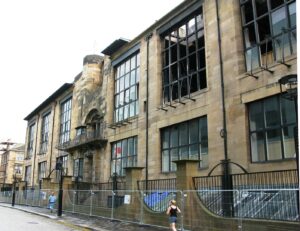
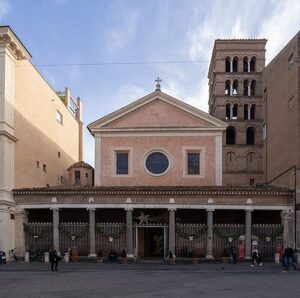
The project’s results were tested in case studies conducted in five different countries: Italy, Greece, UK, Portugal, and Turkey. The pilot sites were selected to adequately represent the rich diversity of European Cultural Heritage across different historical periods, climatic zones, and material types.
Pilot Site Characteristics
The five pilot sites represented:
- Temporal span: From Pre-history (circa 3600 BC) to Contemporary period (1914 AD – present)
- Geographic diversity: Mediterranean, Atlantic, and Continental European climates
- Material variety: Wood, bricks, and stone construction
- Typological range: From archaeological sites to standing historic structures
Study cases’ results provided a consistent set of guidelines, best practices, and lessons learned about STORM technologies.
Post-Earthquake Fire Risk Assessment: A Critical STORM Focus
One of STORM’s most significant contributions to heritage protection was addressing the compounded risk of fire following seismic events—a threat that has historically caused catastrophic heritage losses.
The Post-Earthquake Fire Threat
Post-earthquake fires represent one of the highest risks of destruction for cultural heritage buildings, particularly wooden structures. An earthquake will cause innumerable ignition sources while simultaneously compromising fire protection systems, creating a perfect storm for catastrophic fires.
Historical precedents demonstrate this devastating combination:
- The 1906 San Francisco earthquake resulted in fires that caused more damage than the earthquake itself
- The 1923 Great Kanto earthquake in Tokyo triggered firestorms that destroyed vast urban areas including countless heritage sites
- The 1995 Kobe earthquake caused over 100 post-earthquake fires
Kyoto Basin Case Study: More than twenty percent of Japan’s national treasures are concentrated in Kyoto basin, a relatively small area of 12km by 15km. Considering that the occurrence of a strong earthquake due to inland active faults surrounding Kyoto basin is anticipated within the next few decades, risk analysis of cultural heritages burning out should be checked for all wooden building structures in the area.
STORM’s Contribution to Post-Earthquake Fire Risk Assessment
The STORM project advanced post-earthquake fire risk assessment through several key innovations:
1. Rapid Structural Assessment Using LiDAR
The STORM project successfully demonstrated that LiDAR technology could be deployed immediately following earthquakes to assess structural damage. This capability addresses a critical gap: determining which buildings are structurally compromised and therefore at elevated fire risk due to:
- Damaged electrical systems creating ignition sources
- Broken gas lines providing fuel
- Compromised fire compartmentation allowing rapid spread
- Structural instability preventing firefighting access
2. Integrated Risk Mapping
STORM’s platform enabled the creation of compound risk maps showing:
- Seismic vulnerability of heritage structures
- Fire load and combustibility characteristics
- Firefighting access constraints
- Water supply infrastructure vulnerabilities
- Proximity to ignition sources and fire spread paths
3. Emergency Response Coordination
The STORM Academy training specifically addressed “gathering and sharing data in emergency between rescue services and cultural heritage protection bodies”. This coordination is critical in post-earthquake scenarios when:
- Traditional communication infrastructure may be damaged
- Multiple agencies must prioritize limited resources
- Decisions must be made rapidly with incomplete information
- Heritage protection must be integrated with life safety priorities
Post-Earthquake Fire Risk Factors
Research conducted as part of STORM and related initiatives identified key risk factors for post-earthquake fires in heritage contexts:
Ignition Risk Factors:
- Earthquake-induced damage to electrical distribution systems
- Broken gas lines in areas with gas infrastructure
- Overturned heating appliances and cooking equipment
- Industrial processes disrupted by shaking
- Deliberate ignition during looting or social unrest
Fire Spread Risk Factors:
- High density of wooden or combustible structures
- Narrow streets preventing fire service access
- Compromised fire compartmentation (damaged walls, open doors/windows)
- Strong winds common in post-earthquake weather patterns
- Multiple simultaneous ignitions overwhelming response capacity
Firefighting Capacity Degradation:
- Damaged water supply infrastructure
- Blocked roads preventing fire apparatus access
- Fire station and equipment damage
- Personnel casualties reducing available firefighters
- Competing demands for emergency response resources
Mitigation Strategies Developed
STORM’s research informed several practical mitigation strategies:
Pre-Earthquake Preparedness:
- Seismic retrofitting prioritized for fire-vulnerable heritage buildings
- Pre-positioning of portable water supplies and firefighting equipment
- Development of heritage-specific emergency response plans
- Training of heritage staff in basic fire suppression techniques
- Documentation and off-site backup of heritage information
Immediate Post-Earthquake Actions:
- Rapid LiDAR-based assessment to identify structurally compromised buildings
- Immediate disconnection of utilities (gas, electricity) to reduce ignition risk
- Deployment of fire watches at high-value heritage sites
- Establishment of temporary water supplies for firefighting
- Coordination protocols between heritage and emergency services
Water Curtain Systems: Research on Dai-houon-ji Temple (a wooden national treasure in Kyoto) proposed an innovative Emergency Water Spray System (EWSS) designed to protect the temple from block-scale fires. The specification of the water curtain system was expected to keep radiant heat temperature less than 200 degrees at the edge of the wooden heritage structure. At least 3,000 tons of water stored in cisterns was required for two hours of firefighting operations, with dual pumping stations designed to retain fail-safe quality.
Access to STORM Training Materials and Resources
Official Project Resources
STORM Project Website: http://www.storm-project.eu/
The official project website contains comprehensive information about STORM methodologies, technologies, and outcomes.
CORDIS Project Page: https://cordis.europa.eu/project/id/700191
The European Commission’s CORDIS database provides access to:
- Official project deliverables
- Publications and technical reports
- Final project results and impact assessments
- Contact information for consortium partners
Training Materials
STORM Academy Materials: Training content developed for the STORM Academy 2019 includes:
- Lecture materials on earthquake damage assessment
- Emergency coordination protocols
- Sensor technology documentation
- Integrated platform user guides
- Case studies from the five pilot sites
For access to specific training materials, contact:
- National Fire Academy (I.S.A.), Rome, Italy (institutional repository)
- Tuscia University, Viterbo, Italy (academic resources)
Technical Deliverables
STORM produced numerous technical deliverables available through the CORDIS repository:
- D1.x series: Analysis of current regulations and practices for government, management, and conservation of Cultural Heritage
- D2.x series: Environmental assessment methodologies and predictive models
- D3.x series: Non-invasive survey and diagnostic methods
- D4.x series: Integrated platform specifications and user documentation
- D5.x series: Pilot site case study reports
- D6.x series: Policy recommendations and best practices guidelines
Related Publications
Several scientific publications emerged from STORM research, available through:
- Peer-reviewed journals in heritage science and conservation
- Conference proceedings from heritage protection symposia
- Technical reports published by consortium partner institutions
Project Legacy and Follow-On Activities
Immediate Impact (2016-2020)
During its active phase, STORM achieved significant milestones:
- Development and deployment of integrated monitoring platform across five pilot sites
- Successful validation of LiDAR technology for post-earthquake heritage assessment
- Training of hundreds of heritage professionals through the STORM Academy program
- Creation of interdisciplinary networks connecting conservation, engineering, and emergency management communities
- Publication of technical deliverables and scientific papers advancing the field
Post-Project Continuation (2020-2026)
Following project completion in 2020, STORM’s legacy has continued through several channels:
Integration into National Frameworks
- Partner countries have incorporated STORM methodologies into their national heritage protection protocols
- Italy’s fire services (Vigili del Fuoco) have adopted LiDAR assessment techniques developed through STORM for post-disaster heritage evaluation
- Emergency response protocols developed in STORM inform current practice in participating nations
Educational Legacy
- STORM Academy training materials continue to be used in heritage conservation curricula at partner universities including Tuscia University
- Online access to training resources enables continued professional development
- The interdisciplinary model established by STORM influences current heritage protection education programs
Technology Transfer
- Sensor technologies and monitoring systems developed in STORM have been commercialized and deployed at additional heritage sites beyond the original pilot locations
- The open cloud infrastructure model pioneered by STORM has been adopted by subsequent heritage monitoring initiatives
- LiDAR protocols validated through STORM are now standard practice for rapid post-disaster assessment
Follow-On Research Projects
STORM’s success generated several follow-on initiatives:
- STRENCH Project (2018-2021)
Built on STORM foundations by focusing on strengthening resilience of heritage buildings against natural hazards, particularly in Central Europe region. - ARCH Project (2019-2022)
Advanced STORM concepts by developing Resilience Measures Inventory specifically for built heritage and cultural landscapes, with emphasis on climate adaptation. - National Initiatives
Individual consortium partners have launched national-level research building on STORM outcomes, particularly in:
- Advanced structural health monitoring systems
- Climate change impact modeling for heritage sites
- Post-disaster heritage salvage protocols
Current Relevance (2026)
Ten years after its initiation, STORM’s relevance has only increased:
Climate Crisis Intensification
The accelerating climate crisis has made STORM’s predictive modeling and adaptation strategies more critical than ever. Extreme weather events affecting heritage have increased in frequency and intensity exactly as STORM modeling predicted.
Post-Disaster Applications
Recent major disasters affecting cultural heritage have validated STORM methodologies:
- The 2024 floods in Central Europe demonstrated the value of STORM-style integrated monitoring
- Wildfire threats to Mediterranean heritage sites underscore the need for STORM’s environmental change prediction capabilities
- Ongoing seismic activity in heritage-rich regions (Italy, Greece, Turkey) continues to require the rapid assessment technologies STORM pioneered
Digital Heritage Evolution
STORM’s early adoption of digital technologies positioned it as a precursor to current trends in digital heritage management, including:
- Digital twin technologies for heritage buildings
- AI-enhanced risk prediction models
- Crowdsourced monitoring and citizen science initiatives
- Cloud-based collaborative platforms for heritage protection
Accessing STORM Legacy Resources
For Researchers and Practitioners:
- CORDIS project repository: https://cordis.europa.eu/project/id/700191
- Partner institution repositories (Tuscia University, National Fire Academy Rome)
- Publications database accessible through European heritage research networks
For Heritage Managers:
- Best practices guidelines remain available through consortium partner websites
- Training materials can be requested from STORM Academy host institutions
- Technology vendors offering STORM-derived monitoring systems can provide implementation guidance
For Policy Makers:
- Policy recommendations and government process adaptations documented in project deliverables
- Cost-benefit analyses for heritage protection investments informed by STORM data
- Regulatory framework recommendations available through CORDIS
Conclusions
The STORM project represents a watershed moment in European cultural heritage protection, demonstrating that systematic, technology-enabled approaches can significantly enhance resilience against climate change and natural hazards. Its legacy continues to influence heritage conservation practice, emergency management protocols, and research directions across Europe and beyond.
As we face an uncertain climate future, the integrated, interdisciplinary, and technology-forward approach pioneered by STORM provides a proven model for safeguarding our irreplaceable cultural heritage for future generations. The project’s emphasis on collaboration, innovation, and practical application remains as relevant in 2026 as it was at its inception in 2016—perhaps even more so given the accelerating threats to heritage sites worldwide.
For More Information:
European Heritage Research Hub STORM profile: https://www.heritageresearch-hub.eu/project/storm/
FireRiskHeritage.net coverage of STORM Academy 2019: https://www.fireriskheritage.net/publicationsand-research-documents-of-risk-to-cultural-heritage/preparedness-and-first-aid-to-cultural-heritage-in-the-storm-summer-school/