Fire Safety of Historical Wood: a Workshop in Rome
Historic timber structures are not only vulnerable to decay and collapse; their ageing and hidden pathologies also increase the risk of ignition and rapid fire spread in heritage buildings. The collapse of the wooden roof of San Giuseppe dei Falegnami in Rome, together with recent research on the fire behaviour of ageing wood, shows why integrated structural, biological and fire‑safety strategies are now essential for historic wooden roofs, floors and decorative elements.
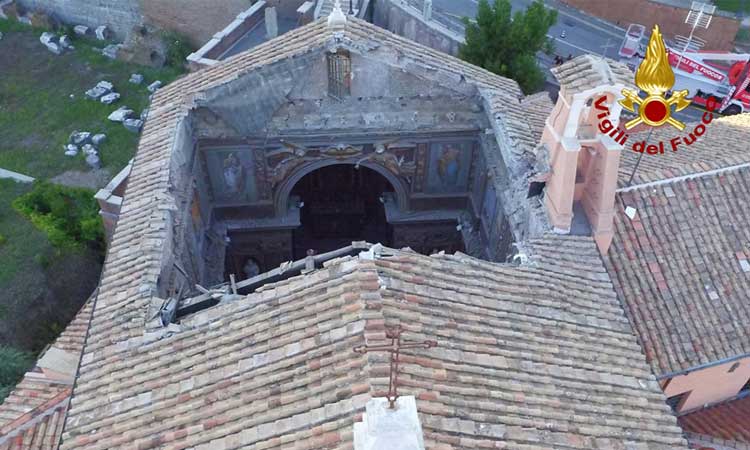
On August 30th, 2019, a large portion of the wooden roof Church of San Giuseppe dei Falegnami suddenly collapsed, damaging the interior and some of the paintings and artefacts preserved inside.
The incident, happened in the most historical part of Rome, has interested a sixteenth century building, whose construction had been funded by the Corporation of the Carpenters. For such reason, inside the church there are many wooden works.
The event inadvertently highlighted the importance of effective management of wooden structures within historic buildings, a key topic of the meeting “Storia, Sicurezza, e Protezione delle Strutture Lignee degli Edifici Storici” (History, Security and Protection of the Wooden Structures of Historic Buildings) held in Rome on 22 January 2019.
The workshop was held at the Istituto Superiore Antincendi in Rome on 22 January 2019, organised by the National Fire Corps and the Order of Engineers of the Province of Rome within the H2020 STORM project.
The aim was to present practical solutions to protect timber structures in major heritage buildings, with contributions from academics, research institutes and fire‑brigade officers directly involved in conservation and emergency response.
One of the consideration underlying the workshop is based on the fact that wood, if well preserved, is one of the most time resistant building materials.

Several examples of historic buildings, dating back to fifteen hundreds years, show that time is not always a problem for many historical beams or pillars.
The church of Kizhi Pogost in Russia (17-18th century) with 22 domes and a height of 37 meters, or the Orthodox orphanage on the island of Prinkipos (Büyükada) in Turkey (a six stories buildings that consists of 206 rooms, a kitchen, a library, a primary school and vocational workshops), show that wooden structures can reach significant dimensions.
In the meeting program, a number of Italian specialists, together with Prof. Jukka Jokilheto (Special Advisor to the Director General of ICCROM) have explained i the fundamentals of maintenance of wood structures in historical buildings.
Prof Augelli (Politecnico di Milano – DAStU, Observatory for conservation of wood works ) his presentation – The diagnosis for the characterization of historical wooden structures – started reminding that the general criteria of approaching the discipline can be based on the ICOMOS Charter – Principles for the Analysis, Conservation, and Structural Restoration of Architectural Heritage (2003).
With specific regards to codes applicable to the specific issue then Prof. Augelli clarified that the following UNI (Italian Standard Organisation) standards should be followed:
- UNI 11161:2005–Beni Culturali-Manufatti lignei – Linee guida per la conservazione, il restauro e la manutenzione ( Cultural Heritage-Wooden artefacts Guidelines for conservation, restoration and maintenance)
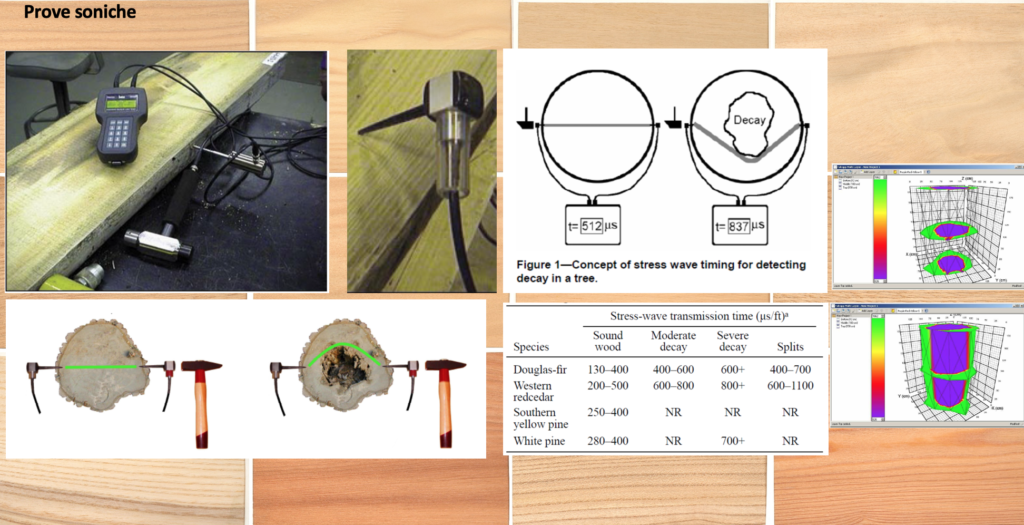
- UNI 11118:2004-Beni culturali-Manufatti lignei – Criteri per l’identificazione delle specie legnose (Cultural Heritage-Wooden artefacts Load-bearing structures of buildings-In-situ inspection for the diagnosis of the elements in place)
- UNI 11119:2004 –Beni Culturali-Manufatti lignei – Strutture portanti degli edifici-Ispezione in situ per la diagnosi degli elementi in opera (Cultural Heritage-Wooden artefacts Load-bearing structures of buildings-In-situ inspection for the diagnosis of the elements in place)
- UNI 11138:2004-Beni culturali-Manufatti lignei – Strutture portanti degli edifici-Criteri per la valutazione preventiva, la progettazione e l’esecuzione di interventi (Cultural heritage – Wooden artefacts Building load-bearing structures-Criteria for preventive assessment, planning and execution of interventions)
During the seminar, the case studies of the roof of Saint Catharine Monastery on Mount Sinai and the roof of the Sana’a Mosque have showed how wood structures can stand for more than one thousand years.
In both cases the problems caused by environmental conditions seem to pose a challenge to an adequate approach to the restoration and protection of the more than thousand-years-old wooden elements.
The natural durability of a wood species is defined as its intrinsic resistance to attacks by biological xylophagous organisms (fungi, insects, bacteria, marine organisms).
Ms Sabrina Palanti (CNR IVALSA), researcher of the Italian National Research Council – Trees and Timber Institute, explained the classification of insects, fungi and other species that can damage wood. In her presentation, she explained how fungi feed on the cell wall components of the wood and determine a change in the physical, mechanical, chemical and wood color properties and how the total resistance in the attacked area decreases.
Among the insects, the Trichoferus holosericeus, the Hylotrupes bajulus, the Anobium punctatum and the Lyctus brunneus, together with theReticulitermes lucifugus, the Kalotermes flavicollis, theDendrobium pertinax and the Xestobium rufovillosum revelead to be the worst enemy of wooden structures. Each of such species needs a specific protection action.
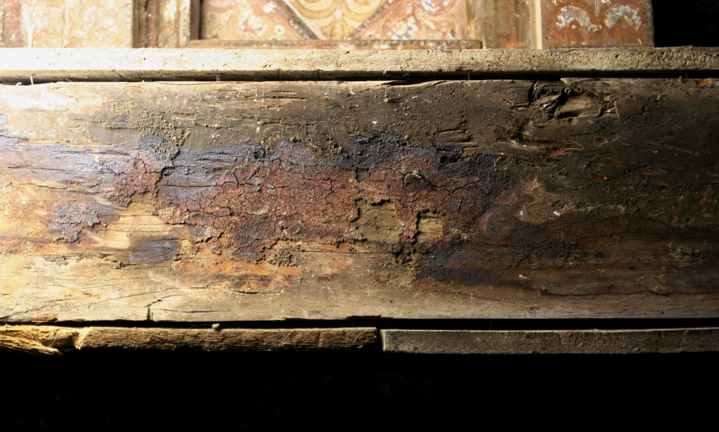
For example, against the Reticulitermes lucifugus, the traditional treatment is carried out by forming a chemical barrier around the attached building to prevent the flow of the workers from the nest inside the building itself. Currently, a technology that uses anti-aging hormones in sealed cellulose baits is used.
Then, physical or chemical-physical barriers in the ground where the building have to be built. Ms Palanti then added information about the most common protection techniques as, for example, the three steps process of a) removal of the portion of wood affected by the larval galleries (Wood which is no longer a mechanical resistance); b) placing the product under pressure in a specific case (at least three holes per linear meter) and c) surface treatment by brush or spray.
Among the main outcomes, the workshop stressed: the need for systematic diagnosis of historic timber using non‑destructive and minimally invasive methods; the integration of biological protection and structural consolidation with fire‑safety objectives; and the importance of considering climate‑change impacts, electrical systems and emergency scenarios together, rather than in separate technical silos
The last two presentations of the seminar have dealt with the approach adopted by Italian standards on electrical systems (CEI Standards) to limit fire risk to wooden structures (Michele Mazzaro) and with the theme of climate change and protection of structures in historic buildings (Stefano Marsella – H2020 STORM research project).
Wood Durability, Degradation and Fire Risk
One of the workshop’s starting points was that well‑preserved wood can be remarkably durable: there are documented historic roofs and elements that have performed for more than fifteen centuries. However, biological and physical degradation – if ignored – creates conditions that increase both the probability of collapse and the vulnerability of structures to fire spread and fire‑induced damage.
Sabrina Palanti (CNR IVALSA – Trees and Timber Institute) outlined the classification of fungi, insects and other xylophagous organisms that attack wood, and explained how they modify mechanical, physical and chemical properties of timber elements. As resistance decreases in affected areas, the load‑bearing capacity is reduced and hidden cavities may form, which can promote unseen fire spread inside sections, joints and voids.
The Italian UNI standards on conservation of wooden artefacts and load‑bearing structures provide a structured framework for diagnosis and intervention, including:
- UNI 11118:2004 – criteria for identifying wood species in cultural heritage artefacts.
- UNI 11119:2004 – in‑situ inspection for diagnosis of load‑bearing wooden structures.
- UNI 11138:2004 – criteria for preventive assessment, planning and execution of interventions on structural timber in historic buildings.[
These standards, if systematically applied, support integrated strategies where structural consolidation, biological protection and fire‑safety objectives are considered together rather than separately.
Protection Techniques and Their Fire Implications
Palanti also described the main protection techniques against biological degradation, including:
- Local removal of wood that has lost mechanical resistance due to larval galleries.
- Injection of suitable products under pressure (typically through at least three holes per linear metre).
- Surface treatments by brush or spray.
From a fire‑risk perspective, such treatments must be evaluated not only for their effectiveness against biological agents, but also for their possible influence on ignition risk, flame spread and smoke production. A holistic assessment should therefore consider the compatibility between biocides, consolidants, possible fire‑retardant products and the long‑term behaviour of historic timber under fire exposure.
Electrical Installations, Climate Change and Fire Safety of Timber
The last two presentations of the seminar explicitly linked technical disciplines often treated in isolation: electrical safety and climate change impacts on historic buildings with significant timber components.
- Michele Mazzaro discussed how Italian CEI standards for electrical systems address the limitation of fire risk in buildings with wooden structures, highlighting the importance of careful routing of cables, protection of penetrations and control of temporary electrical installations during works.
- Stefano Marsella (H2020 STORM project) examined how climate change – through more intense heatwaves, altered humidity cycles and extreme events – can affect both the conservation of timber and the risk profile of historic buildings, including increased probability of ignition and more severe fire scenarios.
These contributions reinforce an increasingly shared message in international literature: for historic buildings, fire prevention and fire protection must be rooted in detailed knowledge of materials, pathologies and use conditions, and cannot be reduced to generic code‑compliance measures.
Towards Integrated Guidance and Practice
The proceedings of the seminar, announced for publication in English, are expected to offer an updated overview of this specialized field, from diagnostic methods to standards and preventive techniques. They will also be a useful resource for connecting conservation‑oriented approaches, such as those of ICOMOS, with modern fire risk management practices that emphasise prevention, early detection, appropriate levels of protection and realistic emergency planning for historic timber structures.
Updated February 2026