Two Fires in Rome’s Historic Centre: Specific Risks in Churches
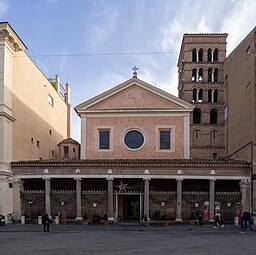
The Basilica of San Lorenzo in Lucina in Rome. The image shows the portico where the second fire started. Photo by Di DellaGherardesca via Wikimedia Commons (CC BY-S4.0)
On Sunday 25 January 2026, two separate fires within minutes of each other affected churches in the very heart of Rome’s historic centre, along the axis between Via del Corso and Piazza San Lorenzo in Lucina. In both cases, the flames started from temporary elements – a Christmas nativity scene in one church, construction materials in the other – underlining once again how “non‑permanent” installations can become critical points of ignition in heritage contexts.
The first incident occurred in the church of Gesù e Maria on Via del Corso, a 17th‑century Baroque church.
During Sunday morning worship, a fire broke out in the nativity scene set up inside the nave.
Firefighters evacuated the faithful and quickly extinguished the flames, which are believed to have been triggered by an electrical fault in the presepe’s lighting system. The episode did not cause injuries and appears not to have produced major structural damage, but it could easily have had far more serious consequences for people and for the richly decorated interior.
Shortly afterwards, a second fire was reported in the construction site outside the Basilica of San Lorenzo in Lucina, a church with ancient origins and high artistic value facing one of the most frequented squares in the city centre.
Here the flames involved wood panels and bags of electrical material stacked under the portico, in an area under renovation but open to intense pedestrian flows.
The Carabinieri, one of the two national Italian police organisations, from the nearby station intervened first using portable extinguishers to contain the fire before it could affect the façade or spread to the interior.
The fire brigade subsequently completed extinguishing and safety operations. There were no injuries and no significant structural damage but investigations are underway to determine the causes and verify compliance with safety regulations on the building site.
For the fire‑safety community, this “double alarm” in a small area of the historic centre is a reminder of several recurring themes.
First, seasonal decorative installations inside churches – nativity scenes, Christmas trees, temporary lighting – often introduce additional electrical loads and combustible materials close to altars, pews and works of art, in buildings not originally designed for this density of wiring and equipment.
Second, construction and maintenance works in or around heritage churches create new fuel packages and ignition sources at the boundary between the monument and public space: scaffolding, timber formwork, packaging, temporary electrical systems and hot‑work activities. If these are not rigorously controlled, small fires can develop in critical locations such as porticoes, entrances and roofs.
A third aspect that should never be overlooked is the impact of small fires on historic heritage. While such fires could not compromise personal safety or structural integrity in some cases, they can cause damage to decorations and non-structural artefacts that contribute to the buildings’ aesthetic value.
The two Rome incidents also highlight the importance of rapid first intervention by non‑specialist personnel. In Gesù e Maria, prompt evacuation and immediate intervention by the fire brigade avoided escalation in a space with an important Baroque decorative apparatus.
In San Lorenzo in Lucina, the use of extinguishers was decisive in containing the fire in the construction area before it affected the church’s envelope. This reinforces the message that training in the use of extinguishers, clear emergency procedures and good coordination between parish staff, contractors and security forces can greatly reduce damage to people and heritage, even before specialist rescue teams arrive.
Practical questions for historic buildings responsible
From a risk‑management perspective, the Via del Corso fires suggest several practical questions for those responsible for historic churches, not only in Rome:
- How are temporary electrical installations for liturgical seasons planned, inspected and documented?
- Are presepe and decorative lighting systems kept physically separate from combustible scenery and from historic surfaces?
- How are construction sites in or near churches managed in terms of housekeeping, segregation of materials and protection of entrances and porticoes?
- Which first‑response resources (extinguishers, training, emergency plans) are effectively available during services and during works?
Answering these questions in advance, rather than after an incident, is essential if we want churches to remain open, welcoming and safe places of worship, without exposing congregations and cultural heritage to avoidable fire risks.