EU Funding for Cultural Heritage Safety Research: A Strategic Overview (2021–2026)
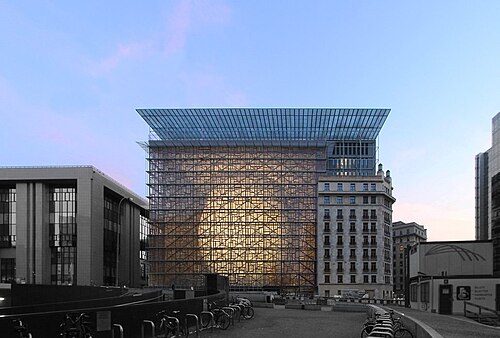
The Europa building, seat of the European Council and Council of the European Union in Brussels - Image: Samynandpartners, CC BY-SA 4.0 <https://creativecommons.org/licenses/by-sa/4.0>, via Wikimedia Commons
How European investment in fire risk, multi-hazard resilience and emergency coordination is shaping heritage protection – and why it’s still not enough
Article 33 of the Treaty on European Union requires the Union to ensure the safeguarding and development of Europe’s cultural heritage while respecting cultural diversity. This principle is reflected in Article 167 of the Treaty on the Functioning of the EU which promotes the conservation of heritage of European significance and cooperation between Member States.
The European Framework for Action on Cultural Heritage also structures ongoing actions on innovation, sustainability and inclusion. The Opinion of the European Committee of the Regions — Towards an integrated approach to cultural heritage for Europe emphasises its economic and social role.
In light of these statements, the following post analyses the state of research funding for the prevention and protection of EU cultural heritage with respect to safety.
The Research Gap: Why Cultural Heritage Safety Demands More Attention
Cultural heritage sites face a convergence of threats that standard building codes were never designed to address. Historic structures are frequently constructed with combustible materials, lack compartmentation and feature complex layouts that challenge modern suppression systems.
They increasingly face wildfire exposure as climate-driven fire regimes extend into every landscape including cultural ones. Yet the tools available to heritage managers remain fundamentally incomplete (here a brief Fireriskheritage analysis of the main gaps).
Current fire-risk assessment frameworks focus almost exclusively on structural integrity – will the building stand? – and on safe egress from the buildings – will people be safe in case of fire? – while systematically neglecting the movable heritage, decorative finishes, archives and interior elements that constitute the irreplaceable cultural value of a site.
A cathedral that survives structurally but loses its medieval timber roof, liturgical furnishings and manuscript collection has lost most of what made it culturally significant.
What’s Missing from Current Practice
The gaps are technical, procedural and institutional:
- Holistic risk models are lacking data on combustion by-products, suppression agent damage (water, foam and chemical suppressants) and cascading losses across tangible and intangible heritage.
- Interdisciplinary assessment frameworks are required to bring fire engineers, conservation scientists, materials specialists, emergency planners and heritage managers together with shared metrics and decision tools. In this area only rare efforts appear to have been made to adopt such a culture.
- Heritage should be integrated into mainstream disaster risk management (DRM). Cultural assets are explicitly included in wildfire-risk zoning, fuel management strategies, civil protection response protocols and climate adaptation plans. However, this approach should not be an afterthought in tourism or culture chapters but integrated into a wider view of risk management.
- Performance-based design guidance is necessary to address the data gap in holistic models. It requires information on the behaviour of fire and extinguishing agents in historic materials and fabric. Other research should respect preservation ethics while meeting modern life-safety requirements, particularly for accessibility, escape means and structural fire resistance in buildings with protected fabric.
- International standards and guidelines are needed. There are some widely adopted, regularly updated and enforceable standards from ICOMOS, ICCROM, CEN and ISO. However, they remain fragmented and often non-binding. A better approach is demonstrated by the NFPA standards (909 and 914), which however lack the research data on fire behaviour mentioned above.
This isn’t solely a fire problem: floods, earthquakes, climate extremes and anthropogenic threats (arson, terrorism, neglect) are converging on the same vulnerable assets, yet research funding and policy frameworks continue to treat heritage safety as a niche specialty rather than critical infrastructure.
EU Investment in Heritage Fire Risk Research (2021–2026)
Against this backdrop, the European Commission—through the Research Executive Agency (REA) under Horizon Europe and DG ECHO under the Union Civil Protection Mechanism (UCPM)—has funded a strategic but modest portfolio of projects advancing fire-risk assessment, resilience modeling and emergency preparedness for cultural heritage.
Fire-focused projects share several strategic hallmarks. They integrate cross-disciplinary methods—such as AI, GIS mapping, resilience indices, living labs, economic valuation, and even artistic inquiry—while emphasizing co-design through robust stakeholder engagement that moves beyond traditional top-down expert approaches.
However, transferability remains limited, with most case studies confined to European contexts and little evidence of adoption into national building codes, heritage regulations, or climate strategies beyond project consortia.
Across 2021–2026, aggregate investment in these fire-specific heritage initiatives totals under €25M—equivalent to just 0.026% of Horizon Europe’s €95.5B budget and far less than 1% of Cluster 2 (“Culture, Creativity & Inclusive Society”) allocations.
UCPM Coordination Actions: Building Operational Capacity for Heritage Emergency Management
Parallel to Horizon Europe research, DG ECHO has funded a vital sequence of coordination and capacity-building actions under the Union Civil Protection Mechanism (UCPM), systematically integrating cultural heritage protection into disaster risk management and cross-border emergency response.
PROMEDHE (2016–2018)—”Protecting Mediterranean Cultural Heritage during Disasters”—laid the groundwork by forging cross-border expert networks and training programs that linked civil protection authorities with cultural heritage agencies across Italy (lead), Cyprus, Israel, Jordan, and Palestine. It trained national pools of first responders in heritage triage, stabilization, and documentation, while developing standard operating procedures (SOPs) for multi-stakeholder coordination among fire brigades, cultural ministries, police, and conservation professionals. This established the proof-of-concept that heritage-specific disaster response training and cross-border coordination could operate effectively within existing civil protection structures.
PROCULTHER (2019–2021)—”Protecting Cultural Heritage from the Consequences of Disasters”—built directly on this foundation, led by Italy’s Vigili del Fuoco alongside France, Spain, Turkey, and ICCROM. The project delivered the “Key Elements of a European Methodology,” a shared framework defining roles, procedures, and interoperability standards for heritage protection across multi-hazard emergencies (fire, flood, earthquake, conflict). It created training pathways for UCPM module personnel, laid the groundwork for a dedicated cultural heritage response module, and offered policy recommendations to embed heritage into national disaster risk management frameworks—all for €599,307 in DG ECHO funding. PROCULTHER marked a pivotal shift, transforming fragmented national practices into a harmonized European operational approach with common terminology and standards.
PROCULTHER-NET (2022–2023) then addressed the critical “evaporation problem” of time-limited projects, transitioning outputs into a permanent thematic community within the EU Civil Protection Knowledge Network for nearly €800,000. It consolidated technical content—SOPs, training materials, assessment tools—into maintained repositories, established cross-sectoral exchange platforms connecting disaster managers, heritage professionals, researchers, and policymakers, and advocated for heritage’s explicit inclusion in national risk assessments, civil protection plans, and UCPM protocols. This ensured institutional continuity, preventing valuable expertise from disappearing once funding ended.
Wildfire technology precursors
Projects that don’t explicitly target cultural heritage safety can still contribute to the broader strategy shaping heritage protection policies, warranting inclusion in a dedicated “precursor” category. GEO-SAFE (2015–2019, H2020-MSCA-RISE) stands out as a prime example, having developed geospatial decision support systems for wildfire response—real-time risk mapping and resource allocation tools rigorously tested through EU-Australia exchanges. Its strengths lie in advancing fire prediction models directly applicable to wildfire-prone heritage regions, with Italian participation fostering early geospatial expertise that later informed heritage-focused applications. Yet gaps persist: cultural heritage layers (sites, collections) were absent from risk tools, and outputs remained unadapted for heritage salvage operations or UCPM coordination. Other initiatives may merit addition as knowledge evolves.
Multi-Hazard Expansion: Beyond Fire to Systemic Resilience
Several programmes have expanded from fire-specific risks to comprehensive, multi-hazard safety frameworks for cultural heritage.
- MYRIAD-EU (Horizon Europe Cluster 3) develops systemic risk management connecting floods, fires, energy disruptions, and tourism pressures on historic districts and cultural landscapes, demonstrated across North Sea and Danube basin sites. It delivers multi-hazard dashboards, stakeholder-co-developed risk protocols, and clear pathways for integrating heritage into territorial resilience planning.
- ARCH (H2020, 2019–2022) provides the baseline, advancing climate resilience for historic areas through vulnerability modeling, risk assessment workflows, and financing for adaptation. Its toolkits and methodological foundations have been adapted and expanded by successors like FIRE-RESILIENT and MYRIAD-EU.
- HERITAGE-01-01 Projects (Horizon Europe 2023 call) deploy remote sensing, sensor networks, and chemical mapping for structural health monitoring, pollutant tracking, and disaster detection on heritage assets, yielding emerging toolkits and pilot-site sensor infrastructures.
- READY (ICCROM First Aid and Resilience, Creative Europe 2025–2027) builds capacity against extreme weather, complex emergencies, and cascading risks across Europe, backed by approximately €1.5M.
- Resilient CH Partnership (proposed 2025–2035) aims to link research, innovation, and policy for multi-risk resilience (wildfire, flood, heat, storms), targeting up to €60M over 10 years pending finalization.
The Funding Reality: Marginal Investment in a Critical Domain
Horizon Europe Budget Context
Horizon Europe Budget Context: Horizon Europe (2021–2027) commands €95.5 billion across all Pillars and Clusters, with cultural heritage primarily housed in Cluster 2 (“Culture, Creativity & Inclusive Society”), allocated roughly €2.5–3 billion over seven years—about 4–5% of the total budget. Within this cluster, explicit safety research targeting cultural heritage (fire risks, multi-hazard protection, emergency management) claims only a small fraction, likely €25–50M aggregated across relevant fire-specific and multi-hazard projects since 2021.
UCPM Investment: DG ECHO’s prevention and preparedness budget separately sustains the EU Civil Protection Mechanism (UCPM) coordination actions—PROMEDHE, PROCULTHER, PROCULTHER-NET—at a multi-million euro scale. Yet this remains modest against competing civil protection priorities like chemical, biological, radiological, and nuclear threats, pandemic readiness, and cross-border rescue capacities.
Comparative Context
For perspective, Horizon Europe’s allocations dwarf cultural heritage fire safety investments: health research (Pillar II, Cluster 1) exceeds €7B, while climate, energy & mobility (Cluster 5) and digital, industry & space (Cluster 4) each surpass €15B.
By contrast, heritage fire safety claims under €50M—roughly 0.05% of the total budget.
This stark disparity has clear implications for practitioners. Heritage managers and researchers must strategically align their work with broader agendas to secure funding.
This can be achieved by framing cultural heritage fire risk within territorial wildfire resilience (as in the FIRE-RES model), embedding it into multi-hazard climate adaptation (as in the MYRIAD-EU approach) or aligning with civil protection capacity-building (as in the PROCULTHER approach).
Consequently, standalone heritage fire safety proposals face fierce competition and limited dedicated funding opportunities.
Strategic Recommendations for the Next Funding Cycle
Drawing from the 2021–2026 portfolio, clear priorities emerge for scaling impact.
Embed heritage in mainstream disaster risk management (DRM) policy, positioning cultural assets explicitly within wildfire-risk zoning (e.g., fuel-management buffers around sites), UCPM response protocols (dedicated modules and pre-positioned equipment), national climate adaptation plans (as critical infrastructure rather than a cultural annex), and building codes (performance-based alternatives for historic structures). This demands dedicated policy integration funding to forge coordination between culture ministries, civil protection agencies, and climate/environment departments—not just isolated research projects.
Sustain coordination networks beyond project cycles, as PROCULTHER-NET proved with its thematic communities; these require permanent homes and budgets to prevent “evaporation.” Viable paths include DG ECHO budget lines for heritage emergency coordination, embedding into UCPM training centers like the European Civil Protection Training Network, and joint DG ECHO/DG EAC/JRC programs for ongoing technical support.
Build international standards, advancing ICOMOS/ICCROM efforts toward enforceable guidelines. ISO/TC 21 (Fire Safety Engineering) could craft a heritage-specific standard covering structures, contents, and intangibles; CEN/TC 346 (Conservation of Cultural Heritage) should issue UCPM-aligned fire-risk guidance; and ICCROM/ICOMOS must revise charters to incorporate performance-based fire safety, post-fire ethics, and climate-driven risks.
Develop holistic risk indices that transcend current structural fire resistance metrics, explicitly accounting for movable heritage/collections, decorative finishes (frescoes, plasterwork), suppression damage (water, foam, chemicals), and intangible elements (traditions, knowledge systems). These tools would quantify cultural value alongside engineering trade-offs for decision-makers.
Expand open research and capacity-building beyond Europe, where climate-fueled fires challenge Mediterranean, Nordic, and Atlantic sites much like those in Latin America, Africa, Asia, and Oceania. EU initiatives should incorporate non-EU testbeds into MSCA/Horizon projects (FIRE-RESILIENT precedent), foster South-North exchanges (FIRECULT model), and create globally interoperable metrics aligned with UNESCO World Heritage, ICOMOS, and national systems.
Conclusion: From Pilots to Policy
The European Union has seeded a strategically important but financially modest portfolio of fire-risk and multi-hazard resilience projects for cultural heritage.
On the research side (Horizon Europe), projects like FIRE-RESILIENT, FIRE-RES, FIRECULT and POSTFIRE are prototyping indices, AI tools, economic models and structural assessment protocols that could transform how heritage managers assess and mitigate fire risk.
On the operational side (UCPM), PROMEDHE, PROCULTHER and PROCULTHER-NET have built the training infrastructure, coordination frameworks and policy pathways to deploy those tools in real emergencies.
Yet aggregate investment remains microscopic relative to the scale of climate-driven fire threats and the irreplaceable value of cultural heritage at risk.
Unless fire safety for heritage transitions from niche research topic to recognized infrastructure priority—with sustained funding, international standards, policy integration at national level and operational capacity embedded in civil protection systems—the impressive tools and networks developed since 2021 risk remaining in the pilot phase while wildfires, arson and aging infrastructure continue to destroy heritage assets across Europe and globally.
The challenge for the next EU funding cycle (Horizon Europe 2028+, UCPM 2028–2034 MFF) is clear: scale, sustain and integrate—or watch the research gains evaporate while heritage burns.
This article does not claim to be exhaustive—other EU research funding opportunities may have been overlooked. If you spot any, please let us know in the comments. Our next post will cover the EU Civil Protection Mechanism in relation to post-emergency interventions on cultural assets.
Further Reading:
- Fire Safety Engineering and Cultural Heritage Buildings[fireriskheritage]
- Towards Comprehensive Fire Risk Indexes for Cultural Heritage[fireriskheritage]
- PROMEDHE EU Project: Protecting Mediterranean Cultural Heritage[fireriskheritage]
List of projects advancing fire-risk assessment, resilience modeling, and emergency preparedness for cultural heritage
FIRE-RESILIENT (Horizon Europe MSCA Postdoctoral Fellowship, 2023–2025) develops an Emergency Preparedness and Safety Index (EPSI) for immovable cultural heritage in wildfire-prone Wildland-Urban Interface zones. It combines GIS-based hazard mapping with on-site resilience assessments drawn from structured interviews with site managers, emergency responders, and conservation professionals, evaluating preparedness across evacuation planning, vegetation management, water supply, structural vulnerability, response coordination, and post-fire recovery. Case studies span diverse contexts—the Trøndelag Folk Museum in Norway, Spain’s Alhambra, and Portugal’s Dolmen of Antela—yielding free decision tools, first-responder training modules, and policy recommendations for regional wildfire plans, all within the typical €300,000–€500,000 MSCA funding range.
FIRE-RES (Horizon Europe, 2022–2026) promotes integrated wildfire management across prevention, response, and adaptation, building on H2020 predecessors like FirEUrisk. Through 11 European Living Labs, it co-develops AI-driven fire models, sensor networks, drone surveillance, policy frameworks, and governance for fire-resilient territories. While not heritage-exclusive, many sites encompass historic landscapes and archaeological areas, positioning FIRE-RES as an upstream enabler for heritage-sensitive strategies via stakeholder co-design and territorial integration, backed by €19.8–€20M.
FIRECULT (JPI Cultural Heritage & Climate / Belmont Forum, 2024–2026) explores the wildfire-heritage-climate nexus across tangible and intangible assets in regions facing shifting fire regimes, spanning Ireland, Italy, Turkey, and Kenya. Its multi-disciplinary approach blends fire modeling, economic valuation, artistic research, and community engagement to quantify risks and co-create adaptation strategies, drawing €1–2M from national contributions.
POSTFIRE (French ANR, with EU collaboration) analyzes post-fire behavior in historic stone masonry—highlighted by Notre-Dame—developing assessment protocols through materials testing, thermal damage databases, and structural guidelines for inspection and stabilization, at around €1M.
TREEADS and related AI platforms deploy AI for wildfire prevention, detection, and suppression in forest zones buffering heritage sites, integrating fire-behavior models with cultural asset layers to elevate heritage from operational afterthought to explicit decision parameter, funded across multi-million euro Horizon calls for civil protection digital tools.