Fire Safety Engineering and Cultural Heritage Buildings
One of the possibilities that professionals have at their disposal to reflect with greater awareness on the risks to which historic buildings are subject is to simulate what would happen in the event of a fire
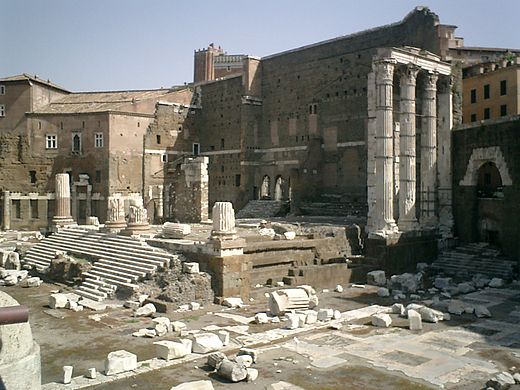
Fire wall at urban scale in the Ancient Rome - Trajan's Forum
Updated January 2026
Introduction
One of the most powerful tools that fire protection professionals have at their disposal to reflect with greater awareness on the risks to which historic buildings are subject is to simulate what would happen in the event of a fire. This capability, enabled through Fire Safety Engineering (FSE), represents a paradigm shift from rigid prescriptive compliance to performance-based solutions tailored to the unique challenges of heritage conservation.
Fire prevention is a discipline that relies in most cases on the use of standardized solutions. The verification of safety with respect to fire risk is normally based on the comparison between the measures provided for by a given regulation and those actually adopted. For example, the width of escape routes, the resistance time of structures (with respect to a standard fire), and the fire behavior class (the propensity to ignition) of covering and furnishing materials are easily verifiable elements. If a project is lacking in one or more of these aspects, it must be modified to comply with the classes or measures provided for by the regulation.
But what to do when the building has already been built and, above all, it cannot be modified because its construction elements, its visual impact, and its history do not allow it to be modified without society accepting these changes? This fundamental question lies at the heart of Fire Safety Engineering’s application to cultural heritage.
The preservation dilemma: when standard codes fall short
The level of safety to which projects are now required to comply is much higher than that of buildings of a few hundred years ago. Not surprisingly, the history of architecture and of the most important cities in many countries is marked by fires that have destroyed buildings or entire urban areas, such as the Great Fire of London in 1666.
Installing fire safety systems or equipment can save a building from destruction, but in some circumstances the installation is not possible without interfering with important parts of the building. Furthermore, sometimes the risk of unnecessary activation of these systems can be assessed as excessive compared to the damage that a fire would cause. An inadequate escape route—for example, a staircase that is too steep or too narrow—can compromise the escape of people present in a building; in many cases the construction of an external emergency staircase would substantially damage the appearance of a building.
There is no magic wand to solve these problems in almost any building of historical or artistic value in the world. Current safety standards are significantly higher than those of the past, but their application is frequently incompatible with the protection of historic buildings. This incompatibility creates a tension between two legitimate but sometimes conflicting objectives: ensuring adequate life safety and preserving irreplaceable cultural heritage.
Fire safety engineering: defining the performance-based approach
Fire Safety Engineering (or Fire Protection Engineering) is the most powerful tool for assessing fire risk in heritage, historical, or cultural buildings. According to the Wikipedia definition, it is “the application of science and engineering principles to protect people, property, and their environments from the harmful and destructive effects of fire and smoke. It encompasses engineering which focuses on fire detection, suppression and mitigation and fire safety engineering which focuses on human behavior and maintaining a tenable environment for evacuation from a fire.”
Using the techniques developed within the performance-based approach to improve the protection of cultural and historical buildings against fire is, at the moment, the only possible way that allows matching safety needs with conservation issues. This methodology enables fire protection engineers to create custom solutions that meet safety requirements alongside preserving the historical heritage of the building.
Core principles of performance-based FSE
Performance-based fire design involves applying engineering expertise to design fire protection in buildings, taking into account the specific building characteristics and unique factors, rather than ticking boxes to satisfy prescriptive fire codes. The approach emphasizes:
- Quantifiable Performance Objectives. Establishing measurable safety goals (e.g., Available Safe Egress Time, temperature limits, smoke visibility thresholds) rather than prescriptive requirements
- Risk-Based Analysis. Evaluating actual fire hazards and building-specific vulnerabilities rather than assuming generic scenarios
- Holistic System Thinking. Considering the interaction of detection, suppression, compartmentation, egress, and management measures as an integrated system
- Equivalent Safety Demonstration. Proving that alternative solutions provide safety levels equal to or exceeding prescriptive code requirements
- Heritage Value Preservation. Minimizing intervention in historic fabric while achieving safety objectives
FSE Methodology specific to heritage buildings
The application of FSE to heritage buildings requires a specialized methodology that balances fire safety imperatives with conservation principles. This process typically follows a structured framework:
Phase 1: Building assessment and documentation
Comprehensive building documentation forms the foundation of FSE analysis. As noted in NFPA 914 guidance, an organization operating and maintaining a historic structure benefits from having emergency preparedness plans and current building floor plans. This phase includes:
- Architectural Survey: Detailed documentation of construction materials, structural systems, compartmentation, concealed spaces, and heritage significance
- Occupancy Analysis: Evaluation of current and proposed uses, occupant loads, occupant characteristics (mobility, familiarity), and visitor patterns
- Fire Load Assessment: Identification of combustible materials, ignition sources, and potential fire scenarios
- Existing Protection Inventory: Cataloging of current fire detection, suppression, alarm, and egress provisions
- Heritage Significance Evaluation: Working with conservation officers to identify elements that must be preserved and acceptable intervention levels.
Phase 2: Fire risk assessment
Fire risk assessment in heritage contexts extends beyond life safety to include property preservation and cultural value protection. The methodology employs:
- Qualitative Risk Analysis (QRA): Systematic identification of fire hazards, assessment of likelihood and consequences, and prioritization of risks
- Scenario Development: Creation of design fire scenarios representing credible worst-case conditions based on fuel packages, ventilation, and ignition sources
- Consequence Modeling: Estimation of potential losses including life safety impacts, structural damage, collection losses, and heritage value degradation
- Vulnerability Mapping: Identification of building zones with highest fire risk and heritage sensitivity.
Phase 3: Performance criteria establishment
Performance criteria must address both life safety and heritage preservation objectives. Key criteria include:
- Life Safety Metrics:
- Available Safe Egress Time (ASET) > Required Safe Egress Time (RSET) with adequate safety margin
- Tenable conditions maintained along egress routes (i.e. visibility >10m, temperature <60°C, CO <1400 ppm, CO₂ <5%)
- Structural stability maintained for evacuation duration plus firefighting operations
- Property Protection Metrics:
- Fire containment within compartment of origin for specified duration
- Temperature limits to prevent irreversible damage to heritage materials
- Smoke damage limitation through early detection and controlled ventilation.
Phase 4: Design fire scenario analysis
Computational and analytical tools enable quantitative evaluation of fire safety performance:
- Computational Fluid Dynamics (CFD): Fire Dynamics Simulator (FDS) and other CFD tools model smoke movement, temperature distribution, and visibility in complex heritage spaces
- Egress Modeling: Simulation tools predict evacuation times considering building geometry, occupant characteristics, and behavioral factors
- Structural Fire Analysis: Finite element modeling assesses structural response to fire exposure, critical for evaluating existing structural systems
- Smoke Management Design: Analysis of natural and mechanical ventilation strategies to control smoke movement and maintain tenable conditions.
Recent advances include AI-powered smoke prediction models that can forecast visibility profiles and ASET with greater consistency and speed than traditional CFD analysis. This significantly reduces the time and cost of performance-based design. Furthermore, this approach may necessitate further investigations regarding its applicability to historic buildings, as these structures, with their unique geometric and material characteristics, do not readily lend themselves to training models using hundreds of comparable cases.
Phase 5: Fire safety strategy development
Based on analysis results, a comprehensive fire safety strategy integrates:
- Detection and Alarm Systems: Early warning optimized for heritage environments (e.g., Very Early Smoke Detection Apparatus for concealed roof spaces)
- Suppression Systems: Selection and design of appropriate suppression (sprinklers, water mist, gaseous agents) with consideration for heritage impact
- Passive Fire Protection: Compartmentation, fire-resistant construction, and protection of structural elements
- Smoke Control: Natural or mechanical smoke exhaust systems designed to maintain egress route tenability
- Egress Provisions: Optimization of evacuation routes, signage, emergency lighting considering historic constraints
- Fire Service Access and Firefighting: Provisions for fire service intervention, including access routes, water supply, and firefighting equipment
- Fire Safety Management: Procedures, training, inspections, and emergency response plans.
Phase 6: Validation and documentation
The final phase demonstrates compliance with performance objectives:
- Acceptance Criteria Verification: Documentation showing all performance metrics meet or exceed targets
- Sensitivity Analysis: Testing robustness of design to variations in assumptions
- Peer Review: Independent technical review by qualified fire engineers
- Regulatory Approval: Submission to building authorities with comprehensive technical documentation
- Benefit vs. Sacrifice Analysis: Formal evaluation demonstrating that fire safety interventions are proportionate to heritage impact.
Prescriptive vs. performance-based approaches: when to apply each
As mentioned above, performance-based and prescriptive approaches are two different methodologies for fire safety design, each with its own advantages and limitations, especially when applied to historic buildings.
Prescriptive approach characteristics
The prescriptive approach is based on specific norms and pre-established standards that must be strictly respected. This approach presents:
Advantages:
- Easier to apply with clear, easily verifiable guidelines
- Well-understood by building officials and inspectors
- Lower engineering costs for straightforward applications
- Proven track record of safety performance,
and
Limitations:
- Standardized solutions may not be compatible with building peculiarities
- Rigid application may lead to invasive interventions that damage or alter historical aspects
- May require unnecessary modifications when alternative solutions would provide equivalent safety
- Often impossible to apply without compromising architectural integrity.
Performance-based approach characteristics
The performance-based approach focuses on achieving a certain level of safety through detailed analysis of risks and performance, rather than adopting fixed prescriptions. In this case:
Advantages:
- Customized solutions respect structure and architectural features without compromising safety
- Allows use of innovative materials or modification of protection systems to achieve equivalent performance while preserving integrity
- Greater flexibility and adaptability for fire protection of historical buildings
- Can demonstrate equivalent or superior safety with less invasive interventions
- Enables optimization of fire safety investment,
and
Limitations:
- Requires specialized expertise and sophisticated analysis tools
- Higher engineering costs and longer design timelines
- More complex approval processes requiring regulatory acceptance
- Requires ongoing validation through commissioning and periodic review
- Performance depends on proper implementation and maintenance.
Decision framework: when FSE is appropriate
Fire Safety Engineering is particularly appropriate for heritage buildings when:
- Prescriptive compliance is impossible: When strict code compliance would require destruction of significant heritage fabric
- High heritage value: When buildings house irreplaceable collections or possess exceptional architectural/historical significance
- Complex geometries: When large volumes, atriums, concealed spaces, or unusual layouts challenge prescriptive assumptions
- Change of use: When adaptive reuse increases occupancy or fire risk beyond original design intent
- Major alterations: When renovations trigger code upgrade requirements that would be disproportionately invasive
- Conflicting objectives: When life safety, property protection, and heritage preservation goals create tensions requiring careful balance
- Economic justification: When the cost of performance-based design is justified by avoiding unnecessary interventions or enabling beneficial uses
Conversely, prescriptive approaches remain appropriate when:
- Buildings can comply with minimal heritage impact
- Simple geometries and occupancies match code assumptions
- Budget constraints preclude detailed FSE analysis
- Regulatory environment does not support performance-based approaches
Common FSE challenges in historic buildings
Fire safety engineers face recurring challenges when applying FSE principles to heritage contexts:
1. Inadequate documentation
Many historic buildings lack comprehensive as-built documentation, construction details, or records of previous alterations. Hidden voids, concealed structural members, and unknown material properties create analytical uncertainties that must be addressed through investigation and conservative assumptions.
2. Material property uncertainties
Historic construction materials (e.g., hand-hewn timber, lime mortar, historical plaster) often have variable or unknown fire performance characteristics. Standard fire resistance ratings may not apply, requiring testing or conservative engineering judgments.
3. Compartmentation deficiencies
Historic buildings frequently feature:
- Large uncompartmented volumes (churches, theaters, galleries)
- Extensive concealed spaces in roofs, floors, and walls
- Vertical shafts and service penetrations without proper fire stopping
- Doors and walls lacking fire resistance ratings
Retrofitting compartmentation without visible impact presents significant design challenges.
4. Egress limitations
Historic egress routes often exhibit:
- Narrow staircases with steep pitch and winders
- Limited exit capacity for current occupant loads
- Complex circulation routes unfamiliar to visitors
- Dead-end corridors and rooms without alternative exits
- Exit signage and emergency lighting incompatible with heritage aesthetics
Performance-based design must demonstrate adequate egress performance despite these constraints, often through compensating measures like enhanced detection, suppression, or management controls.
5. Detection and suppression conflicts
Installing modern fire protection systems in historic spaces creates aesthetic and physical challenges:
- Visible piping, sprinkler heads, and detectors impacting historic finishes and sight lines
- Structural limitations preventing pipe routing or equipment mounting
- Water damage concerns for collections and finishes
- False alarm risks in dusty, draft-prone, or temperature-variable environments
- Maintenance access requirements conflicting with conservation principles
FSE must identify minimally invasive system configurations and justify any heritage impact through benefit-sacrifice analysis.
6. Structural vulnerability
Historic structural systems (unreinforced masonry, unprotected iron/steel, heavy timber) may have limited fire resistance. Analyzing structural fire performance requires:
- Specialist structural engineering expertise
- Material testing or conservative property assumptions
- Modeling of temperature distribution and structural response
- Evaluation of failure modes and progressive collapse potential
Demonstrating adequate structural performance without adding visible protection (e.g., intumescent coatings, encasement) challenges FSE creativity.
7. Regulatory acceptance
Building officials and fire services may be unfamiliar or uncomfortable with performance-based approaches, particularly when significant code deviations are proposed. Successful FSE applications require:
- Clear, comprehensive documentation
- Transparent statement of assumptions and limitations
- Peer review by independent experts
- Stakeholder engagement early in design process
- Demonstration of equivalent or superior safety outcomes
8. Stakeholder coordination
Heritage projects involve multiple stakeholders with potentially conflicting priorities:
- Conservation officers prioritizing heritage fabric preservation
- Fire services concerned with operational safety and firefighter access
- Building owners balancing safety investment against budget constraints
- Regulatory authorities ensuring code compliance
- Occupants and visitors expecting modern safety standards
- Heritage organizations advocating for minimal intervention
FSE practitioners must navigate these competing interests, facilitating consensus on acceptable risk-safety-heritage trade-offs.
9. Cost-benefit evaluation
Performance-based design incurs higher upfront engineering costs but may reduce construction costs by avoiding unnecessary interventions. Demonstrating economic justification requires:
- Comparative cost analysis of prescriptive vs. performance-based solutions
- Valuation of heritage preservation benefits
- Consideration of lifecycle costs including maintenance and operational impacts
- Insurance premium implications of fire safety improvements
10. Long-term performance assurance
FSE solutions depend on ongoing maintenance, management, and operational controls. Ensuring long-term performance requires:
- Comprehensive commissioning and acceptance testing
- Detailed operations and maintenance documentation
- Staff training in fire safety procedures
- Periodic inspections and testing
- Management systems to maintain design intent as occupancies and uses evolve.
Case study: McDougall House, New Zealand (2019)
McDougall House, a two-story heritage building in New Zealand, suffered extensive damage during the Canterbury earthquakes in 2010-2011. The conservation plan included preservation and restoration of the external façade, restoration of ornamental plasterwork ceiling within the Ballroom, reconstruction of damaged internal lath and plaster linings, adaptation of the fireplace, and reconstruction of the damaged chimney.
FSE Approach: The fire engineering design adopted the Verification Method C/VM2 with “As Nearly As is Reasonably Practicable” consideration for the heritage fabrics of the building. The combination of quantitative and qualitative analyses demonstrated building design compliance with the 10 design scenarios of C/VM2. These analyses included:
- Assessment of minimum means of escape and fire protection provisions
- Assessment of allowable unprotected areas in external walls for horizontal fire spread
- Assessment of firefighting provisions
- Smoke and egress modeling of proposed design fires
- Benefit versus sacrifice analysis on heritage fabrics.
Outcome: The application of C/VM2 resulted in an upgrade to the fire safety and fire protection systems of the building while also retaining and enhancing its heritage value. The performance-based approach enabled preservation of significant heritage elements including ornamental plasterwork, historic lath and plaster linings, and the building’s external façade that would have been compromised or destroyed by prescriptive code compliance. The project demonstrated that rigorous FSE analysis can achieve modern safety standards while respecting heritage conservation principles.
Key Lessons: This case illustrates how performance-based verification methods can be applied systematically to heritage structures post-disaster, enabling reconstruction that improves fire safety without sacrificing historical authenticity. The benefit-sacrifice analysis provided a transparent framework for decision-making among stakeholders with competing priorities.
Relevant Standards and Guidance Documents
Fire safety engineers working on heritage projects should reference the following standards and guidance:
International Standards
NFPA 914 – Code for Fire Protection of Historic Structures (Current Edition: 2023)
- Prescribes minimum requirements for protection of historic structures from fire through comprehensive fire protection programs
- Applies both prescriptive and performance-based approaches to life safety and fire safety problems in historic structures
- Emphasizes preventing or minimizing intrusion of fire protection systems to preserve historic fabric and significance
- Identifies minimum fire safety criteria to permit prompt escape and minimize impact of fire and fire protection on historic fabric
- Should be adopted in conjunction with NFPA 909 (Code for the Protection of Cultural Resource Properties – Museums, Libraries, and Places of Worship)
NFPA 909 – Code for the Protection of Cultural Resource Properties
- Addresses museums, libraries, and places of worship
- Focuses on protection of cultural resources and collections
- Complementary to NFPA 914 for buildings housing significant artifacts
ISO 16730 Series – Fire Safety Engineering
- ISO 16730-1: Assessment, verification and validation of calculation methods
- Provides framework for validating FSE calculation methods and models
Regional Standards
BS 9999:2017 – Code of Practice for Fire Safety in the Design, Management and Use of Buildings (United Kingdom)
- Provides flexible approach to fire safety integrating fire safety engineering principles with building design and management
- While aimed primarily at modern buildings, includes provisions applicable to historical buildings
- Enables performance-based approaches as alternative to prescriptive Approved Document B
BS 9999:2008 – Fire Safety in the Design, Management and Use of Buildings
- Earlier edition proposing risk profiles for museum visitors
- Provides framework for occupancy-specific risk assessment
Regulatory Reform (Fire Safety) Order 2005 (United Kingdom)
- Requires fire risk assessments by competent persons
- For historic buildings, assessments should be conducted by those experienced with heritage sites
- Legal requirement for proper fire door installation and maintenance
Design and Verification Methods
C/VM2 Verification Method (New Zealand)
- Provides verification methodology for fire safety compliance
- Successfully applied to heritage buildings with “As Nearly As Is Reasonably Practicable” considerations
- Includes 10 design scenarios covering life safety and property protection
SFPE Engineering Standard on Calculating Fire Exposures to Structures
- Society of Fire Protection Engineers guidance on structural fire analysis
- Relevant for evaluating existing structural fire resistance
Heritage-Specific Guidance
UNESCO and ICOMOS Guidelines
- Offer best practices for implementing fire safety measures without compromising historical value
- Emphasize minimal intervention and reversibility principles
COST Action C17 – Built Heritage: Fire Loss to Historic Buildings
- European Science Foundation research action (concluded 2006)
- Remains the most comprehensive research on fire risk to built heritage
- Produced extensive references, case studies, and technical guidance
Historic Scotland and Riksantikvaren (Norwegian Directorate for Cultural Heritage) Publications
- Various technical guidance documents on fire protection in historic buildings
- Case studies demonstrating successful FSE applications