Mitigating Water Damages to Cultural Heritage: Strategies and Firefighting Solutions
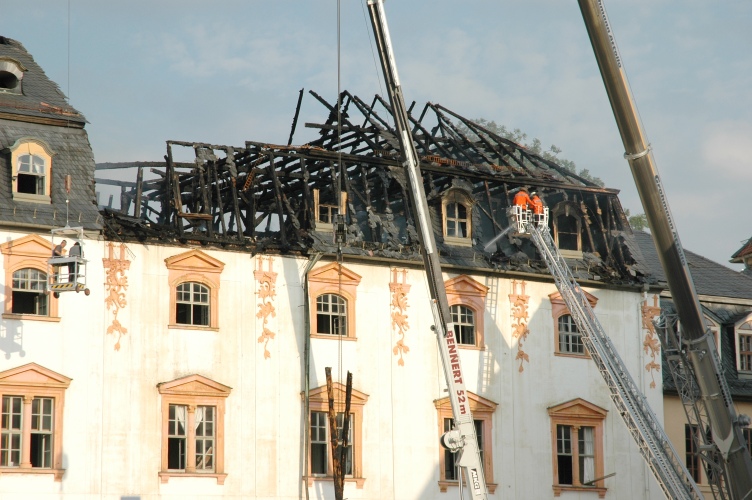
Anna Amalia Library Weimar Destruction trough the burning 3.9.2004 The picture is taken about 18 hours after the start of the burning. Image: Michak, CC BY-SA 3.0 <http://creativecommons.org/licenses/by-sa/3.0/>, via Wikimedia Commons
Water remains the most pervasive threat to cultural heritage, as outlined in our previous analysis “Water: the Most Common Enemy of Cultural Heritage”. From catastrophic floods like those in Pakistan (2022) and Venice (2019) to insidious leaks and high humidity, firefighting systems (Anna Amalia library), water causes erosion, mold growth, structural decay, and irreversible damage to artifacts and buildings.
This post explores targeted mitigation strategies, with a focus on integrating firefighting systems that minimize secondary water damage while ensuring fire safety.
Understanding Water Damage Sources
Water risks to heritage sites span natural events and human-induced issues:
- Floods: Riverine, pluvial (flash), and coastal surges overwhelm sites, as seen in Germany’s 2021 floods damaging historic villages like Traben-Trarbach.
- Humidity and Leaks: Chronic exposure leads to biological degradation (mold, insects) and material weakening in porous historic fabrics.
- Firefighting Interventions: Traditional sprinklers and hoses deliver massive water volumes, exacerbating damage—up to 500 liters per minute per nozzle—often harming more than the fire itself.
Mitigation starts with risk assessment: mapping vulnerabilities using GIS, historical data, and climate projections to prioritize interventions.
Preventive Structural Measures
Proactive engineering reduces water ingress:
- Site Protection: Elevate structures on plinths, install flood barriers (e.g., demountable walls), and create diversion channels or retention basins for pluvial floods.
- Building Envelope Upgrades: Waterproof roofing, breathable membranes, and cavity drainage preserve historic integrity while blocking moisture.
- Drainage Systems: French drains, sump pumps, and permeable paving manage surface runoff, critical in urban heritage like Venice.
These align with UNESCO and ICOMOS guidelines, emphasizing reversible, minimally invasive solutions.
Firefighting Systems: Balancing Suppression and Preservation
Conventional water-based systems pose a dilemma: effective against fire but devastating to heritage. Modern alternatives prioritize low-water use and controlled discharge.
| System Type | Key Features | Water Usage | Heritage Suitability |
|---|---|---|---|
| Pre-Action Sprinklers | Pipes dry until fire detection; activates only on confirmed heat/smoke | Low (delayed release) | High: Prevents accidental discharge from leaks |
| Water Mist (High-Pressure) | Fine droplets (high velocity, low volume); cools, smothers, and displaces oxygen | 90% less than sprinklers | Excellent: Minimal residue, rapid evaporation |
| High-pressure water mist systems | Tailored for heritage; discreet piping, no external power/water needed in remote sites | Very low; pre-action options | Ideal for museums/archives |
| Traditional Wet-Pipe Sprinklers | Always pressurized; fast activation | High volume | Limited: Use only in non-sensitive areas |
Water mist systems are highly effective at minimising collateral damage. For instance, high-pressure water mist technology solutions restrict water output to grams per square metre compared to litres in sprinklers. Furthermore, mandatory ‘damage limitation plans’ restrict water damage to artefacts.
Response and Recovery Protocols
Immediate post-event actions are crucial:
- Emergency Teams: Train heritage staff and firefighters in joint drills; use absorbent barriers and dehumidifiers.
- Damage Assessment: Italian 2013 protocols for rapid surveys (e.g., mobile vs. immovable assets) guide prioritization.
- Restoration: Vacuum drying, desalination, and climate-controlled storage; ICCROM’s Disaster Risk Management provides best practices.
Case Studies and Innovations
- Venice 2019: MOSE barriers now mitigate surges, combined with mist systems in museums.
- Bagan, Myanmar: Post-flood reinforcements include elevated stupa bases and mist retrofits.
- Emerging Tech: IoT sensors for real-time humidity/fire detection, linked to automated mist activation.
Conclusion
Mitigating water damage requires a holistic approach: prevention through resilient design, effective firefighting such as water mist and pre-action systems and robust planning.
By adopting these measures, we protect cultural heritage from its most common threat without compromising fire safety.
Until international standards are available, compliance with relevant NFPA and EU STORM project could be considered.