The Hidden Vulnerability: Fire Risk in Cultural Heritage Storage Facilities
Storage facilities deserve the same commitment to fire safety as the Louvre’s galleries or the Library of Congress’s reading rooms. The collections they hold may be out of sight but they must never be out of mind.
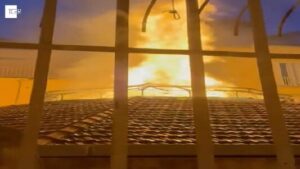
On October 1, 2025, a devastating fire broke out at the main warehouse of Amar Chitra Katha (ACK) in Bhiwandi, India. For four days, flames consumed one of India’s most cherished cultural institutions destroying over 600,000 units of inventory and irreplaceable archival material. Among the losses were original hand-drawn illustrations and transparent film positives from approximately 200 of the earliest comic titles dating back to the 1960s and 1970s. These works had taught generations of Indian children about their cultural heritage through stories of Krishna, Rama, the Pandava Princes, Savitri, Prithviraj Chauhan and Shivaji Maharaj.
While the published titles had been digitised and remained accessible through digital platforms the original artwork with its fine lines expressive faces and dramatic compositions created by legendary illustrators such as Ram Waeerkar was lost forever. The fire struck during peak season just as the company prepared for Diwali fairs book festivals and comic conventions destroying six months’ worth of printed inventory.
This was not ACK’s first encounter with fire. In 1994 a suspected short circuit at the Mumbai India Book House office had damaged approximately 3,000 reference books and artwork for unreleased editions. Yet despite this previous warning the vulnerability of storage facilities remained.
A Pattern of Catastrophic Storage Fires
The Bhiwandi fire joins a tragic historical pattern of storage facility fires that have devastated cultural heritage worldwide. These incidents reveal a disturbing truth: storage facilities, often located away from public view and institutional oversight, frequently receive inadequate fire protection despite housing collections of irreplaceable value.
The Film Archive Legacy
The history of film preservation is particularly marked by catastrophic storage fires:
The 1937 Fox Vault Fire remains one of the most devastating losses in American film history. On July 9, 1937, at the Little Ferry, New Jersey storage facility, spontaneous combustion of deteriorating nitrate film ignited a domino effect of fires through concrete vaults with poor ventilation during a summer heat wave. The result was catastrophic: the highest-quality examples of every Fox film produced prior to 1932 were destroyed. More than 75% of Fox’s feature films from before 1930 are now completely lost, including entire careers of actors such as Theda Bara and most of Tom Mix’s 85 films for Fox. As film historian Anthony Slide noted, this was “the most tragic” American nitrate fire.
The 1965 MGM Vault Fire on August 10 demonstrated that even major studios with preservation programmes were vulnerable. An electrical short ignited nitrate film in Vault 7 at MGM’s Culver City backlot, triggering an explosion and fire. The vault was one of several “concrete bunk houses” spaced apart to prevent fire spread, but without sprinkler systems and with only small roof fans for ventilation. The only known copies of hundreds of silent and early sound films were destroyed, including Lon Chaney’s “London After Midnight” and Greta Garbo’s “The Divine Woman”. Ironically, MGM had been one of the few studios actively preserving its catalogue and transferring nitrate to safety film.

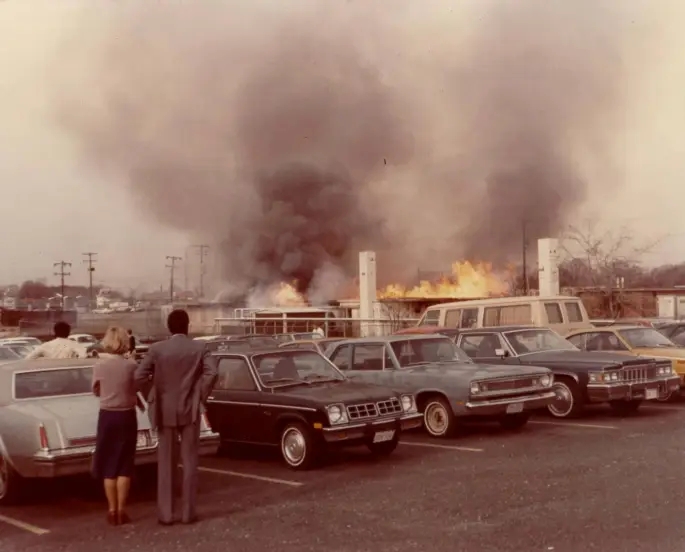
The 1978 National Archives Suitland Fire is particularly significant because it occurred at an institution specifically designed to prevent such disasters. On 7 December 1978 approximately 12.6 million feet of Universal Newsreel footage was destroyed. The facility, originally intended as temporary three-year storage built in the 1940s, had been upgraded with a high-speed sprinkler system when Universal donated its library in 1970. However, during air conditioning upgrades in 1978 contractors disabled one-third of the sprinkler heads. When a power tool sparked the disabled sprinklers failed to control the blaze and firefighters opening fireproof doors to search for trapped workers allowed flames to spread.
The 2020 Paris Nitrate Fire brought these risks into the modern era with tragic human consequences. Serge Bromberg, founder of Lobster Films, stored nitrate film reels in the basement of a residential building in suburban Paris. The resulting fire killed two people and destroyed homes. Bromberg was later found guilty of manslaughter involuntary injury and endangering lives.
The fire at the Deutsches Museum Storage Depot, Ingolstadt, Germany (October 10, 2018) – Fire broke out on a Wednesday evening at the storage depot of the Munich-based Deutsches Museum, located in Ingolstadt, north of Munich. The warehouse housed approximately 8,000 artifacts from the technology museum’s collection, including vehicles, medical equipment, computers, textiles, and notably the microscope of Nobel Prize-winning chemist Manfred Eigen. The fire caused considerable damage to the contents of the depot. This incident is particularly significant as it affected one of the world’s largest and most important science and technology museums.
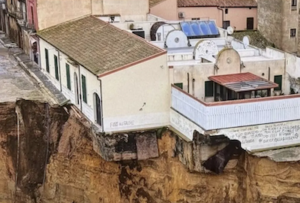
Furthermore, smaller structures are frequently susceptible to such damage. For example, only in 2025 the 17th-century Romite Ambrosiane Monastery in Italy was destroyed by a fire caused by a short circuit around 8 p.m. The fire destroyed a church and valuable artworks and antique furniture. The Kelton House Museum in Columbus, Ohio was declared a total loss after a fire and gas explosion. The historic landmark sustained catastrophic structural damage while firefighters worked to save artefacts and framed pictures before transitioning to a defensive approach. On November, 2 the historic Bantam Jeep building in Pennsylvania (USA) was severely damaged by a fire which caused the roof and upper floors to collapse, making the building unstable and requiring demolition. The building was famously linked to the production of the original Bantam Jeep during World War II.
Main risk factors
Storage facilities face a perfect storm of risk factors that distinguish them from public exhibition spaces:
1 Resource Allocation Disparities. Institutional budgets prioritise public-facing spaces where security incidents would be immediately visible and embarrassing. Consequently, storage areas receive less investment in fire detection systems, suppression equipment, climate control and security monitoring. The Bhiwandi warehouse likely did not receive the same level of fire protection as ACK’s Mumbai offices.
2. Concentrated Risk. Storage facilities concentrate vast quantities of irreplaceable material in single locations for operational efficiency. The Fox vault fire destroyed 75% of the studio’s pre-1930 output in a single event. The National Archives lost 12.6 million feet of footage in hours. Concentration that is economically justified creates catastrophic single points of failure.
3. Material Hazards. Storage facilities often house materials with inherent fire risks:
- Nitrate film self-ignites at temperatures around 38°C (100°F), burns underwater and cannot be extinguished once ignited
- Degrading cellulose acetate releases gases that accelerate decomposition and increase flammability
- Paper and cardboard in large quantities
- Historic plastics and polymers with unknown combustion characteristics
- Electrical equipment for climate control and security in ageing infrastructure
4. Environmental Control Failures. The Fox fire resulted from poor ventilation and excessive summer heat causing nitrate gases to spontaneously combust. The 1978 Suitland fire occurred during HVAC upgrades. Storage facilities require precise environmental control but these systems are expensive to maintain, easily deferred during budget constraints and create additional ignition sources through electrical components.
5. Reduced Human Presence. Storage facilities operate with minimal staff presence compared to museums or libraries. Fires can develop undetected for longer periods. The MGM fire occurred at 10:00 p.m. when few people were on site. The Bhiwandi fire burned for four days, suggesting delayed detection or difficult access for firefighters.
6. Geographic Isolation. Storage facilities are often located in industrial areas, warehouses districts or remote sites with lower real estate costs. This isolation can create longer response times for fire services and may place facilities beyond the reach of advanced fire departments with specialised cultural heritage training.
The Persistent Storage Paradox
Roger Mayer, MGM’s studio manager, described their concrete vaults as “good storage because [the films] couldn’t be stolen”. This reveals a fundamental tension: measures that enhance physical security often compromise fire safety. Concrete bunkers with limited access and ventilation may deter theft but trap heat and prevent fire suppression. Isolated warehouse locations reduce insurance and operational costs but delay emergency response.
Furthermore, the success of preservation programmes can create new vulnerabilities. As institutions digitise collections and create backup copies, there may be a false sense of security regarding original materials. As the Bhiwandi fire demonstrated, digital copies cannot replace the cultural and historical value of original artwork. The fine lines and expressive faces of Ram Waeerkar’s illustrations exist only in the original hand-drawn positives not in their digitised reproductions.
Contemporary Challenges: The 2025 Context
The Bhiwandi fire occurred in a contemporary context that should have made it preventable:
- Modern fire detection technology includes smoke detectors, heat sensors, flame detectors and gas detection systems that can provide early warning.
- Automated suppression systems ranging from sprinklers to gaseous suppression agents designed for archival environments are widely available.
- Building codes and standards such as NFPA 909 provide detailed guidance for cultural property protection or international organisations such as ICOM’s International Committee for Museum Security have published comprehensive guidelines since 1993.
Despite this, the fire persisted for four days, indicating systemic failures in applying existing knowledge to storage facilities particularly in developing regions or smaller institutions with limited resources.
What Must Change: An Agenda for Storage Facility Protection
Institutional Culture. Storage facilities must be recognised as equally important to exhibition spaces. Budget allocations inspection schedules emergency planning and staff training should reflect the irreplaceable value of stored collections not just their public invisibility.
Risk Distribution. Major institutions should adopt distributed storage models with geographically separated facilities. No single event should be capable of destroying entire categories of collection. The Fox fire destroyed 75% of pre-1930 output because all the collections were in Little Ferry. Modern institutions should maintain copies in multiple secure locations.
Material-Specific Protocols. Different materials require different approaches:
- Nitrate film requires specialised facilities meeting NFPA 40 standards with a temperature below 21°C (70°F) freezing when possible ventilated storage containers and trained professional handling.
- Paper collections require humidity control acid-free containers and adequate spacing.
- Digital media requires both physical protection and multiple backup copies in separate locations.
- Mixed collections require careful segregation of incompatible materials.
Infrastructure Investment. Storage facilities require modern fire suppression systems appropriate for their contents environmental monitoring with remote alerting regular electrical system inspections and upgrades adequate ventilation designed for the specific materials stored and backup power systems for critical equipment.
Human Factors. Well-trained staff who understand material-specific risks, clear protocols for contractors working in storage areas (as demonstrated in the Suitland fire), regular inspection schedules and coordination with local fire departments for pre-incident planning are essential.
A comprehensive strategy
A comprehensive digital backup strategy, while not a replacement for originals, provides insurance against total loss. However, digitisation itself requires proper planning: high-resolution capture that preserves detail, distributed backup storage, regular verification of backup integrity and documentation of digitisation processes.
Not all storage facilities fail
The Library of Congress, despite Paul Spehr’s testimony, maintained nitrate collections for 37 years without fire. What worked?
- John G. Bradley’s design of compartmented storage cabinets in the 1930s, tested to withstand 1500°F (815,55 °C) external fires, represented genuine innovation. The National Bureau of Standards’ extensive testing in 1948-1956 established that compartmented storage racks combined with sprinklers could limit damage to 2.2-92.9% of a vault compared to 100% loss without protection.
- Filmarchiv Austria’s modern wooden vault design, completed recently, uses wood as an insulator that remains stable longer during fire than concrete. This counterintuitive approach, based on research into energy efficiency and ventilation, demonstrates that continued innovation in storage design remains possible.
- MGM’s preservation programme, despite the 1965 fire, ensured that 68% of its silent films survived—the highest proportion of any major studio. Their systematic donations to archives and transfer to safety film meant that losing Vault 7 did not mean losing everything.
Conclusion: The Invisible Collections
The Bhiwandi fire and its historical predecessors reveal a harsh truth: our cultural heritage is only as secure as its least-protected storage point. While visitors admire exhibitions and scholars access reading rooms, the vast majority of human cultural heritage is stored in facilities that receive a fraction of the attention, resources and protection.
The loss of Amar Chitra Katha’s original artwork represents not only destroyed objects but severed connections to the artists who created them and the cultural moment they embodied. Ram Waeerkar’s illustrations cannot be recreated, even with perfect digital copies. The specific texture of paper, the variation in line weight, the corrections and pentimenti that reveal artistic process—these exist only in originals.
We cannot prevent all fires, but we can ensure that when the next Bhiwandi, Fox or Suitland occurs it reflects genuine unpredictability rather than predictable neglect. Storage facilities deserve the same commitment to fire safety as the Louvre’s galleries or the Library of Congress’s reading rooms. The collections they hold may be out of sight but they must never be out of mind.
The question is not whether the next storage fire will occur but whether we will have done everything possible to prevent it and minimise its impact. The answer, too often, remains no.
Fire Risk Heritage acknowledges the loss experienced by Amar Chitra Katha, its readers and the cultural heritage community in India. May this tragedy motivate improved protection for storage facilities worldwide.