Montreal: when a Forgotten Industrial Landmark burns
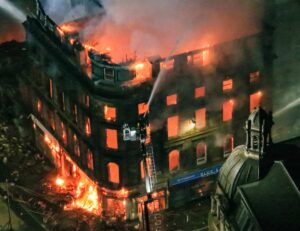
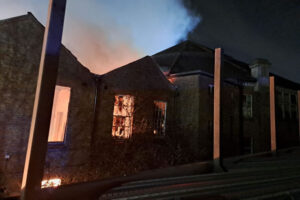
In the early hours between 20 and 21 January 2026, a major fire tore through the former Barsalou/Familex factory in Montreal, a 1910 brick industrial building wedged against the entrance of the Jacques‑Cartier Bridge.
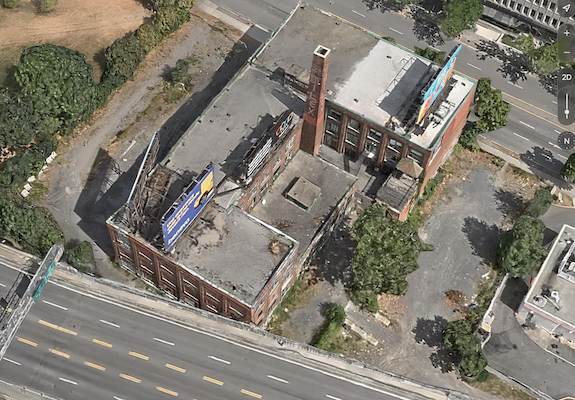
Within hours, a structure that had silently shaped the cityscape for more than a century was first gutted by flames and then fully demolished for safety, leaving behind traffic chaos – and an empty space where a piece of industrial heritage used to stand.
The fire was so intense that it forced the complete closure of the Jacques‑Cartier Bridge for several hours, cutting a key link between Montreal Island and the South Shore and mobilising around one hundred firefighters.
A safety perimeter was established to protect the bridge from potential collapse of the burning building, and only later in the day were lanes gradually reopened after structural checks and emergency repairs.
The cause is under investigation by the police arson squad. At the time of writing there is no official determination and authorities say there is currently no clear evidence of criminal origin.
A building that bent the bridge
From a heritage perspective, the Familex factory was not “just another vacant building”. It was part of the city’s industrial and infrastructural history.
Built in 1910 as a soap factory for Joseph Barsalou, the structure later housed Procter & Gamble and, from 1943, the Familex pharmaceutical and household products company, which distributed goods door‑to‑door across Quebec.
When plans for the Jacques‑Cartier Bridge were drawn up, the owner of the factory refused to move. As a result, the bridge’s Montreal approach had to be curved around the building, making the factory a physical constraint that literally bent a major piece of infrastructure.
Heritage Montréal has underlined how the former Barsalou/Familex factory had “real heritage value both for its industrial history and its relationship to the bridge”.
The building was included in redevelopment plans by the current owner, with an intention to integrate the historic structure into a new project – an example of adaptive reuse that is now uncertain after the fire.
The risks of abandoned heritage
At the time of the fire, the building was vacant and awaiting redevelopment; no casualties have been reported, and canine units confirmed that nobody was inside.
From a risk‑management point of view, this is a “success”: no lives lost, traffic restored, bridge protected. Yet from a heritage risk perspective, the event highlights several recurring vulnerabilities:
- Vacancy as a risk multiplier. Long periods of vacancy and underuse often mean limited surveillance, increased exposure to vandalism or accidental ignition, and deferred maintenance of fire safety systems. Heritage Montréal explicitly called the fire “a stark reminder of the risks associated with abandoning heritage buildings and the urgent need to focus on their protection”.
- Heritage outside the usual protection perimeter. The Familex building was a recognised landmark but not a church or museum; it sat in a grey zone between ordinary real estate and formally protected heritage. This often translates into lower priority in fire prevention measures, even when the building has clear architectural and historical significance.
- Collateral impacts on critical infrastructure. The fire did not only destroy a historic building; it disrupted a major bridge, with consequences for mobility and emergency response across the metropolitan area. This illustrates how industrial heritage can be tightly interwoven with critical infrastructure, and how fires in “secondary” buildings can generate disproportionate systemic effects.
What this fire tells us about heritage fire risk
The Montreal event reinforces some key points:
- Industrial and infrastructural heritage is at risk
The focus after spectacular church or museum fires often hides the vulnerability of old factories, depots, viaduct‑adjacent buildings and other industrial structures. These are frequently large, complex volumes with obsolete services and limited compartmentation – a combination that favours fast fire spread and difficult firefighting conditions. - Abandonment is not a neutral state
A vacant heritage building is not “on pause”. It is on a downward risk trajectory. Every year of underuse increases the probability that minor incidents escalate into major fires, and that fire safety measures fall below acceptable levels. Risk assessments and maintenance obligations should explicitly reflect this. - Heritage must be visible in risk and planning layers
The Familex fire forced road closures and structural checks on a key bridge. This suggests that heritage buildings integrated into critical infrastructure should appear in risk maps and emergency plans, not just in inventories of monuments. Their condition, fire load and potential impact on infrastructure should be assessed and monitored.
From Montreal to a broader agenda
The destruction of the former Familex factory is not only a local loss for Montreal. It is a reminder that every city has its “quiet heritage”. Buildings that shape the urban form and collective memory without enjoying the visibility and protection of iconic monuments. When these structures burn, the story is quickly reduced to traffic disruptions and redevelopment opportunities.
For those working on fire safety and heritage, cases like Montreal point to concrete actions:
- systematic fire‑risk screening of vacant heritage buildings, especially those interacting with major infrastructure;
- inclusion of industrial and infrastructural heritage in performance‑based fire scenarios and emergency plans;
- policies that link redevelopment rights and public incentives to verified fire‑safety upgrades in heritage assets during transitional phases (vacancy, construction).
As with other recent fires in historic churches and industrial sites, the Montreal case shows that fire is not only a conservation issue but a strategic risk at the intersection of heritage, urban infrastructure and emergency management. Making this explicit – in plans, metrics and design – is the first step to avoid losing the next “invisible landmark” in a single night.