Comprehensive FireRiskHeritage Guide for Historic Timber Structures Safety
Historic wood presents significantly different fire characteristics compared to new timber.
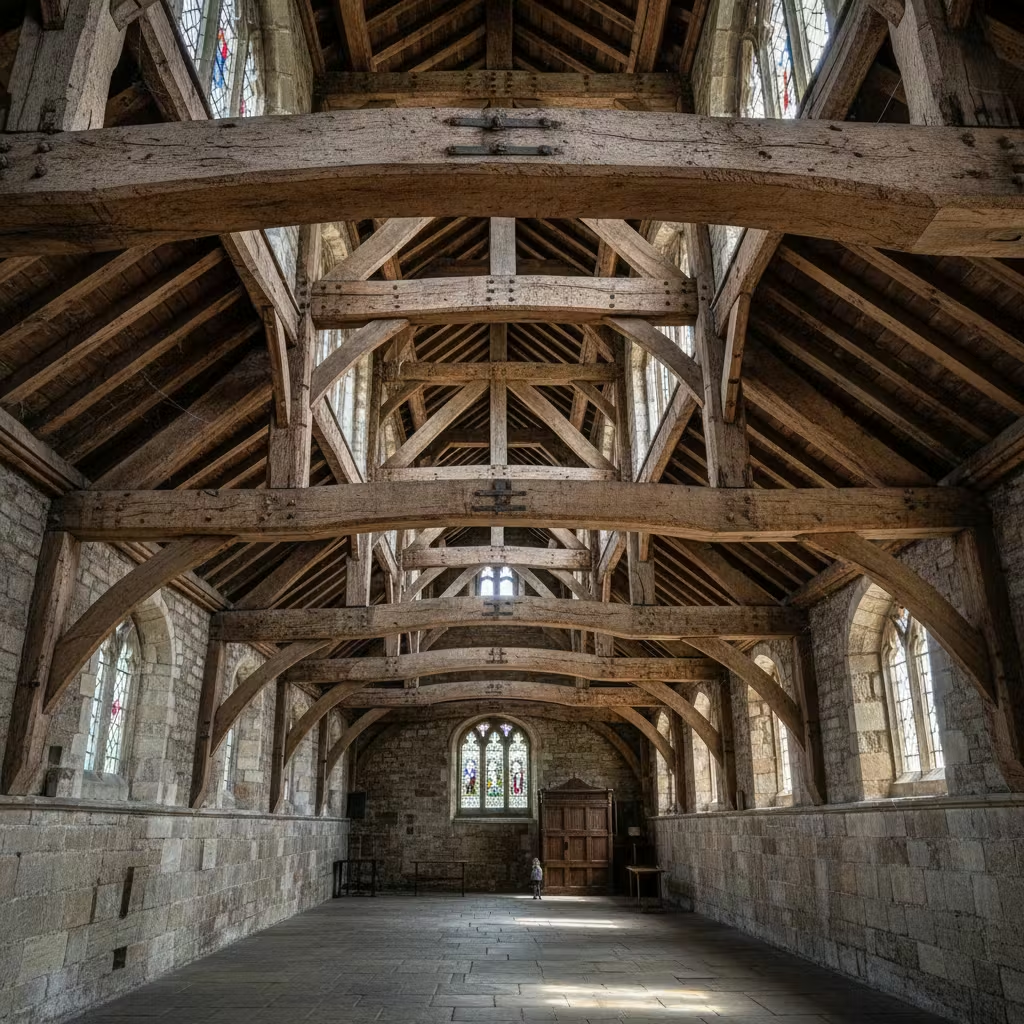
IA generated of a timber roof @Fireriskheritage
Historic timber structures represent one of the most vulnerable yet essential components of architectural heritage.
From medieval cathedral roofs spanning centuries to traditional wooden churches and decorative elements, these structures face unique fire safety challenges that require specialized knowledge, integrated protection strategies, and careful balance between preservation principles and modern safety requirements.
Recent catastrophic fires have highlighted the urgent need for systematic approaches to timber fire protection in heritage buildings.
The Unique Fire Risk Profile of Historic Timber
Ageing and Fire Behaviour
Historic wood presents significantly different fire characteristics compared to new timber. Research confirms that ageing increases susceptibility to ignition and accelerates fire spread. Key factors include:
- Reduced moisture content over centuries of drying
- Micro-cracks and cellular degradation that increase surface area for combustion
- Chemical changes in lignin and cellulose structure
- Hidden cavities from biological attack that promote concealed fire spread.
Laboratory tests demonstrate that fires in structures with aged wood generate higher temperatures and more rapid CO/CO2 concentration increases, particularly in upper building areas.
Biological Degradation and Fire Vulnerability
The intersection of biological attack and fire risk is critical. Fungi, insects (including Hylotrupes bajulus, Anobium punctatum, Reticulitermes lucifugus), and other xylophagous organisms create:
- Loss of mechanical resistance in affected wood
- Internal galleries and voids where fire can spread undetected
- Reduced cross-sectional area that accelerates structural failure under fire conditions.
Current Posts on Fireriskheritage.net
Fire Risk Heritage site currently features these wood-related articles:
- Fire Safety of Historical Wood: a Workshop in Rome (Jan 2019) – Documents the 2019 workshop at Istituto Superiore Antincendi covering diagnostic methods, UNI standards, and integrated approaches
- Fire Behaviour of Ageing Wood (Jan 2025) – Analyzes recent research on how ageing affects ignition and spread rates
- Iquique St. Antonio Church Destroyed by Return Fire (Oct 2024) – Case study of a 17th-century wooden Chilean church completely destroyed by rekindled fire
- Upgrading Fire Behaviour of Wooden Doors in Historic Buildings (Jan 2024) – SINTEF guidance on door fire resistance upgrades
- Historic Timber Doors: The IFE Guide to Fire Resistance (Jan 2024) – Technical assessment methods for timber panel doors
- Probable Arson Severely Damaged Germany’s Largest Wooden Church (Aug 2025) – Marktkirche case study
Technical Protection Framework
1. Knowledge-Based Assessment
Following ICOMOS Charter principles (2003), interventions must proceed through:
- Comprehensive diagnosis using non-destructive methods
- Species identification (in Italy: UNI 11118:2004)
- In-situ inspection of load-bearing structures (in Italy: UNI 11119:2004)
- Preventive assessment and intervention planning (in Italy: UNI 11138:2004)
Recent methodologies include probabilistic risk assessment specifically for historic timber flooring and structural elements.
2. Fire Retardant Treatments
Modern treatments balance effectiveness with conservation principles:
Chemical treatments:
- Intumescent coatings that expand under heat, forming protective char layers
- Lignin-based flame retardants achieving LOI (Limiting Oxygen Index) values of 36.5%
- Bio-based formulations with sodium methyl silicate
- Transparent formulations preserving historic appearance
Application considerations:
- Pressure impregnation for deep penetration (minimum 3 holes per linear meter for injection treatments)
- Surface brush/spray applications for exposed elements
- Compatibility testing with existing finishes and biocides
- Long-term performance in exposed environments
Performance metrics:
- UL-94 V-0 ratings
- Heat release reduction: 90%+ in peak and total values
- Water contact angles showing hydrophobic properties
3. Passive Fire Protection Systems
Compartmentation strategies:
- Fire-resistant barriers (walls, floors, doors) designed to contain fire for specified periods
- Cementitious coatings for CLT (Cross Laminated Timber) and exposed timber, particularly effective in cold conditions
- Strategic placement recognizing that cathedral crossing towers and dense masonry can act as fire-breaks
Detection and early warning:
- Smoke detection systems designed for high ceiling volumes
- Aspirating systems for concealed roof voids
- Integration with emergency protocols recognizing that ground-level escape routes remain safer as fire products concentrate in upper areas.
4. Electrical System Management
Standards and international best practices emphasize:
- Careful cable routing away from timber elements
- Protection of penetrations through wooden structures
- Rigorous control of temporary installations during conservation works
- Elimination of hot work hazards (blowlamps, welding) near combustible materials
Risk Factors Requiring Special Attention
Churches and Religious Buildings
Specific vulnerabilities include:
- Timber frames that become increasingly flammable with deterioration
- Open interior volumes with high ceilings facilitating rapid fire spread
- Wooden furnishings: pews, altars, organs, choir stalls providing substantial fuel loads
- Candle and temporary lighting hazards
- Scaffolding during restoration providing arson access routes
- Limited supervision in remote areas during off-hours
Historical data indicates arson causes three out of four church fires.
Climate Change Impacts
Research from the H2020 STORM project identifies emerging risks:
- More intense heatwaves affecting timber moisture content
- Altered humidity cycles accelerating biological degradation
- Increased wildfire exposure for buildings in peri-urban settings
- Extreme weather events creating more severe fire scenarios
Case Study Synthesis
San Giuseppe dei Falegnami, Rome (2019)
- 16th-century church financed by Carpenters’ Corporation
- Wooden roof collapse damaged interior artworks
- Highlighted need for systematic timber structure management
Iquique San Antonio Church, Chile (2024)
- 17th-century wooden structure, national monument since 1994
- Fire extinguished then re-ignited 24 hours later
- Complete destruction despite 12 firefighting teams
- Demonstrates concealed fire risk in aged timber
Marktkirche Clausthal, Germany (2025)
- Germany’s largest wooden church
- Suspected arson severely damaged historic structure
- Emphasizes security and surveillance importance
Integrated Management Strategy
A comprehensive approach must address:
Preventive measures:
- Regular inspection schedules for timber condition
- Moisture and biological attack monitoring
- Maintenance of protective treatments
- Staff training and awareness programs
Protection interventions:
- Appropriate fire retardant selection and application
- Passive barrier improvements
- Detection system installation
- Emergency access and firefighting provision
Emergency planning:
- Site-specific fire risk assessments
- Salvage priorities for movable heritage
- Firefighter familiarization with building layout
- Post-fire stabilization procedures
Conservation principles:
- Minimal intervention compatible with significance
- Reversibility where possible
- Documentation of all measures
- Regular review and updating of strategies
Future Directions
Emerging research areas include:
- Probabilistic fire resistance modeling for historic timber assemblies
- Advanced non-destructive testing methods
- Bio-based flame retardants with improved heritage compatibility
- Machine learning for fire risk prediction in aged structures
- HBIM (Heritage Building Information Modeling) integration of fire safety data
Recommendations
For heritage managers and conservation professionals:
- Adopt systematic diagnostic protocols following international standards (ICOMOS, UNI, national frameworks)
- Integrate fire safety with structural and biological protection rather than treating them separately
- Prioritize early detection in concealed spaces where aged timber creates hidden fire spread risks
- Balance active and passive measures appropriate to building significance and use
- Consider climate change impacts in long-term risk assessments
- Document all interventions thoroughly for future reference
- Engage fire brigades in pre-planning and site familiarization
Conclusion
Historic timber structures can survive for centuries when properly maintained and protected.
The challenge lies not in choosing between preservation and safety, but in achieving both through informed, integrated strategies that respect heritage significance while applying modern fire science.
Recent catastrophic losses demonstrate that inadequate attention to timber fire risk leads to irreplaceable cultural heritage destruction. With systematic approaches combining knowledge, appropriate treatments, passive protection, and vigilant management, we can ensure these irreplaceable structures remain safe for future generations.