Do Traditional Fire Codes Fall Short in Protecting Cultural Artifacts? The Notre Dame des Champs Case
When discussing fire safety in cultural heritage buildings, such as churches, museums, and historic monuments, we often rely on standards developed for offices or warehouses.
However, what occurs when the fire is contained, no lives are lost, and the structure remains intact, yet priceless artworks are permanently lost?
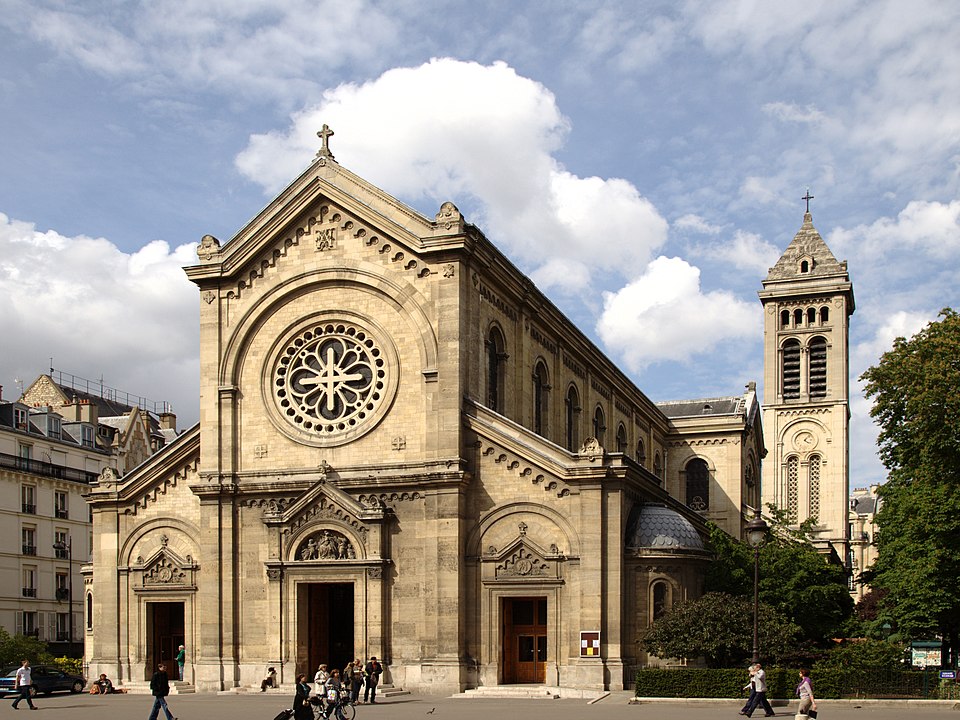
This was the reality at Notre-Dame-des-Champs in Paris during two fires in July 2025. Both incidents were characterized as “contained” and did not compromise structural integrity or endanger human life— yet the damage to artistic heritage was severe and irreversible. Why? Because traditional fire safety regulations are based on two primary objectives:
- Life safety – ensuring the safe evacuation of individuals.
- Structural stability – preventing building collapse under fire conditions.
These objectives were achieved in both Notre-Dame-des-Champs fires. However, the art—the frescoes, paintings, and historic finishes—was not safeguarded.
The building
In 1604, the Benedictines surrendered the priory to Princess Catherine Gonzaga, Duchess of Orleans-Longueville, who subsequently established Carmelites from Spain. However, during the French Revolution, the convent was closed, and the church was subsequently destroyed.
In 1802, the Carmelite Order acquired a portion of the estate. Subsequently, a chapel dedicated to Notre-Dame-des-Champs was constructed, along with a new cloister and living quarters. The order departed in 1906. In 1858, a temporary wooden chapel was erected as a neighborhood parish. The current structure was designed by architects Paul-René-Léon Ginain and Eugène Bonté, with Léon Ginain also contributing. The foundation stone was laid on March 17, 1867.
The iron framework designed by Gustave Eiffel for the church marked his first church structure and predated his work on the Eiffel Tower by two decades. This framework allowed the church to reach greater heights, reduce the number of supporting columns, and accommodate larger windows.
The fires
In July 2025, Notre-Dame-des-Champs, suffered a double fire incident. While the building remained structurally sound and no lives were lost—meeting traditional fire safety benchmarks—the artistic and historical value of the site was severely damaged. Over a 24-hour period, two separate fires struck the church:
- First Fire (July 23)
- Cause. Electrical fault in the organ of the choir.
- Outcome. Rapid suppression by firefighters prevented structural damage and fire spread. However, dense, acrid smoke filled the interior—leading to widespread soot deposition across all surfaces: frescoes, painted walls, wooden elements.
- Second Fire (July 24)
- Cause. Deliberate act of arson in the Chapel of Saint Joseph.
- Outcome. According Connaissance des Arts website: “The stone became covered in soot, but what is most worrying are the six paintings in the transept created by Joseph Aubert at the turn of the 20th century. Located near the heart of the fire, some of them were very close to the flames and were therefore particularly damaged.“
The damaged painting
The artworks, recently restored at great cost, were not destroyed by direct flames alone. Instead, the damage came mostly from:
- Radiant heat (even without direct contact),
- Acidic soot, which chemically reacted with pigments and binders,
- Thermal degradation of materials: many pigments begin to degrade irreversibly at temperatures as low as 45–60°C.
The painting suffered “cooking” of its pigments, melting of protective layers, and irreversible surface damage. Even if the canvas survives, restoration is often impossible or prohibitively expensive—effectively rendering the artwork lost.
Why Traditional Fire Codes Failed
Current fire safety standards are built around two primary objectives. Life safety: Ensuring people can evacuate safely and structural integrity: Preventing collapse through fire-resistant building elements. In the case of Notre-Dame-des-Champs, both goals were met:
- No fatalities,
- The building remained standing.
But what about the art? Traditional codes ignore the fact that:
- Many pigments degrade at temperatures well below 80°C.
- Smoke and partic
The critical gap lies in the fact that cultural assets have significantly lower tolerance for heat and smoke compared to structural elements.
- Pigments on frescoes undergo irreversible degradation at temperatures as low as 45–80°C.
- Soot, acidic aerosols, and particulate matter from fire, even without direct flame contact, cause permanent staining, corrosion, and chemical decay.
Traditional prescriptive standards fail to consider these critical thresholds of artistic damage. They assume that if a building does not burn down and people escape, the mission is accomplished. However, in cultural heritage contexts, the art itself is the mission.
This is where a technical driven approach becomes essential. With Fire Safety Engineering (FSE), we move beyond prescriptive rules to performance-based design:
- Utilize CFD simulations to model smoke and heat flow, identifying high-risk zones for soot accumulation near artworks.
- Establish damage-specific thresholds: trigger suppression systems not when a ceiling burns, but when temperatures near a painting exceed 60°C.
- Deploy gentle technologies, which suppress fire without flooding or damaging wooden structures and canvases.
Conclusion
The lesson is evident: safeguarding cultural heritage should not be an afterthought in fire safety measures. It must be the primary objective, as it will enable us to cease treating historic buildings as mere shelters for people and structures and instead design fire protection that preserves our shared history, not merely saves lives or prevents structural collapse.