Christmas Markets under Pressure: from Terror Plots to “Ordinary” Disasters
Attacks, plots, rampages and accidents are all pressures on the same vulnerable object.
Across Europe, Christmas markets are more than seasonal shopping events. They are recurring public rituals that each year re‑occupy historic squares, churchyards and streets with light, music, food and craft stalls. They help communities renew a sense of belonging in familiar heritage settings, making them part of contemporary intangible cultural heritage, even when they are not formally recognised as such.
Over the last decade – and especially in the past few years – these markets have increasingly become sites of violence, planned attacks and serious accidents. Whether the cause is terrorism, a rampage, or technical failure, the effect is similar: a ritual that depends on openness and trust is reshaped by fear, heavy security and traumatic memory.
Targeting a ritual: attacks and foiled plots in 2024–2025
Recent seasons show how Christmas markets have become symbolic targets for violence:
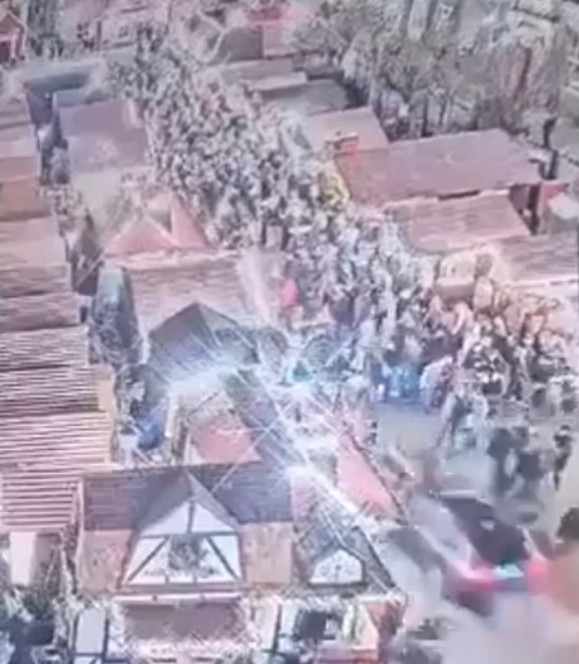
- Magdeburg, Germany – 20 December 2024 (car‑ramming)
A rental car was driven for about 400 m through the Christmas market in Magdeburg’s historic centre, killing at least five to six people and injuring more than 200–300 others, according to various official tallies. The driver, a Saudi doctor, showed signs of mental illness; prosecutors treated it as a deliberate rampage rather than an organised terrorist plot, but the impact on the market and the city was indistinguishable from a terror attack. Memorials, barriers and intense policing define the site each December. - Dingolfing‑Landau (Lower Bavaria), Germany – December 2025 (foiled plot)
German police arrested five men suspected of planning to drive a vehicle into crowds at a local Christmas market, echoing the Berlin 2016 and Magdeburg 2024 tactics. Wiretaps suggested the main suspect wanted to “kill or injure as many people as possible”, underlining that the market itself – a festive, family‑oriented event in a historic town centre – was the chosen symbol. - Lublin, Poland – December 2025 (foiled bombing attempt)
Polish security services detained a 19‑year‑old law student at the Catholic University of Lublin, accusing him of preparing an Islamic State‑inspired bomb attack on a Christmas market. Investigators say he researched explosives and saw the market as a mass‑casualty target, again choosing a seasonal ritual in a historic urban setting rather than a generic commercial site.
These cases show how attackers and would‑be attackers now “read” Christmas markets as high‑value symbolic targets: dense crowds, strong media visibility, and deep cultural resonance, with significative added costs to reach adequate safety and security levels. .euronews+1
“Ordinary” disasters with extraordinary cultural impact
Not all serious harm at Christmas markets and fairs comes from ideological violence. Technical failures and uncontrolled behaviour can cause mass‑casualty events that affect the ritual in similar ways:
- Magdeburg 2024 revisited – an attack without a clear label
While the Magdeburg car‑ramming is often framed alongside terrorist attacks, the investigation’s focus on mental illness and the absence of organised extremism show how a single individual’s actions can turn the market into a disaster scene without fitting neatly into security categories. In practice, however, the consequences for the intangible heritage of the market – trauma, memorialisation, permanent barriers – are identical to those of a formally recognised terror attack. - Düsseldorf, Germany – July 2025 (historic fair fireworks accident)
At the traditional Rhine fair opposite Düsseldorf’s historic Altstadt, at least 19 people were injured when a fireworks show malfunctioned, sending burning debris into the crowd and forcing the 700‑year‑old event to be cut short. Although not a Christmas market, this long‑standing fair plays a similar role in animating heritage space, illustrating how technical risk management at festivals is now inseparable from safeguarding living traditions. - Birmingham, UK – December 2024 (Christmas fairground ride collapse)
In Birmingham city centre, a fairground ride associated with the Christmas market and fair collapsed to the ground, injuring 13 people, several seriously. The ride has not returned in subsequent seasons, and safety reviews and legal claims continue. For many visitors, the visual and emotional association between “Christmas in the city centre” and this accident has altered how safe and carefree the event feels.
These incidents may be classed as accidents or rampages rather than terrorism, but from an intangible‑heritage perspective they still damage the ritual: participation drops, children are kept away, organisers modify layouts and programmes, and memories of injury and fear become part of the tradition’s narrative.
Security, perception and the reshaping of historic squares
In response to both attacks and accidents, authorities and organisers have introduced escalating security and safety measures:
- In Germany, security costs for Christmas markets have risen sharply – by around 40–45% in a few years according to market operators – to pay for concrete barriers, access checks, CCTV, private guards and reinforced police deployments.
- Media such as DW, BBC and France 24 document how fake news and disinformation (exaggerated claims of bans, staged videos of “raids”) further fuel public anxiety around markets, sometimes discouraging attendance.
Historic squares and streets – often framed by churches, town halls and monuments – are thus being physically and psychologically reconfigured. What was once an open, meandering flow through stalls and music is now channelled by barriers, patrol routes and controlled entry points. For heritage professionals, this raises difficult questions about how to:
- Protect people without permanently disfiguring historic public spaces.
- Maintain the festive feel and social function of the markets under visible security infrastructure.
- Document and manage the evolving intangible heritage of these events as they incorporate memories of tragedy and fear.
Why this matters for heritage safety
In our opinion, given that Christmas markets and similar fairs should be recognized as intangible heritage practices that depend on both physical context and social trust, and that damage to either can jeopardize their continuity, a comprehensive risk assessment for historic urban areas hosting Christmas markets and fairs should:
- Consider crowd safety, security threats, and technical failures as part of the same risk landscape that already includes fires, structural collapses, and extreme weather conditions. In addition to anti-terrorism security measures, among the areas that professionals should carefully consider is the planning and management of emergency crowd evacuations, which requires specific expertise. Furthermore, integrating safety and security warning and alert systems could require a new approach to the problem. An interesting text on the necessary comprehensive approach is the UK Green Book guidance, published by the HM Treasury.
- Encourage integrated planning in which heritage managers, event planners, security services, and risk management engineers collaborate to co-design effective yet reversible measures that are visually compatible with the historic fabric.
In this sense, attacks, plots, rampages and accidents are all pressures on the same vulnerable object: the seasonal re‑occupation of historic squares by communities seeking light and conviviality in winter. Safeguarding that ritual is now as central to heritage‑risk practice as protecting the stones and timbers that surround it.