The Reconstruction of the Glasgow School of Art following the Second Fire
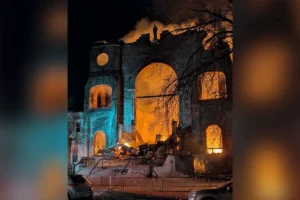
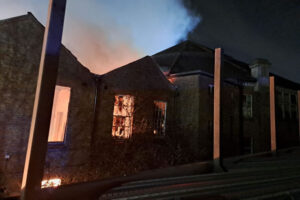
In the evening of June 15, 2018, a catastrophic fire engulfed the Charles Rennie Mackintosh Building at the Glasgow School of Art, devastating one of Scotland’s most significant architectural treasures. The blaze occurred just four years after a previous fire had damaged the same building, and at a time when a £35 million restoration project was nearing completion.
The fire destroyed approximately 90 percent of the interior and caused severe structural damage to this masterpiece of early 20th-century architecture. The building, completed in 1909, represented a pinnacle of Art Nouveau design and was recognized internationally as one of Mackintosh’s finest works—alongside contemporaries like Victor Horta, Henry Van de Velde, Adolf Loos, and Louis Sullivan.
The 2018 Fire: Timeline and Damage
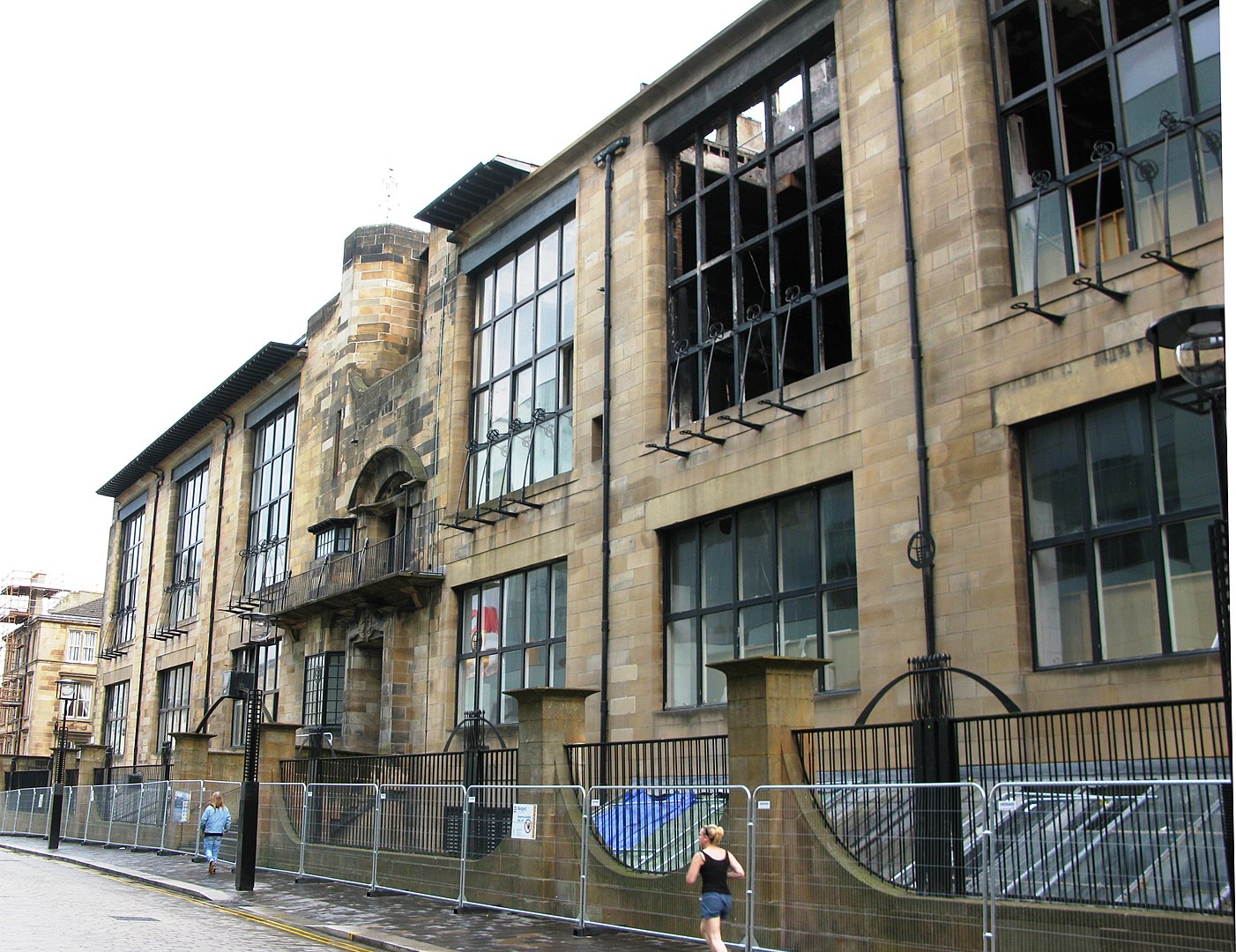
The alarm was raised at 23:19 (11:19 PM) on Friday, June 15, 2018, when a security guard discovered fire within a crawl space or duct on the east side of the building.
The Scottish Fire and Rescue Service (SFRS) responded swiftly, with the first appliances arriving within six minutes of the initial call.
Despite this rapid response, firefighters encountered a fully developed fire. At its height, more than 120 firefighters battled the blaze, which spread with alarming speed through the building.
Within 38 minutes of the first crew’s arrival, 50 percent of the structure was well alight. Active firefighting operations continued for 10 days, though fortunately there were no casualties. The fire caused catastrophic damage:
- Approximately 90% of the interior was destroyed or severely damaged
- The roof structure collapsed entirely
- The upper floors sustained the most severe damage
- Much of the stonework survived, though with significant fire damage
- The neighboring O2 ABC music venue was also destroyed
The Architectural Vulnerability: Why the Fire Spread
The SFRS) investigation revealed that the building’s original 1909 design, while architecturally brilliant, contributed significantly to the fire’s rapid spread—a factor that had also played a critical role in the 2014 fire. Key vulnerabilities included:
Vertical fire spread:
- A vertical service void running the entire height of the building to roof level acted like a chimney, allowing flames, hot gases, and smoke to travel rapidly upward
- Original ventilation ducts, both brick-lined (within walls) and timber-mounted (on wall surfaces), ran vertically throughout the structure
Horizontal fire spread:
- Timber-lined walls and numerous concealed voids provided continuous fuel pathways
- Horizontal ventilation ducts constructed of timber and sheet metal allowed lateral fire propagation
- The timber construction within walls created hidden spaces where fire could travel undetected
Amplifying factors during restoration:
- The ongoing £35 million restoration had created additional openings and construction access points
- The new sprinkler system, designed after the 2014 fire, had not yet been installed and commissioned
- Construction materials and temporary works provided additional fuel load
- An unlimited air supply fed through the duct system intensified the fire, promoting uncontrolled growth and rapid development
This combination of historic construction methods and temporary construction conditions created what fire investigators described as near-ideal conditions for catastrophic fire development.
The 2014 Fire: A Tragic Precursor
The 2018 catastrophe was made even more painful by the fact that it occurred during restoration work following a previous major fire on May 23, 2014.
The 2014 fire began in the basement when a canister of expanding foam, used by students preparing for their degree show, was placed near a hot projector.
Flammable gases from the foam canister were drawn into the projector’s cooling fan and ignited upon contact with energized electrical components. The flames quickly spread to a foam panel behind the projector, then to timber paneling, and eventually reached the renowned Mackintosh Library two floors above.
The 2014 fire was notable for several reasons:
- It destroyed the internationally significant library, which contained original Mackintosh furniture and fittings
- The SFRS estimated that 90 percent of the building and 70 percent of its contents were saved through aggressive firefighting
- A fire suppression system was in the latter stages of installation but was not yet operational—a cruel irony that would be repeated in 2018
- The fire revealed the building’s inherent fire vulnerability, particularly the timber-lined voids and vertical ducts
Following the 2014 fire, the Glasgow School of Art launched an ambitious £35 million restoration project aimed at faithfully reinstating the building to Mackintosh’s original design while incorporating modern fire safety systems, including comprehensive sprinkler protection.
The Investigation: An Unprecedented Effort
The SFRS investigation into the 2018 fire represented the most complex and resource-intensive fire investigation ever undertaken by the service. The investigation:
- Spanned from June 15, 2018 to September 30, 2021—over three years
- Cost approximately £127,248
- Involved excavation and physical examination of hundreds of tonnes of fire-damaged debris, in some areas up to four meters in height and heavily compacted
- Required working within a structurally dangerous site
- Included careful analysis of witness testimonies, CCTV footage, and photographic evidence
Deputy Chief Officer Ross Haggart explained the challenges: “Due to the nature of the ongoing restoration and construction works combined with other factors such as the air supply into the building, the fire was unfortunately able to take hold, spread and ultimately cause catastrophic damage. Unfortunately, almost everything within the building was severely damaged or consumed in the fire and that included any potential items of evidence that could have provided those answers.”
Despite this unprecedented investigative effort, published in January 2022, the SFRS was unable to determine a definitive cause. The investigation concluded that:
- The fire likely started on the east side of the building on or above level 4
- No credible origin and cause hypothesis could be supported by physical evidence or witness testimony
- The official cause was recorded as “undetermined”
Lessons for Heritage Sites Under Restoration
The Glasgow School of Art fires offer critical lessons for fire safety professionals managing historic building restoration projects:
1. Increased vulnerability during construction
Heritage buildings undergoing restoration are at their most vulnerable to catastrophic fire. The combination of:
- Exposed combustible construction
- Temporary breaches in compartmentation
- Construction materials providing additional fuel load
- Disrupted or incomplete fire protection systems
- Increased ignition sources from construction activities
Creates conditions far more dangerous than either the original historic state or the final restored condition.
2. Timing of fire protection system installation
Both the 2014 and 2018 fires occurred when sprinkler systems were installed but not yet operational. This highlights the need to:
- Commission fire suppression systems as early as possible in the restoration timeline
- Consider temporary fire protection measures during the gap period
- Prioritize activation of fire protection over aesthetic completion.
3. Inherent architectural vulnerabilities
Historic buildings often contain fire spread pathways that meet no modern standards:
- Concealed voids and service routes
- Vertical shafts functioning as chimneys
- Timber construction within masonry walls
- Lack of compartmentation
Fire safety strategies must identify and address these vulnerabilities, potentially through:
- Installation of fire-stopping at critical junctions
- Enhanced detection in concealed spaces
- Compartmentation strategies that respect historic fabric
- Continuous fire watch during high-risk construction phases.
4. Learning from near-misses
The 2014 fire was, in retrospect, a warning. While praised for saving 90% of the building, it revealed fundamental vulnerabilities that remained unresolved when the 2018 fire struck. Fire safety professionals must:
- Conduct thorough post-incident analysis after any fire event, even those successfully controlled
- Implement comprehensive risk reduction measures, not just restoration
- Consider whether faithful reconstruction includes replicating dangerous conditions.
The Reconstruction Challenge
As of January 2026, the fate of the Mackintosh Building remains uncertain. Initial plans for a faithful £62 million reconstruction have been complicated by:
- Legal disputes with insurers that emerged in May 2024
- Rising costs far exceeding original estimates (now potentially over £100 million)
- Concerns about whether faithful reconstruction should include replicating the building’s fire vulnerabilities
- Debate within the conservation community about balancing authenticity with safety
Approximately £18 million has been spent on stabilization work, debris removal, and site preparation, funded by interim insurance payments. However, detailed design work has been postponed while the Glasgow School of Art, working with architects Reiach and Hall and Purcell, develops revised plans.
Current projections suggest that if reconstruction proceeds, it will likely:
- Be delivered in phases over at least a decade
- Incorporate comprehensive fire safety systems from the outset
- Face ongoing tension between faithful reinstatement and modern building code compliance
- Require careful consideration of how to address the ventilation system vulnerabilities that proved so catastrophic
Questions for Heritage Building Managers
The Glasgow School of Art tragedy poses difficult questions for anyone responsible for historic buildings undergoing restoration:
- How do you balance faithful reconstruction with modern fire safety requirements?
- When should sprinkler systems and other active protection be commissioned during restoration projects?
- What fire watch protocols are appropriate during construction phases when buildings are most vulnerable?
- How can historic concealed voids and vertical shafts be safely managed without destroying historic fabric?
- Should post-fire reconstruction replicate dangerous original conditions, or is modern life safety paramount?
- What interim protection measures can bridge the gap between system installation and commissioning?
The loss of the Mackintosh Building stands as a stark reminder that heritage buildings under restoration require not just conservation expertise, but sophisticated fire safety engineering that recognizes the unique vulnerabilities of these irreplaceable structures.
References:
- Scottish Fire and Rescue Service (2022). “Fire Investigation Report: The Glasgow School of Art, 15 June 2018”
- SFRS (2014). “Fire Investigation Report: Glasgow School of Art”
- The Mackintosh Building Archive: themackintoshbuilding.co.uk
Scientific Department | June 22, 2018 | Updated January 28, 2026