Cultural and Historic Heritage Losses in the World: 2026 List

The 04 January 2026 fire at the Hollywood Center Motel in Los Angeles. Screenshot via LAFD/YouTube (https://www.youtube.com/watch?v=m5x41G9tz8Y)
This page records a cultural heritage loss documented in 2024. The case is part of a broader, evolving archive that tracks how heritage sites are affected by war, fire, disaster, neglect, and other forms of destruction. Because many losses are underreported or poorly documented, this archive is necessarily incomplete and continuously updated.
The list includes destroyed, severely damaged, and threatened buildings and sites.
This archive grows through contributions. If you are aware of a cultural heritage loss that should be included here, please share it through the contact form, especially if the case is underreported or documented only locally.
January 2026
01 Jan | Amsterdam, Netherlands | Vondelkerk (former church, 1880)
The New Year’s Eve fireworks are the likely cause. The roof and gable collapsed and the steeple partially fell, but the main masonry shell was structurally sound after the fire. Lessons include the dangers of festive overload and pyrotechnics and the need for ember screens.
04 Jan | Hollywood, CA, USA | 121-year-old Spanish Colonial motel
Following a fire in October, the incident is suspected to be arson. The structure sustained total loss and a rapid collapse of the masonry facade due to thermal shock. This highlights the dangers of abandoned buildings and urban decay.
February 2026
14 Feb | Canterbury, UK | Former Odeon Cinema (Art Deco theater, 1933)
Two 14-year-olds were arrested in connection with an arson-suspected incident in a derelict roof void. The incident caused significant roof and interior damage and prompted a 24-hour operation involving 15 fire engines and 60 firefighters. A nearby evacuation was also required. The incident highlights the importance of vacant building patrols and boarding procedures.
17 Feb | Naples, Italy | Teatro Sannazaro (19thC theater)
A fire caused a cupola to collapse onto the stalls and orchestra pit resulting in severe internal charring. This incident highlights the risks of old theatre fire protection, stage combustibles and the importance of maintaining a proximity exposure of less than three metres.
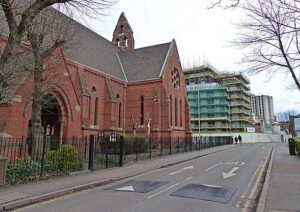
22 Feb | London (UK) |King’s Hall Methodist Church Fire
The 1916 Grade II-listed King’s Hall Methodist Church in Southall, West London—a rare interwar survivor designed by Sir Alfred Gelder with its iconic red-brick facade and domed interior—was gutted by a fierce blaze on February 22. Vacant since 2013, the derelict structure collapsed structurally after flames engulfed all floors and roof, despite a robust response from 70 London Fire Brigade firefighters using turntable ladders. No casualties, arson suspected. This loss highlights the perils of heritage abandonment, joining February’s toll alongside Montreal’s Saint-Paul Church.
23 Feb | Montreal, Canada | Former Saint-Paul Church (1910 worship site)
The Montreal Fire Department and police are examining the remains to determine whether the fire was accidental or intentional. The total roof and steeple loss was subsequently spread to the rectory and the seniors’ home (148 evacuations). This demonstrates that adaptive reuse barriers can be overcome. Furthermore, the building lacked sufficient volume sprinklers.
23 Feb | Omagh, Northern Ireland | Crevenagh House (19th Century)
Crevenagh House was destroyed by fire, with the incident treated as suspected arson. The case is significant because it involved the total loss of a historic house rather than a monument or church, yet the heritage value was still substantial. It underlines the vulnerability of empty or underused historic properties to rapid and irreversible destruction.
If you want this to match your page even more closely, I can also rewrite it in a slightly more editorial or more technical register, depending on the tone of the surrounding entries.
March 2026
8 March | Forsyth House (B-listed, 1851), Union Street/Gordon Street | Glasgow (UK)
A fierce fire ignited ~3:45 PM in an unregistered ground-floor vape shop (suspected lithium-ion batteries), rapidly consuming the four-story Victorian commercial building beside Glasgow Central Station, causing partial collapse (dome/chimney lost), facade retention, and demolition start March 18. No injuries among 250 firefighters deployed; disrupted Scotland’s busiest rail hub. Multi-agency probe ongoing amid Glasgow’s fire-prone heritage stock.
17 March | Serbia Pavilion, Giardini | Venice Biennale (Italy)
Roof fire erupted ~10 AM during insulation/waterproofing works (possible short circuit/flammable materials; winds exacerbated), producing heavy smoke over UNESCO Giardini pavilions; contained without structural loss to 1912 modernist building or art collections, but delayed 2026 Biennale prep (May opening). Highlights hot-work/fire-watch needs in exhibition heritage sites
April 2026
3 April | Leek, Staffordshire, UK | Big Mill (Grade II-listed, 1857)
BBC reported deep concern over the future of the fire-hit Big Mill in Leek after the building was left structurally compromised and subsequently demolished. The case is relevant for a 2026 damage list because it records not only fire damage but also the loss of historic fabric through demolition after the event. If you want to keep the list focused on direct fire incidents rather than post-fire demolition outcomes, this one can be exclude
8 April | Rio de Janeiro, Brazil | Olympic Velodrome
A fire broke out at the Olympic Velodrome in Rio de Janeiro’s Olympic Park. The incident damaged part of the venue and added another example of the vulnerability of large modern heritage-adjacent sporting structures to fire loss.
10 April | Swindon, UK | Mechanics’ Institute (Grade II, 1853)
A fire broke out at the vacant Mechanics’ Institute in Emlyn Square, Swindon, with crews called shortly after 06:17 BST. Police said the incident was being treated as suspected arson after a number of youths were reported nearby. The historic building has been empty since 1986 and is on Theatres Trust’s at-risk register, underscoring the vulnerability of long-vacant listed buildings to intrusion and deliberate ignition.
April 2026 Iran-Israel conflict update
• Chehel Sotoun Palace (Isfahan, World Heritage site) – Severe damage to ceiling murals, ayaneh-kari (mirror work), wooden latticework, and painted decorations.
• Ali Qapu Palace (Isfahan, World Heritage site) – Damage to the historic palace on Naqsh-e Jahan Square.
• St. Nicholas Orthodox Church (Tehran) – Structural damage from a strike on the former US Embassy complex where the church was located.
• Rafi’-Nia Synagogue (Tehran) – Fully destroyed by an Israeli Air Force strike on 7 April 2026.
• Habima Theater (Tel Aviv, national theater) – Direct hit during hostilities; windows shattered, interior severely damaged.
• Bauhaus buildings in Tel Aviv – Two Bauhaus buildings damaged when a nearby apartment block was destroyed.
30 April | Mozambique | St. Louis de Montfort Church in Meza, loss
On 30 April 2026, a Catholic church in Mozambique was attacked in a jihadist assault, adding another serious case to the growing list of heritage-related losses linked to violent extremism. Unlike a generic accidental loss, this incident must be understood as an intentional act of destruction and intimidation, with the church targeted as both a place of worship and a symbol of community identity.
The significance of the case lies not only in the physical damage, but also in the broader pattern it reveals: religious heritage in conflict-affected areas is often exposed to deliberate attack precisely because of its symbolic value. In such contexts, the loss of a church is never only a conservation issue. It is also a direct assault on cultural continuity, social cohesion, and the right of communities to preserve their sacred places.
This episode should therefore be read alongside other heritage losses recorded in 2026 as part of a wider picture in which places of worship remain vulnerable to violence, fire, and instability.
30 April | WUI fire damages to Montmenach rural church | France
The church of Montmenach illustrates a wider and often underestimated risk: the exposure of rural historic buildings located at the wildland-urban interface. In these settings, heritage structures are not only threatened by ordinary deterioration, but also by wildfire, ember attack, vegetation encroachment, and limited emergency access.
This makes the case particularly relevant for fire risk heritage analysis. Rural churches often combine high historical value with combustible materials, isolated locations, and limited active protection, creating conditions in which a small ignition source or a nearby landscape fire can rapidly escalate into a major loss. The Montmenach case is therefore best understood not simply as a local damage event, but as an example of the vulnerability of heritage assets embedded in rural fire-prone landscapes.
May 2026
1 May 2026 | Australia | Cathedral damaged
In May 2026, a fire damaged St Mary the Virgin Church, a heritage-listed Anglican parish church in South Perth, Australia. The 1931 Gothic Moderne building, constructed almost entirely of reinforced concrete and listed on both the Western Australia (WA) Register of Heritage Places and South Perth Municipal Heritage Inventory, experienced a ground-floor fire confined to one room on Monday morning, May 31. Emergency services responded to a third-alarm property fire call at 10:49 AM and contained the blaze within approximately 20 minutes; the main chapel was spared, no injuries occurred, and the building remained intact. However, the fire’s cause has not been publicly disclosed by WA authorities, representing a significant gap in fire risk documentation for heritage buildings. This incident underscores how even minor fires pose risks to cultural heritage sites, while also demonstrating the fire-resilience advantage of reinforced concrete construction compared to timber-frame or masonry churches with wooden roof structures that more frequently suffer total losses. Despite immediate emergency reports, no investigative follow-up has been published, leaving this as a “partial case” in global fire loss documentation for historic buildings.
6 May | Niigata, Japan | Atago Shrine (300–420-year-old Shinto shrine)
A massive fire broke out late on the night of 6 May 2026 (around 23:30) in the crowded Furumachi district of Niigata City, completely engulfing the historic Atago Shrine. Firefighters battled the blaze for nearly 3.5 hours before bringing it under control, but the shrine’s main hall and worship hall were reduced to ashes. At least three nearby buildings were also damaged, and an elderly woman in her 90s was injured while evacuating. The shrine, dedicated to Homusubi-no-Mikoto—the deity believed to protect against fire—was a sacred site that had stood for more than 300 years, highlighting the profound irony of a fire-deity shrine being destroyed by fire. This incident is part of a broader pattern in 2026 of Shinto shrines and Buddhist temples in Japan suffering severe fire losses. Although the Atago Shrine was completely destroyed and the fire received local Japanese TV coverage, it was largely invisible in English-language international news. Most information about this loss comes from Japanese-language local broadcasts and social media posts from Japan-specialist accounts.
15 May | Texas, USA | Historic railway bridge (wildfire)
A large wildfire in Texas burned across approximately 6,000 hectares, destroying a historic wooden railway bridge and causing significant damage to homes and vehicles. The fire engulfed the wooden bridge structure, leaving the railway tracks without support. No casualties have been reported so far. This case adds to the growing number of incidents where wildfires threaten or destroy historic infrastructure and cultural landscapes.
20 May | Japan | Miyajima | Reikado Hall, Daishō-in Temple
Reikado Hall at Daishō-in Temple on Miyajima Island was destroyed by fire on 20 May 2026. The hall, associated with Kūkai and known for housing the sacred “Eternal Flame,” was reduced to ruins in a fire that also affected nearby vegetation and a small auxiliary structure. The cause of the fire was not immediately clear and was reported as under investigation.
This case is especially significant because it concerns a highly symbolic wooden religious building, where ritual meaning and fire risk are closely intertwined.
April – May 2026 | United Kingdom | London | Synagogues affected in April and May 2026
Several synagogues in London were affected in April and May 2026, adding to concerns about the vulnerability of religious heritage in urban contexts. Depending on the specific cases included, the damage may have resulted from vandalism, arson, or other forms of intentional or accidental harm, but in every case the impact goes beyond the physical building and touches community identity and continuity. This is important because synagogue losses are not only architectural events. They also affect places of worship, remembrance, and communal life, making them especially sensitive heritage assets in periods of social tension. Framing the incidents within April and May 2026 helps place them within a clear time period and avoids treating them as a generic or undated pattern.
May 2026 | Ukraine | Museums damaged
In May 2026, Ukrainian museums and other cultural sites were again damaged during Russian attacks on Kyiv and Sumy. The National Art Museum of Ukraine in Kyiv reported damage caused by the blast wave from the overnight strike, while its collection and staff were unharmed; the museum was closed indefinitely for safety checks and restoration work. In Kyiv, the National Museum of Chernobyl was also reported damaged during the same raid, underscoring how cultural heritage remains exposed in attacks on urban areas. In Sumy, local reports also mentioned damage to the museum of local history amid strikes that hit residential buildings and triggered fires. These incidents highlight the continuing vulnerability of museums, archives, and historic buildings in wartime, even when the intended targets are military
January – May 2026 | Japan | Temples and shrines damaged
In the first five months of 2026, nine historic shrines and temples were lost to fire across Japan, representing a devastating cultural heritage crisis. The most recent and iconic loss occurred on May 20, 2026, when Reikado Hall of Daisho-in Temple on Miyajima island in Hiroshima Prefecture was completely destroyed, the hall housed an “eternal flame” that had burned continuously for over 1,200 years (since 806 AD), though the sacred flame itself was salvaged and relocated. Earlier in May, the 573-year-old Daihoji Temple in Takaoka (a national treasure with 16th-century Buddhist scrolls) was completely destroyed on May 16. February saw three temples burn down in Ehime and Yamaguchi Prefectures, including a deadly fire in Shimonoseki, Yamaguchi that killed five residents. April added two more temple losses in Toyama and Mie Prefectures, while a 300-year-old Shinto shrine dedicated to fire prevention in Atago, Niigata burned down in April. Authorities are investigating causes ranging from suspected kitchen fires to possible origins from the eternal flame itself, with many causes still unknown.
June 2026
5 June | Thangu, North Sikkim, India | Thangu Sertok Gumpa (1965 monastery)
A fire destroyed the decades-old monastery in the early hours after a blaze began on the night of June 5, 2026. The fire reportedly caused total loss of the monastery’s religious and cultural contents, including sacred objects and scriptures, while nearby houses were also affected; the cause was reported as an electrical short circuit.
12 June | Trégastel, Brittany, France | Chapelle Sainte-Anne-des-Rochers (17th-century chapel)
A fire severely damaged the roof and framework of the 1635 chapel, destroying roughly 75 percent of the roof structure. Artworks and classified statues were saved, but the incident again shows the vulnerability of historic churches with combustible roofs and limited resilience during prolonged fire exposure.
12 June | Condom, Gers, France | Médiathèque in the historic cathedral cloister
Hours after the Trégastel fire, another blaze damaged the media library in the former monastic cloister attached to Condom Cathedral. The fire destroyed the mediathèque and damaged thousands of archived volumes, including rare historic holdings, with heavy losses from flames, water, and smoke.
15 June | Kyiv, Ukraine | Kyiv-Pechersk Lavra / Dormition Cathedral
A large Russian strike triggered a fire at the UNESCO World Heritage complex, with the Dormition Cathedral roof catching fire and major damage reported to the roof structure and other heritage components. Damage was also reported to nearby cultural institutions in the same attack, including Mystetskyi Arsenal.
28 June | Downpatrick, Northern Ireland — Historic former Convent
A major fire destroyed the historic former Convent of Mercy, a 150-year-old listed building beside St Patrick’s Church. The Northern Ireland Fire and Rescue Service said the blaze was believed to have been started deliberately; around 70 firefighters battled the fire and prevented it from spreading to the adjacent church.thedownrecorder
July 2026
2 July | Beulah, Colorado, USA Horseshoe Lodge and historic fire tower, Pueblo Mountain Park
The Aspen Acres wildfire destroyed the 1930s Horseshoe Lodge, a Works Progress Administration building listed on the U.S. National Register of Historic Places. The same fire also destroyed the historic fire tower at Pueblo Mountain Park, together with caretaker homes and other facilities. The wildfire began in late June, but the destruction of the heritage structures was confirmed on 2 July.
2 July | Richmond, Virginia, USA, Former Good Shepherd Baptist Church, Church Hill
A three-alarm fire severely damaged the former Grandview United Presbyterian Church, a landmark whose history on the site extended back to the nineteenth century and whose present building dated from 1891. The roof partly collapsed, the brick façade was damaged and the stained-glass windows were destroyed or badly damaged; demolition was subsequently planned. The cause remained under investigation.
7 July | Edinburgh, Scotland, UK Former Debenhams building, 109–111 Princes Street
A major fire severely damaged the historic B-listed building on Edinburgh’s Princes Street. The roof and upper floors were reported to have been destroyed or gutted, and the incident caused prolonged closures on one of the city’s principal historic streets. No casualties were reported, and the cause remained under investigation.
28 July | 28 July — Leicester, England, UK St Andrew’s Church, Jarrom Street
A late-night fire caused severe damage to the roof of this approximately 160-year-old Victorian church designed by Sir George Gilbert Scott. The Chapel of St John and other internal areas were affected, while the spire and rose window appeared to survive comparatively intact. More than 40 firefighters attended; there were no casualties, and the fire service later assessed the most probable cause as accidental.
A fire broke out in a traditional Japanese farmhouse in Nanto, within the UNESCO World Heritage property Historic Villages of Shirakawa-go and Gokayama. The building served as a museum relating to the production of a gunpowder ingredient. Firefighters controlled the blaze in approximately 50 minutes, and no injuries were reported; the available reporting does not yet establish the full extent of the building’s damage.