Fire Protection for Heritage Buildings in Hot-Humid Contexts: The Guangzhou Paradigm
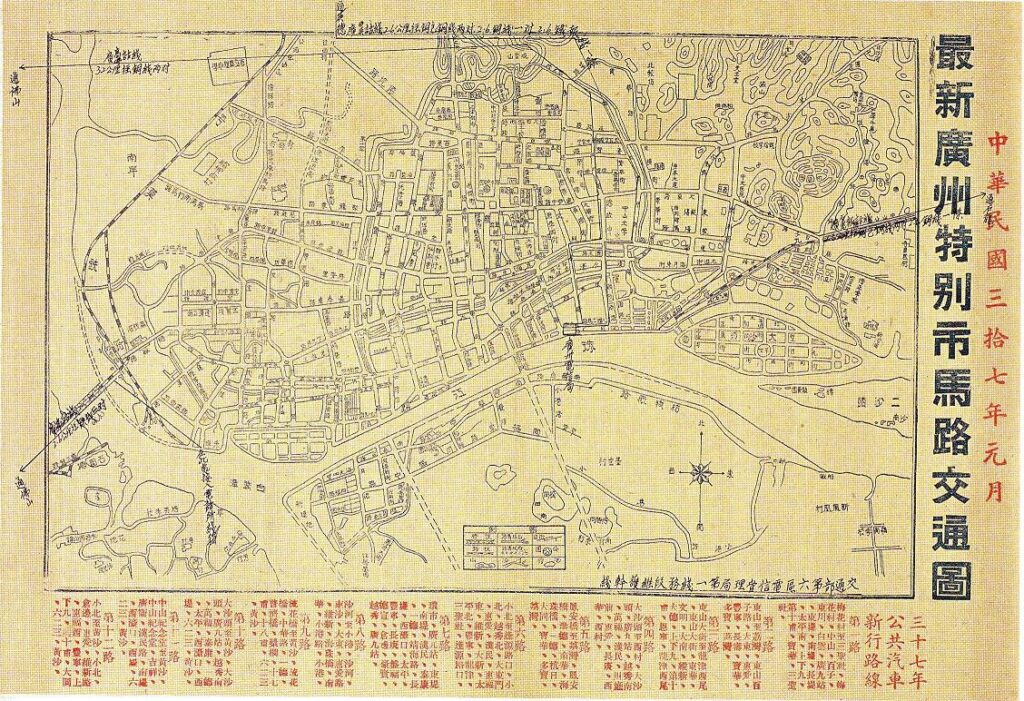
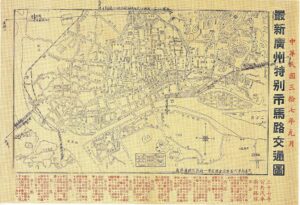
Map of Guangzhou 1948 Public domain, via Wikimedia Commons" href="https://commons.wikimedia.org/wiki/File:Map_of_Guangzhou_1948.jpg"><img width="512" alt="Map of Guangzhou 1948" src="https://upload.wikimedia.org/wikipedia/commons/thumb/4/44/Map_of_Guangzhou_1948.jpg/512px-Map_of_Guangzhou_1948.jpg?20110106105003"></a>
TL;DR: Fire Protection Strategies for Guangzhou’s Historic Core
- Guangzhou’s dense historic districts—over 3,000 assets like qilou arcades and Xiguan mansions—face acute fire risks from hybrid brick-timber structures (R<20 min), 200% higher electrical loads, >150 kg/m² combustibles, and hot-humid stressors (77% RH, typhoons).
- Key Findings Dr. Liu Wen and Prof. Zhang Rui’s CFD analysis validates vernacular defenses: qingyun lanes (85% compartmentation), wok-ear gables (2.5 m smoke layer), and courtyard vents (2–3x extraction). ASET >3 min at 37 kW/m²; 65% fire drop since 2022 via DB4401/T 109-2021 protocols.
- Retrofit Solutions Nano-silica coatings (B2→B1 at 0.3 mm), HRRPUF foams (1:1000 ratio, <100°C in 60 s), and 8–12 MPa water mist (D₅₀=100 µm; O₂<15%) enable heritage-compatible upgrades.
- Next Steps CFD for other climates, material aging models, mist optimization, and policy transfers.
Read the full post ->
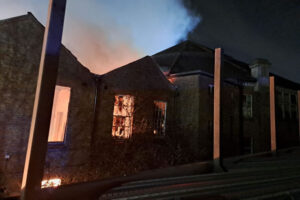
Guangzhou’s historic fabric—over 3,000 immovable heritage assets including arcaded qilou streets, ornate ancestral halls, and stately Xiguan mansions—represents one of the densest and most climatically challenged heritage clusters in China.
Critical fire safety pressures in Guangzhou
These sites face a convergence of critical fire safety pressures. Structural vulnerabilities in hybrid brick–timber systems reduce fire resistance from the nominal R90 minutes to under 20 minutes per the People’s Republic of China’s national standard GB50016‑2014. T
he intensification of adaptive-reuse loads increases electrical demands by 200%. Combustible contents exceed 150 kg/m² and severe environmental stresses from persistent humidity (77% RH), frequent thunderstorms (80–100 days per year) and periodic typhoon winds exceeding 4 m/s exacerbate fire spread and hinder suppression.
Together, these conditions define the acute need for region-specific fire protection strategies that are technically robust yet heritage-compatible.
Performance based design for high-density hot-humid heritage environments
The paper ”Fire Protection Strategies and Technologies for Heritage Buildings: Experiences from Guangzhou”—authored by Dr. Liu Wen and Prof. Zhang Rui (South China University of Technology, School of Architecture)—presents a comprehensive performance-based design framework tailored for high-density hot-humid heritage environments.
The suggested “inherent–acquired–environmental” model integrates empirical field surveys, conservation mapping, and computational fire dynamics analysis to assess both traditional Cantonese architectural defenses and modern retrofit interventions.
The study provides policy-to-practice insights drawing from the Guangdong provincial standard DB4401/T 109‑2021 (Technical specification for fire protection of existing historical building), which systematizes graded protection, mandatory maintenance regimes, and public‑private cooperation among heritage agencies, building owners, and insurers.
Central to the research is a series of Computational Fluid Dynamics (CFD) simulations performed in PyroSim and Fire Dynamics Simulator (FDS).
These assessed fire growth, smoke movement, and human tenability within typical three‑bay courtyard dwellings and qilou segments.
The simulations confirmed several vernacular protective functions. Qingyun fire lanes (1.2–1.5 m wide) achieve up to 85% lateral compartmentation.
Wok-ear gables (1.8 m) deflect flames upwards delaying flashover and sustaining a safe smoke layer height above 2.5 m—approximately four times higher than comparable flat-roof configurations.
Courtyard venting (0.5–1 m² per metre of height) enhances buoyancy-driven smoke extraction by a factor of two to three.
Verification runs under a 37 kW/m² design heat flux found Available Safe Egress Times (ASET) above 3 minutes, with stratified smoke layers stabilizing between 80–120 °C and plume velocities near 1.5 m/s.
The results provide a basis for advanced retrofit strategies incorporating nano‑silica intumescent coatings capable of enhancing substrate fire performance from class B2 to B1 with a thickness of only 0.3 mm, high‑expansion rigid polyurethane foam (HRRPUF foams) for atrium protection (expansion ratio approximately 1:1000, achieving surface cooling below 100 °C within 60 s), and high‑pressure water‑mist systems operating at 8–12 MPa with a droplet median diameter (D₅₀) of around 100 µm.
These systems collectively minimize water‑induced damage while maintaining oxygen concentrations below 15% in concealed fire environments
The study’s outcomes—particularly the reported 65% reduction in fire incidence among priority-monitored heritage buildings since 2022—highlight the potential of integrating indigenous passive protections with calibrated modern engineering.
Yet, expanding these findings to other contexts will require further research.
Key frontiers
Among the many outcomes that this research can lead to, the most immediate ones are:
- Comparative CFD validation under differing climatic stresses (e.g., Mediterranean vs. subtropical humidity profiles).
- Material aging models for heritage timber and lime plasters to refine time-dependent fire resistance predictions.
- Optimization of water mist parameters for spaces with delicate finishes or limited drainage.
- Socio-technical adaptation studies to evaluate how maintenance regimes and policy triads (regulations, guidelines, and strategic specifications) perform when transplanted to contexts such as Venice, Bangkok, or coastal Kerala.
By bridging computational modeling with conservation praxis, the “Guangzhou paradigm” offers a promising template for safeguarding heritage ensembles under climate-intensified fire risks—an approach ripe for regional adaptation and global dialogue.