Emergency Evacuation of Heritage Collections: an ICCROM-UNESCO Handbook
The protection of cultural heritage aims first of all to prevent dangerous events from turning into unacceptable risks for collections and sites. When preventive measures are no longer sufficient, however, museums and archives may have to take the difficult decision to evacuate objects in order to save them from destruction, looting, or severe damage.
In recent years, natural disasters, climate change, social unrest, and armed conflicts have exposed museums, libraries, archives, and religious collections to increasingly complex emergencies. In such situations, the safety of people always remains the top priority, but safeguarding irreplaceable cultural property can also play a crucial role in community resilience and post-crisis recovery.
A practical handbook for extreme conditions
UNESCO and ICCROM have published the handbook Endangered Heritage: Emergency Evacuation of Heritage Collections in English and Arabic to support the protection of collections in conflict and disaster situations.
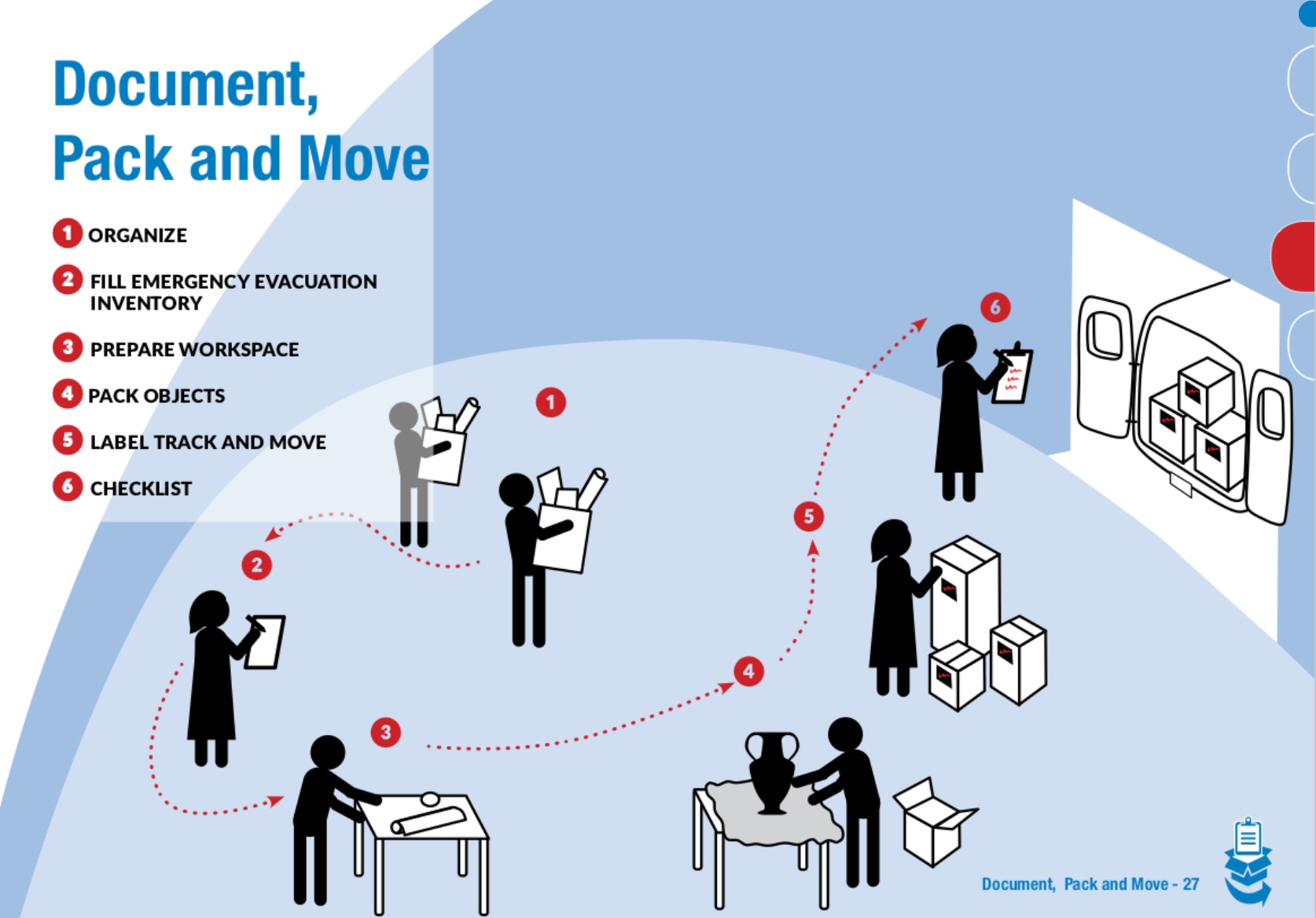
The publication offers a clear, step-by-step workflow to plan and conduct the emergency evacuation of movable heritage, from initial risk assessment through to temporary storage and documentation of evacuated objects.
The manual is grounded in field experience; its workflow was tested by the Egyptian Heritage Rescue Foundation (EHRF), a non-governmental organization based in Cairo that has been active in training and real-life interventions.
One widely cited example is the community-led evacuation of manuscript collections from Timbuktu during the 2013 conflict in northern Mali, which illustrates how local actors, when properly supported, can organize complex rescue operations under extreme pressure.
Scope and limitations
The handbook focuses on how to organize and implement evacuation: team roles, decision-making, handling, packing, transport, temporary storage, and security of collections in crisis conditions. It explicitly does not prescribe object-by-object priorities, as these must be defined in advance by each institution, based on significance, vulnerability, and ethical and legal considerations.
Despite this limitation, the manual has the merit of bringing systematic attention to emergency evacuation procedures, a component still missing or weak in many institutional emergency plans. It can also serve as a training tool for museum staff, civil protection services, and volunteers who may be involved in cultural first aid operations.
How it can be used
Institutions responsible for heritage collections can use the handbook to:
- Integrate evacuation workflows into existing emergency and disaster plans.
- Design realistic training exercises and simulations with staff, emergency services, and community partners.
- Review current storage, access routes, and documentation systems to ensure that an evacuation, if needed, can be carried out safely and efficiently.
Used together with broader guidance on cultural heritage first aid and disaster preparedness, this resource contributes to building a culture of readiness for the protection of collections at risk.
The PDF of Endangered Heritage: Emergency Evacuation of Heritage Collections is available from the ICCROM website and can also be downloaded directly from the ICCROM website or this page of Fireriskheritage.
updated February 2026