Church in Montenach Wildfire Damages
A small fire in friches near Montenach, Moselle, rapidly escalated into a major disaster when flames reached the historic Saint‑Cyriaque church, destroying the roof and bell‑tower in under an hour. The case illustrates how easily a vegetation fire can transition into a catastrophic loss when cultural heritage assets sit exposed inside the wildland–urban interface (WUI). This post outlines the key WUI‑specific risk mechanisms and proposes a set of immediate, low‑cost safety measures that CH managers and local communities can implement to reduce ignitability and limit potential damage from surrounding wildfires.
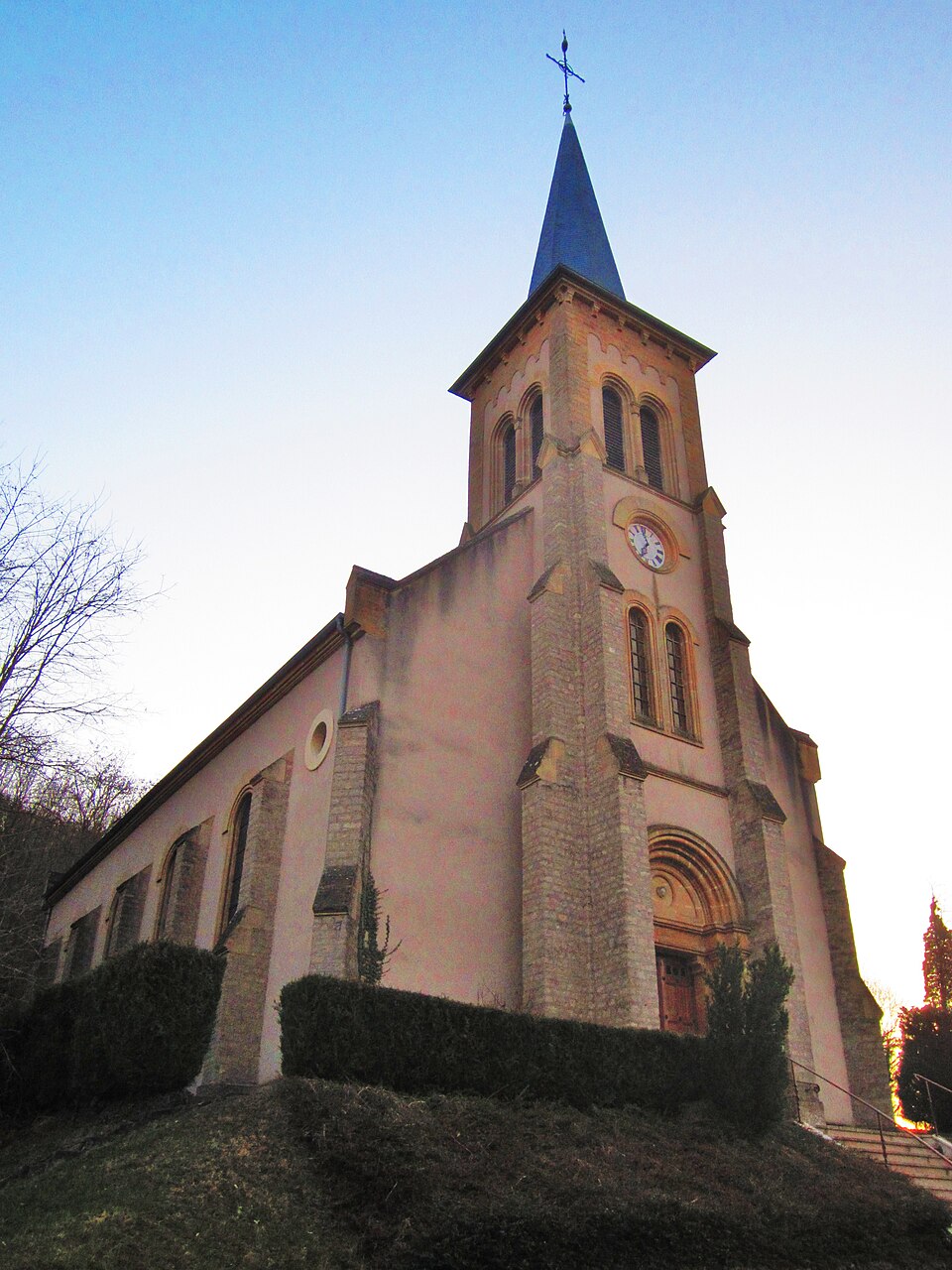
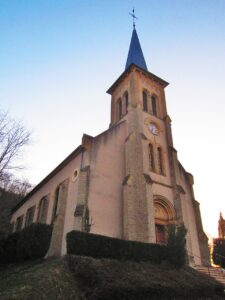
The historic Roman Catholic church located in the French village of Montenach of Saint-Cyriaque before the 2026 fire. Image: Aimelaime, CC BY-SA 3.0 <https://creativecommons.org/licenses/by-sa/3.0>, via Wikimedia Commons
The fire that destroyed the Saint‑Cyriaque church in Montenach (Moselle, near the French–Luxembourg border) on April 30, 2026 is a reminder of how quickly a wildfire or vegetation fire can leap from open land into a cultural‑heritage structure.
Under Fire Risk Heritage (FRH) reading, this incident falls squarely into the “wildland–urban interface” (WUI) risk profile: a small fire of friches or marginal vegetation rapidly escalates into a building‑scale disaster when the right fuel and wind conditions are present.
What happened at Montenach
The Saint‑Cyriaque church in Montenach was struck by a fire that originated from a nearby patch of friches (overgrown wasteland or rough vegetation), which escaped control and spread to the building around mid‑afternoon on 30 April 2026. Within minutes flames consumed the timber roof and bell‑tower structure, causing partial collapse and leaving the interior severely damaged. Despite the rapid deployment of around 60 firefighters and 40 vehicles, the intensity and speed of propagation overwhelmed the intervention, underlining how limited are the options once the building itself is involved.
Why this is a WUI–CH risk case
In WUI terms, this is a classic “interface fire”: a vegetation fire intrudes into an inhabited or heritage area, exploiting continuous fuel (grasses, shrubs, dead wood) and dry conditions. The church sits at the edge of a village, close to fields and friches, creating a continuous “fuel corridor” that can carry radiant heat and airborne embers directly onto combustible roofs, eaves and upper‑storey elements. Once the timber roof and bell‑tower structure are ignited, the heat release rate skyrockets and the building effectively becomes a secondary fuel source, making exterior‑only firefighting extremely difficult.
Key risk factors visible in this case:
- Dry, continuous vegetation around the building (no meaningful defensible space).
- Combustible roof and bell‑tower structure (timber, traditional carpentry).
- Limited time for early warning and evacuation of the building once the front hits.
Immediate safety measures for CH exposed to WUI fire
For CH sites in or near WUI zones (historic villages, rural churches, isolated monuments, etc.), a set of immediate, low‑cost but high‑impact actions can significantly reduce the probability of ignition and slow propagation. These are not “design‑level” mitigation measures, but operational and maintenance steps that can be implemented quickly, even by small communities or heritage managers.
1. Create and maintain defensible space
- Remove fine vegetation, dry grass, leaves and low‑lying shrubs within at least 10–15 m around the building (ideally 20–30 m in high‑risk seasons).
- Keep roof edges, eaves and gutters clear of debris and overhanging branches; trim any nearby trees whose crowns touch or project over the building.
- Avoid locating storage of wood, fuel, pallets, or other combustibles adjacent to the façade; relocate them beyond the immediate perimeter when possible.
2. Reduce building ignitability from embers
- Install ember‑blocking mesh (fine metal mesh) over roof ridge vents, eave openings and louvers to prevent glowing particles from entering attic or roof cavities.
- Use non‑combustible or fire‑resistant materials for fascias, soffits and trim; where this is not feasible, at least treat exposed timber with approved fire‑retardant coatings.
- Ensure that roof coverings are in good condition (no gaps, loose tiles, or missing battens) to reduce the risk of ember penetration underneath.
3. Prepare an emergency “hardening” checklist
Before the high‑risk season and periodically during dry periods, managers of CH in WUI areas should:
- Inspect and clean gutters, roofs and any external combustible elements weekly or biweekly.
- Test and maintain external water points (hose lines, fire hydrants, sprinklers, if available) and ensure that paths and access roads are free of obstructions.
- Prepare a short‑term “emergency hardening” list (e.g., temporary removal of banners, hay bales, wooden staging, or combustible decorations) that can be activated as soon as high fire‑risk warnings are issued.
4. Develop basic WUI‑specific emergency procedures
- Integrate WUI fire into the site’s emergency plan: define early warning thresholds (meteorological alerts, local fire incidents), roles for local volunteers, and priority actions when a nearby vegetation fire is detected.
- Establish clear triggers for restricting access to the building, suspending events, or initiating early evacuation of people and movable assets when winds are strong and fire risk is high.
- Coordinate with local fire services and civil protection to identify “no‑regret” pre‑positioning actions (e.g., stockpiling water, temporary spray systems, or sandbags) in advance of the dry season.
FRH‑style takeaway for practitioners
Links to posts on WUI / wildfire risk
• Wildfire threats to cultural heritage: insights from the STORM Summer School and related projects – discusses how forest and vegetation fires are often overlooked in CH‑focused fire‑risk literature and introduces the concept of WUI‑related exposure.
• UNESCO and partner documents on fire‑risk‑management for cultural and natural heritage.
• Research initiatives such FIRECULT that explicitly address wildfire threats to cultural heritage in WUI zones.