When Historic Spaces Become Event Venues: The Fire Risk Hidden Behind Special Occasions
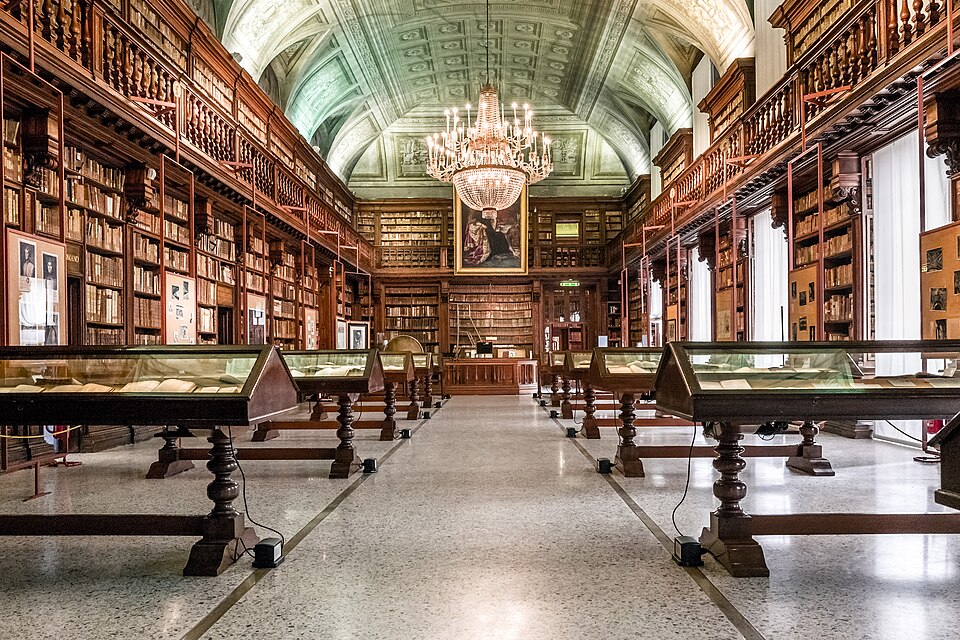
The Maria Teresa Hall of the Braidense Library. Image: Tiziana Porro, CC BY-SA 4.0 <https://creativecommons.org/licenses/by-sa/4.0>, via Wikimedia Commons
From the Braidense controversy to Turin’s lesson, why dinners, catering, and temporary setups can turn a heritage interior into a much more dangerous place
The recent criticism over the use of Milan’s Braidense Library for a fitness session is a useful reminder that heritage spaces are often asked to host activities far removed from their original purpose. The issue is not only cultural or symbolic: every change of use can alter the fire risk profile of a historic interior in ways that are easy to underestimate.
This becomes even more evident when the activity is a dinner, reception, or promotional event, where catering equipment, ovens, hot plates, candles, cables, decorations, and crowd management all introduce new ignition sources and fuel loads.
The Braidense affair is part of a broader trend already visible at the Louvre and the Metropolitan Museum of Art, where historic interiors have been used for curated workout sessions before opening hours.
At the Louvre, the “Run in the Louvre” program offered yoga, dance, cardio, and dancehall sessions in spaces such as the Marly Courtyard and the Caryatids Room; at the Met, the “Museum Workout” turned gallery circulation into a choreographed 45-minute exercise experience.
What was presented as creative engagement also revealed a more troubling tendency: heritage spaces increasingly treated as atmospheric stages for contemporary leisure rather than as places whose primary function is conservation, study, and respectful access
Why managers may accept these uses
Heritage managers rarely say yes to such events for a single reason. Revenue, visibility, partnerships, fundraising, and the desire to keep historic spaces “alive” are often part of the decision. In some cases, institutions also see controlled events as a way to attract new audiences or strengthen ties with sponsors and local stakeholders.
That logic is understandable, but it can also create a dangerous blind spot: the fact that a space is beautiful and prestigious does not mean it is operationally suited to every type of activity.
Why fire risk changes so much
A historic building designed for reading, display, or ceremonial use is not automatically suitable for dining, cooking, or intensive event setups.
The fire-risk problem is not only the presence of people, but the temporary introduction of equipment and behaviors that the building was never meant to host. The main issues include:
- Ignition sources. Ovens, portable hot plates, warming trays, candles, decorative flame effects, and improvised electrical arrangements can all start fires.
- Higher fuel load. Table linens, packaging, catering materials, floral decorations, temporary backdrops, and waste increase the amount of combustible material.
- Electrical overload. Historic premises often have sensitive or outdated electrical systems that may not tolerate added kitchen or event loads.
- Blocked exits and access. Temporary furniture and service areas can obstruct escape routes or delay intervention.
- Delayed detection and response. Noise, crowding, and event lighting can make it harder to notice early signs of fire or smoke.
- Heritage amplification. A small fire in a historic interior can spread quickly and cause disproportionate damage because of timber, voids, decorative finishes, and irreplaceable contents.
The Turin warning
The fire of the Cappella della Sindone in Turin is a powerful historical warning. The blaze occurred in the context of a high-level dinner in the Royal Palace, and one of the commonly cited theories is that food-heating equipment, possibly chafing dishes, overloaded the circuits and caused a short circuit.
Other accounts also describe the origin as an electrical short circuit, while stressing that the fire became catastrophic because the chapel was still surrounded by wooden scaffolding, which helped the flames develop and spread.
The exact origin is therefore not always presented in a single unanimous way, but the lesson is clear: when an event introduces heat, electricity, and temporary installations into a heritage setting, the risk can escalate very quickly.
The key management question
The real question for heritage managers is not “Can this space host an event?” but rather “Can this specific activity be carried out here without unacceptable risk to people, collections, and fabric?”
That means every temporary use should be tested against a few basic questions:
- Does the activity introduce cooking, heating, flame, or high electrical demand?
- Does it increase occupancy or complicate evacuation?
- Does it require temporary cables, temporary partitions, or altered layouts?
- Does it add combustible materials or contamination risks?
- Can fire detection, suppression, and staff supervision still work effectively?
If the answer to any of these is uncertain, the event should be reconsidered or redesigned.
A broader heritage lesson
The Braidense debate is therefore useful beyond the specific controversy. It shows how historic premises can become vulnerable not only through neglect, but also through well-intentioned overuse.
A heritage site is not protected simply because the event is elegant or prestigious. It is protected when the use remains compatible with conservation, fire safety, and emergency management.
For FRH readers, this is the central message: the more a historic space is turned into a multi-purpose venue, the more carefully its fire risk must be re-evaluated every single time.