Did Rome’s Colosseum Suffer a Post‑Earthquake Fire in 271 A.D.? Structural and Fire‑Risk Implications
Did Rome’s Colosseum suffer a post‑earthquake fire in 271 A.D.? Structural analyses by Professor Enzo Cartapati and Maurizio Cerone suggest that fire damage may have followed seismic events, affecting the travertine columns and raising questions about the interaction between earthquakes and fire in large masonry monuments. This case study offers early insights into multi‑hazard vulnerability for fire‑risk engineering in cultural heritage.
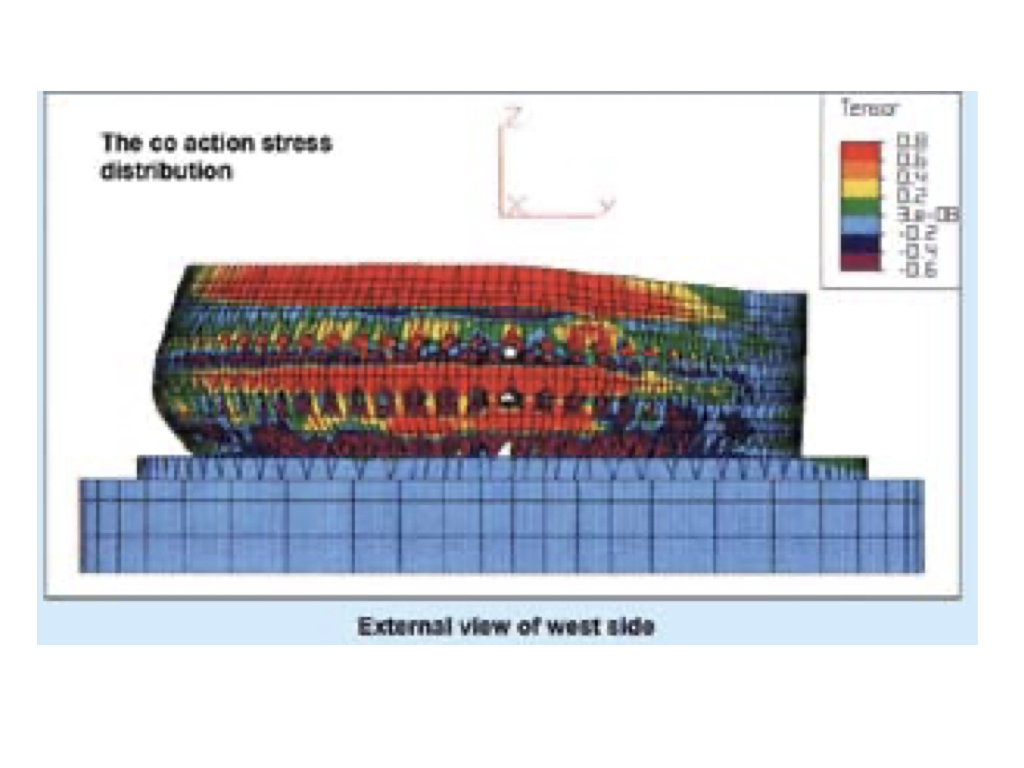
Detail from Professor Enzo Cartapati’s structural analysis of the Colosseum’s stone columns, illustrating the interaction between seismic damage and fire‑induced degradation in 217–271 A.D.
In 217 A.D., the Colosseum suffered a major fire that destroyed its upper wooden structures, leading to a partial collapse and a five‑year closure for restoration (217–222 A.D.).
At the same time, Rome lies in a seismically active region, and historical records indicate that an earthquake occurred in September of the same year. This temporal coincidence has prompted structural and fire‑risk engineers to investigate whether the Colosseum’s damage was driven by seismic loading alone, by fire, or by a coupled post‑earthquake fire scenario.
Professor Enzo Cartapati of Sapienza University of Rome, in collaboration with Maurizio Cerone, has examined the hypothesis of a post‑earthquake fire around 271 A.D. and analyzed the structural condition of the Colosseum’s travertine columns to assess whether fire damage occurred after a seismic event and how it affected the load‑bearing capacity of the monument. Their work contributes to a broader line of research on the vulnerability of large‑scale Roman masonry structures to combined fire and earthquake actions.
From a fire‑risk perspective, the 217 A.D. fire is consistently described as a lightning‑induced event that consumed the wooden elements of the upper galleries and roof‑like structures, triggering localized collapses and necessitating extensive reconstruction of the summa cavea and related colonnades.
A second lightning‑driven fire in 250 A.D., prompting repair orders by Emperor Decius, underscores the long‑term vulnerability of the wooden superstructure to ignition and progressive damage, even after prior interventions [web‑18][web‑21].
Structurally, the Colosseum was a massive load‑bearing masonry system:
- Approximately 292,000 tons of travertine and piperine from the Albulae quarries near Tivoli, and volcanic tuff from Preneste, formed the main envelope and vaulting system [web‑16].
- Around 750,000 tons of squared stone and 8,000 tons of marble from the Luni and Carrara quarries completed the architectural and decorative elements [web‑16].
- The arena measured 76 × 46 meters, with a total height of 57 meters distributed over four levels, implying a complex stress distribution under gravity, lateral seismic, and thermal (fire‑induced) loads [web‑16][web‑28].
From a life‑safety and egress standpoint, the Colosseum’s design incorporated advanced crowd‑management features for its time:
- Eighty vomitoria enabled rapid evacuation of an estimated 45,000–50,000 spectators, consistent with Roman amphitheatres’ emphasis on vertical circulation and controlled dispersal [web‑16].
- Seventy‑two standardized marble stairways, each 57 cm wide, provided orderly access and exit to the seating tiers, reducing congestion and facilitating orderly movement even under stressed conditions [web‑16].
The hypothesis of a post‑earthquake fire in 271 A.D. fits into a wider discussion of multi‑hazard vulnerability in historic stone‑and‑masonry structures: seismic shaking can induce cracking, debonding of stone elements, and destabilization of vaults, rendering the structure more susceptible to subsequent fire damage, particularly if wooden elements remain in the upper levels.
The Cartapati–Cerone analysis therefore provides a useful early‑stage case study for fire‑risk engineering in heritage monuments, where the interaction between seismic history, material degradation, and past fire events must be integrated into conservation and protection strategies.
The full presentation of this work, originally delivered at the April 11, 2003 conference “Integrating Historic Preservation with Security, Fire Protection, Life Safety and Building Management Systems”, is available for download from this website: