Firefighting Equipment and Techniques for Museums: A Comprehensive Guide for Heritage Managers
during the early stages of a fire, there is typically a critical point where the damage caused by fire exceeds that of damage caused by extinguishing media
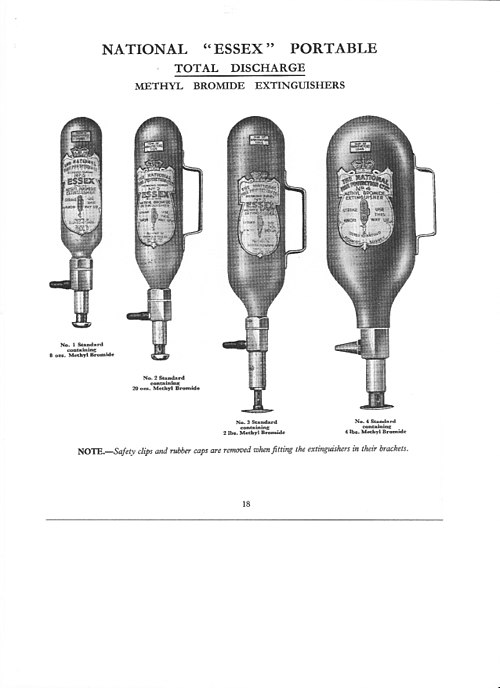
Historic Fire extinguishers. Image: Firetech117 at English Wikipedia, CC BY-SA 3.0 <https://creativecommons.org/licenses/by-sa/3.0>, via Wikimedia Commons
Updated January 2026
Introduction
The 2006 report “Manual Fire Extinguishing Equipment for Protection of Heritage“, prepared by COWI within the COST C 17 Action on behalf of Riksantikvaren, the Norwegian Directorate of Cultural Heritage (RNDCH) and Historic Scotland, remains one of the foundational documents addressing the selection of extinguishing agents suitable for use in historical or cultural heritage sites. This comprehensive guide updates and expands upon that seminal work, incorporating two decades of technological advances, operational experience, and emerging best practices for museum fire protection.
The report provided an overview examination of available firefighting equipment and techniques for museum staff to use in the early stages of a fire, evaluating six categories of handheld extinguishers, three techniques for fighting fires without extinguishers, and nine automatic small extinguishers for use in museums, galleries, or historical buildings. The evaluation criteria—ease of use, extinguishing efficiency, secondary damage, maintenance, and cost—remain relevant today, though technological developments have significantly expanded the options available to heritage managers.
Understanding Fire Risk in Museum Environments
Conventional wisdom once suggested that museums and heritage buildings require special extinguishers to avoid damaging cultural artifacts, but extensive research has demonstrated this is not necessarily true. Fires in heritage buildings typically start in common items such as electrical appliances, electrical distribution boards, and wastebaskets, just like in any other building. Therefore, there is no immediate risk that extinguishing media will damage artefacts at the early stages of a fire where handheld units are supposed to be used.
The critical insight from the COWI research is that during the early stages of a fire, there is typically a critical point where the damage caused by fire exceeds that of damage caused by extinguishing media. Damage by fire accelerates with time, making rapid intervention far more important than overly cautious approaches that delay effective suppression. Typically, artifacts themselves are not impacted by the fire until the later stages when handheld units are less appropriate.
Manual equipment types
Water-Based Systems: Hose Reels and Handheld Extinguishers
The 2006 COWI report suggested that whenever water mains are available, water hose reels should be preferred over other types of handheld extinguishers. They are easy to use, do not run out of water, and ensure that staff remain familiar with their operation. However, cultural differences in risk assessment have led to varying approaches: in the UK, experience of misuse of hose reels has led to a preference for handheld units, while in Norway, the misuse of powder units has resulted in a recommendation for hose reels in preference to handheld units.
Water-based handheld extinguishers remain the most straightforward option for Class A fires involving ordinary combustibles. While water damage is a legitimate concern in museum environments, research has consistently shown that excessive water increases mechanical and wetting damage less dramatically than the alternative of allowing fire to progress. The key consideration is training staff to use appropriate water volumes and application techniques.
Dry Chemical Powder Extinguishers – 1 – Maintenance and Lifecycle Costs
Powder agents present significant challenges in museum environments. The COWI research found that powder agents result in considerable costs in the follow-on cleaning and conservation of materials. The fine powder penetrates textiles, porous surfaces, and intricate artifacts, creating extensive remediation requirements even after small-scale deployments. For this reason, powder extinguishers should be considered only for specialized applications where other agents are inappropriate, such as areas with significant electrical equipment or flammable liquid storage.
Dry Chemical Powder Extinguishers – 2 – Foam and Wet Chemical Systems
Agents containing chemicals such as foam and emulsifying agents extensively affect the surfaces of material samples, according to the 2006 testing program. Modern foam formulations have improved in terms of environmental impact and cleanup requirements, but they still present significant secondary damage risks to porous artifacts, textiles, and paper-based collections. Wet chemical systems, designed primarily for Class K fires involving cooking oils, have limited application in most museum environments.
Dry Chemical Powder Extinguishers – 3 – Carbon Dioxide (CO2) Extinguishers
CO2 extinguishers offer the advantage of leaving no residue, making them particularly suitable for electrical fires and sensitive equipment areas. However, the cooling effect of CO2 causes damage to certain materials, particularly those sensitive to thermal shock such as ceramics, glass, and certain metals. Additionally, CO2 presents asphyxiation risks in confined spaces, requiring careful risk assessment before deployment. Despite these limitations, CO2 remains an important tool for protecting electrical distribution equipment, server rooms, and other areas where residue-free suppression is critical.
Water Mist Systems: Modern Solutions for Heritage Protection
Water mist technology has emerged as one of the most significant advances in museum fire protection since the 2006 COWI report. Water mist systems use significantly less water than traditional sprinkler systems—up to 85% less according to recent studies—while providing effective fire suppression. This dramatic reduction in water consumption translates directly into decreased water damage potential, making water mist particularly suited to protecting libraries, archives, historic buildings, and museums where preservation of sensitive materials is critical.
Design Flexibility and Discreet Integration
The customizable nature of water mist systems allows for more discreet integration into historic buildings. Unlike sprinkler systems that often require bulky piping and visible infrastructure, water mist systems can be designed with smaller piping and compact components, minimizing visual impact on historic aesthetics. Their ability to reach shielded areas by dispersing fine droplets makes them ideal for protecting structures with high ceilings, exposed beams, and other architectural elements that may impede traditional sprinkler systems.
Water mist systems are particularly suitable for retrofit installations in historic buildings where structural changes must be kept to a minimum (Water mist systems typically use 70-85% less water than traditional sprinklers and can control damage to sensitive objects with significantly reduced water discharge). Recent installations, such as the Grand Egyptian Museum’s protection of the Khufu Ship using high-pressure water mist with 1,500 nozzles, demonstrate the technology’s scalability and effectiveness for protecting irreplaceable cultural artifacts.
CO2 and Clean Agent Suppression Systems
High-Pressure CO2 Systems for Museums
The high-pressure CO2 fire suppression system market has experienced robust growth, driven by increasing demand across various sectors including museums and galleries. Modern CO2 systems feature significant innovations including miniaturization for improved space utilization, integration with Building Management Systems (BMS) for enhanced control and monitoring, and advanced agent delivery technologies for optimized fire suppression.
CO2 systems are available in various capacities (40L, 70L, 90L, and larger), allowing specification based on protected volume and fire load characteristics. Gas-based extinguishing technology eliminates water damage risk entirely, making these systems particularly valuable for protecting irreplaceable collections. However, life safety considerations require careful design to prevent asphyxiation hazards, including pre-discharge alarms, time delays, and proper ventilation strategies.
Aerosol Fire Extinguishing Systems
Aerosol fire extinguishing systems represent an emerging technology offering economical, safe, and effective protection for museums and historic buildings. These systems use a non-toxic and environmentally friendly extinguishing agent certified for safety and quality both in Italy and internationally. The technology is compact, adapts to all spaces, and requires small quantities of extinguishing agent, allowing for savings on installation, operating, and maintenance costs.
Aerosol generators have a service life of 15 years with no extraordinary maintenance required beyond six-monthly checks on electrical components. This low-maintenance profile makes aerosol systems particularly attractive for heritage institutions with limited technical staff or budgets. However, aerosol technology remains less proven at large scale compared to water mist or CO2 systems, requiring careful evaluation of manufacturer credentials and certification standards.
Selection criteria for museum fire protection equipment
Risk Assessment Framework
Owners of historical buildings and museums should assess the risk of misuse of extinguishing equipment at their locations and make informed decisions about system selection. The risk analysis must consider several factors: the value and vulnerability of collections, architectural constraints, available water supply, staff training capabilities, budget limitations, and regulatory requirements.
When protection of high-value buildings or artifacts, minimization of collateral damage, design flexibility, and environmental impact are priorities over initial costs, advanced systems such as water mist or clean agents become justified. Conversely, for storage areas, loading docks, or administrative spaces where collections are not at direct risk, conventional sprinkler systems or handheld extinguishers may provide adequate protection at lower cost.
Integration with Detection and Alarm Systems
Modern fire protection requires integration between suppression equipment and detection/alarm systems. IoT-enabled platforms, smart firefighting cloud services, and Building Management System integration allow real-time monitoring, predictive maintenance, and coordinated emergency response. This integration capability has become standard in new installations since 2020, with several manufacturers launching systems with integrated IoT capabilities.
Regulatory Compliance Considerations
Stringent fire safety regulations globally are driving adoption of advanced fire suppression systems, particularly in critical infrastructure sectors including museums. However, regulations also influence system design and performance standards, creating both opportunities and challenges for heritage institutions. Museum managers must navigate national fire codes, heritage preservation requirements, insurance standards, and occupational health and safety regulations when specifying fire protection systems.
Comparison of Equipment Types
| Equipment Type | Primary Application | Advantages | Disadvantages | Typical Cost Range |
| Water Hose Reels | General museum spaces | Unlimited water supply, easy to use, minimal training required | Water damage risk, requires water mains, potential misuse | €500-2,000 per unit |
| Water Handheld Extinguishers | Class A fires (paper, wood, textiles) | Effective on ordinary combustibles, low equipment cost, widely understood | Water damage, limited capacity (9-12 liters), requires manual operation | €50-150 per unit |
| Dry Powder Extinguishers | Electrical equipment areas, vehicle storage | Multi-class capability, no water damage | Extensive cleanup required, damages artifacts, obscures vision | €80-200 per unit |
| CO2 Handheld Extinguishers | Electrical fires, server rooms | No residue, effective on electrical fires | Asphyxiation risk, thermal shock to artifacts, limited capacity | €100-250 per unit |
| Water Mist Systems | Gallery spaces, high-value collection areas | 85% less water than sprinklers, minimal damage, discreet installation | High initial cost, requires specialized maintenance, complexity | €100-300 per m² |
| High-Pressure CO2 Systems | Enclosed spaces, archives, vaults | Zero water damage, rapid suppression, effective on multiple fire classes | Asphyxiation hazard, requires evacuation, high installation cost | €150-400 per m³ |
| Aerosol Systems | Small enclosed spaces, cabinets, localized protection | Low maintenance, compact, residue-free, long service life (15 years) | Limited large-scale application, emerging technology, detection integration required | €1,000-5,000 per unit |
| Foam Extinguishers | Flammable liquid storage, loading docks | Effective on Class B fires, creates vapor barrier | Chemical residue, damages porous artifacts, requires cleanup | €80-180 per unit |
Cost considerations and total ownership analysis
Initial Capital Investment
The capital cost of museum fire protection varies dramatically based on system selection. Manual extinguishers represent the lowest initial investment at €50-250 per unit, requiring 1 unit per 200-400 m² depending on fire load and travel distance requirements. For a 2,000 m² museum, this translates to approximately €500-2,500 for basic manual protection.
Water mist systems represent a significant capital investment at €100-300 per m², meaning a 2,000 m² installation could cost €200,000-600,000. However, this cost must be evaluated against the value of protected collections and the potential for reduced insurance premiums. High-pressure CO2 systems for specialized spaces such as archives or storage vaults typically cost €150-400 per m³ of protected volume.
Maintenance requirements vary significantly among system types. Traditional handheld extinguishers require annual inspection and periodic recharging or replacement, typically costing €20-50 per unit annually. Water mist systems require quarterly or semi-annual inspection of nozzles, pumps, and control systems, with annual costs typically 2-4% of initial capital investment.
Aerosol systems offer exceptional lifecycle cost advantages with 15-year service life and only six-monthly electrical component checks required. High-pressure CO2 systems require periodic cylinder weighing, pressure testing (typically every 5-10 years), and annual control system inspection. When evaluating total cost of ownership over 20-30 years, maintenance costs can equal or exceed initial capital investment for complex automatic systems.
Hidden Costs and Risk Transfer
Insurance considerations represent a critical but often overlooked cost factor. Many insurers offer premium reductions of 10-30% for museums with certified automatic suppression systems, potentially offsetting system costs over time. Additionally, the potential cost of artifact loss, restoration, and business interruption following a fire event can dwarf suppression system investments. Conservation of delicate artifacts, works of art, and architectural elements justifies the investment in more expensive but less invasive systems when risk analysis supports this approach.
Practical guidance for museum managers on equipment selection
Conducting a Fire Protection Needs Assessment
Museum managers should begin with a comprehensive needs assessment evaluating: collection value and vulnerability by zone, fire load characteristics, building construction and compartmentation, water supply availability and reliability, staff capabilities and training resources, regulatory requirements and heritage preservation constraints, and budget realities for both capital and operating expenses.
This assessment should produce a zoned protection strategy recognizing that different areas require different approaches. High-value gallery spaces housing irreplaceable artifacts may justify water mist or clean agent systems, while administrative areas, mechanical rooms, and loading docks may be adequately protected with conventional sprinklers or manual equipment.
Staff Training and Procedural Development
The most sophisticated fire protection equipment provides limited benefit without trained personnel and established procedures. Museum managers should implement: regular fire drills including suppression equipment use (minimum quarterly), hands-on training with actual extinguisher discharge (annually), tabletop exercises simulating fire scenarios and decision-making, clear assignment of fire safety responsibilities among staff, and integration of fire response with emerge evacuation plans.
The 2006 COWI report emphasized that ensuring staff familiarity with equipment represents a critical success factor. Regular drills and training prevent panic, reduce response time, and increase the likelihood of successful early intervention before fire brigade arrival.
Vendor Selection and System Commissioning
When specifying automatic suppression systems, museum managers should require: comprehensive design documentation including hydraulic calculations, evidence of regulatory approval and certification (FM, UL, VdS, LPCB), manufacturer references from comparable heritage installations, detailed maintenance and inspection requirements, staff training programs as part of system delivery, and performance guarantees including response time and coverage.
The commissioning process should include witnessed functional testing, staff training, integration testing with fire alarm systems, preparation of operations and maintenance documentation, and establishment of preventive maintenance schedules with qualified service providers.
Post-2019 Technological Developments
Since 2020, fire protection manufacturers have increasingly integrated Internet of Things (IoT) capabilities into suppression systems. Johnson Controls launched advanced CO2 suppression systems with integrated IoT capabilities in 2020, enabling real-time system monitoring, predictive maintenance based on component condition rather than fixed schedules, remote diagnostics and troubleshooting, and integration with building management systems for holistic facility management.
However, IoT connectivity introduces significant cybersecurity risks that museum managers must address proactively. As documented in our analysis of cybersecurity vulnerabilities in heritage buildings, common weaknesses include devices deployed with default passwords, outdated firmware lacking security patches, open or poorly segmented networks that expose fire suppression controls to attacks, and inadequate remote access controls that create entry points for hackers. The October 2025 Louvre theft highlighted how cybersecurity failures can enable physical crimes even in high-security institutions.
Museum managers implementing IoT-enabled fire protection systems should require vendors to demonstrate compliance with ISO/IEC 27001 information security standards, deploy systems on dedicated firewalled networks separate from public Wi-Fi, establish patch management schedules with regular firmware updates, implement multi-factor authentication for all remote access, conduct biannual cybersecurity audits, and train staff in cybersecurity hygiene including password rotation and phishing awareness. Investing in robust cybersecurity is as essential as protecting physical assets—without it, smart fire safety systems could become a new source of risk rather than a safeguard
Sustainability and Environmental Considerations
Environmental sustainability has emerged as a critical design consideration since 2019. Carrier (Kidde Fenwal) announced a strategic partnership to develop sustainable CO2 recycling technology in 2021. Water mist systems offer significant environmental advantages through reduced water consumption, and manufacturers have focused on developing eco-friendly CO2 sourcing and recycling methods.[datainsightsmarket]
Miniaturization and Aesthetic Integration
Several companies introduced miniaturized CO2 systems optimized for smaller spaces in 2022. This trend toward miniaturization extends across all suppression technologies, driven by heritage sector demands for less visually intrusive protection. Modern water mist nozzles, aerosol generators, and detection devices can be specified in finishes and form factors that minimize aesthetic impact on historic interiors.
Conclusions and recommendations
Selecting the most suitable firefighting equipment for a museum is a complex matter where scientific considerations are important but not exclusive. Staff constraints workplace safety and resource availability often compel safety managers to make difficult decisions. There is no one-size-fits-all solution but a documented assessment should be produced in any case. The complexity of the multi-disciplinary approach required, particularly with the recent addition of cybersecurity, must be considered a challenge that every building poses to achieve the most efficient compromise for safety, security and effective building management.





Thank you for running this very useful resource website.
Would you post helpful Firefighting Techniques to preserve architectural features and artefacts. Some ceiling were saved when a fire officer took action to drill a hole to prevent water damage to a ornate ceiling. And, what other hints and tips could be used to preserve historic architectural features and artefacts.
And how to prepare our heritage buildings, if a war situatuation were thought to occur?
There seems to be a move away from active property protection, to a more restrained firefighting response, where only the roof of the property is watered and hosed to prevent spread, and a reluctance to options that would preserve the fabric of the building.
Thank you very much for your kind message and for reading the site.
Yes, this is an important topic. In heritage fire situations, the challenge is always to balance life safety, fire control, and the protection of irreplaceable fabric and artefacts. In some cases, carefully targeted firefighting actions can reduce secondary damage, but they must always be decided on-site, under incident command, and with full awareness of the building’s construction, contents, and vulnerabilities.
I agree that more attention should be given to practical techniques for preserving architectural features and artefacts during firefighting, including pre-incident planning, access to heritage information, identification of priority objects, and coordination between fire crews and conservation specialists. These measures can make a real difference before, during, and after an emergency.
Your point about preparing heritage buildings for a possible war situation is also very relevant. That is a difficult but necessary issue, especially for sites exposed to conflict, looting, shelling, or prolonged instability. Preparedness in such cases usually requires risk mapping, emergency documentation, temporary protection of assets, relocation of movable objects when feasible, and close cooperation between heritage professionals and civil protection authorities.
I also share your concern about the tendency toward a more restrained firefighting approach in some situations. In heritage buildings, a purely defensive response may reduce some risks but can also leave the structure and its contents more exposed than necessary. The best approach is usually not a choice between “aggressive” and “passive,” but a site-specific strategy that combines suppression, protection of key elements, and conservation awareness.
I would also add that the best tactical choice may vary significantly depending on the legislative and cultural context. In some settings, a necessary firefighting action that causes limited damage while preventing greater destruction may still be viewed in a very critical way, even from a legal perspective. For this reason, the issue cannot be reduced to a simple formula: it requires prevention, training, documentation, and a clear understanding of the operational and legal framework in which decisions are made.
Thank you again for your thoughtful comment. It is exactly the kind of discussion that can help improve future posts on this subject.
With Kind regards
Stefano Marsella