Teotihuacán Shooting: a Warning for Heritage Security
On 20 April 2026, a shooting at the Teotihuacán archaeological site in Mexico turned a major heritage destination into the scene of a sudden and violent emergency. A gunman opened fire near the Pyramid of the Moon, killing one Canadian tourist and injuring several others before taking his own life, underscoring how quickly an open heritage site can become a high-risk environment.
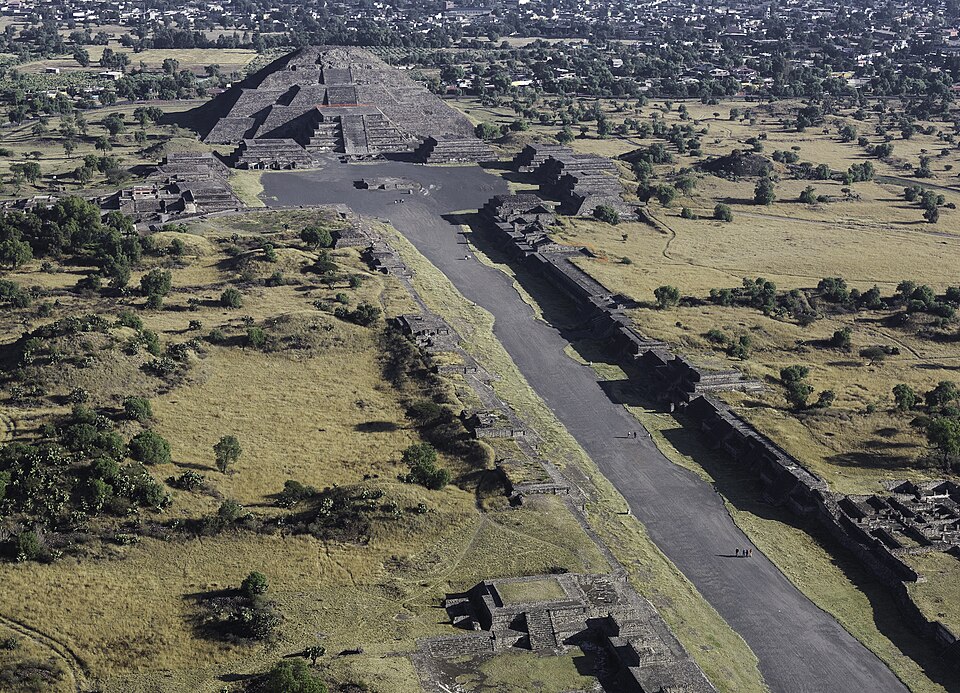
View of the Avenue of the Dead and the Pyramid of the Moon. - Image: Ricardo David Sánchez, CC BY-SA 3.0 <https://creativecommons.org/licenses/by-sa/3.0>, via Wikimedia Commons
On 20 April 2026, a shooting at the Teotihuacán archaeological site in Mexico turned a major heritage destination into the scene of a sudden and violent emergency.
According to reporting, a gunman opened fire near the Pyramid of the Moon, killing one Canadian tourist and injuring several others before taking his own life. What had begun as an ordinary visit to one of the world’s most iconic archaeological landscapes quickly escalated into a mass-casualty incident.
The event was not only a human tragedy. It also exposed how vulnerable major heritage sites can be when they function as open, highly visited, and symbolically charged public spaces. For those working in heritage risk management, the significance of the event goes beyond its immediate human cost.
Teotihuacán is a large, open archaeological site with complex visitor circulation, limited physical barriers, and a constant mix of domestic and international tourism. These are features that make heritage places accessible and valuable, but also difficult to secure without altering their character.
A soft target
Heritage sites are often described as soft targets because they combine symbolic value, public access, and limited perimeter control. Teotihuacán fits this profile clearly. It is not a fortified space, nor should it become one in the traditional sense, yet its openness creates a security dilemma: the very qualities that make it culturally powerful also make it difficult to protect against fast-moving, intentional violence.
Obviously, the problem is not unique to Mexico. Around the world, cultural heritage sites increasingly face risks that were once considered peripheral: terrorism, lone-actor violence, civil unrest, crowd panic, and opportunistic crime. The challenge for site managers is to develop protection strategies that reduce exposure without undermining the visitor experience or the authenticity of the place.
What happened
Available reporting indicates that the attack unfolded rapidly and triggered immediate panic among visitors, some of whom ran down the pyramid area to escape the gunfire. This detail matters from a risk perspective, because the direct effect of the shooting was only part of the emergency. The secondary consequences included crowd disorder, falls, distress, and the sudden loss of normal site control.
This is a recurring pattern in emergencies at heritage sites. The initiating event may be relatively localized, but the impact expands through human behavior, congestion, unfamiliarity with exits, and delayed situational awareness. In other words, the physical hazard is often amplified by the social dynamics of evacuation.
Planning for violence
Most heritage emergency plans are still stronger on fire, weather, and structural hazards than on deliberate violence. That is understandable, but increasingly insufficient.
Teotihuacán suggests that heritage sites also need scenario-based planning for armed attacks, including rapid visitor alerting, interface protocols with police, shelter-in-place options where relevant, and clearly identified evacuation routes that can function under panic conditions.
A critical point is that security measures cannot simply be copied from airports or stadiums. Archaeological parks and historic landscapes require a different balance between access, preservation, and control.
Over-securitization can damage the visitor experience, alter the meaning of the site, and even create new operational problems. The answer is not fortification, but risk-informed design and layered preparedness.
Operational lessons
Several lessons emerge from this event.
- First, heritage sites should treat violent incidents as plausible, not exceptional.
- Second, emergency planning should include multi-hazard procedures that recognize how a security event can rapidly become a crowd-management emergency.
- Third, staff training must cover not only evacuation mechanics, but also communication under stress, visitor guidance, and cooperation with external responders.
There is also a broader governance lesson. Security at major heritage sites is rarely just a site-level issue. It depends on coordination among site managers, local police, tourism authorities, emergency medical services, and regional civil protection structures. Without clear role assignment, a fast-moving incident can overwhelm the response chain before it has time to stabilize.
A wider heritage debate
Teotihuacán now joins a growing list of cultural sites forced to confront the reality that heritage protection is no longer limited to conservation in the narrow sense. It must also include human safety under hostile or unstable conditions. This does not mean turning heritage sites into militarized zones. It means recognizing that openness is itself a risk condition that must be managed through design, planning, and preparedness.
For FRH, the key message is straightforward: heritage protection must evolve from passive preservation to active resilience. The Teotihuacán attack shows how quickly a heritage site can become an emergency scene, and how important it is to have plans that work not only for stones and structures, but for people under sudden threat.