UNESCO’s June 2026 Actions in Ukraine and the Persistent Gap in Cultural Heritage Emergency Planning
UNESCO’s June 2026 actions in Ukraine show that cultural heritage remains highly exposed in crisis situations, yet still insufficiently integrated into emergency planning. This post examines why the gap persists and what a heritage-aware emergency plan should include.

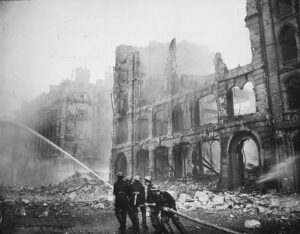
AI-generated image illustrating the continued absence of cultural heritage from emergency planning
The UNESCO action took concrete steps to strengthen the protection of World Heritage in Ukraine, handing over strategic tools intended to support preparedness, response, and recovery in a context of continuing wartime risk.
That action is more than a single institutional gesture: it is another reminder that cultural heritage is still too often left outside the core of emergency planning, even when the threat is immediate and well documented.
Where emergency planning remains weak
Emergency planning usually focuses on protecting life, ensuring the continuity of essential services, and limiting disruption to critical infrastructure. Cultural and historic heritage, by contrast, is frequently treated as a secondary concern, as if it were a replaceable part of the built environment rather than an irreplaceable asset of memory, identity, and social continuity.
This gap is not just conceptual. It becomes visible every time a fire, flood, armed conflict, earthquake, or technological accident strikes a heritage site and the response lacks specific procedures for its protection.
A more mature understanding of risk:
The UNESCO action in Ukraine is significant because it points to a more mature understanding of risk: heritage protection cannot rely only on declarations of value after damage has occurred. It needs advance planning, site-specific vulnerability assessment, clear responsibilities, and coordination between civil protection, emergency responders, and heritage professionals.
Without these elements, even well-intentioned response efforts may arrive too late or cause additional damage.
Persistent operational gaps
The same issue is visible in many other contexts worldwide. Heritage sites are often managed by institutions that have limited authority over emergency response, while civil protection systems are not always designed to account for conservation priorities, artifact salvage, or the fragility of historic materials and structures.
The result is a persistent operational gap between the recognition of heritage value and the practical ability to protect it under emergency conditions.
A heritage-aware emergency plan should identify priorities in advance, document key assets, establish communication channels, define roles and responsibilities, and include procedures for stabilization, salvage, and recovery. It should also be realistic, trained, and updated regularly.
In other words, protecting heritage in emergencies is not an optional extension of general planning; it is part of serious risk governance.
The June 2026 UNESCO actions in Ukraine are therefore not only news. They are a signal that the field still needs to move from recognition to implementation. If cultural heritage is to survive the increasing pressures of conflict and disaster, it must be integrated into emergency planning before the next emergency begins.