Limoges: When Protest Becomes a Fire Risk to Heritage
On Saturday, 17 October 2026, the Hôtel de Ville of Limoges — a 143-year-old municipal building inaugurated in 1883 and listed as a French historic monument — was set ablaze by a group of masked protesters during nationwide demonstrations over the cost of living. Masked rioters first torched a police car outside the building, then smashed windows and entered to start a fire using incendiary devices. By the time firefighters brought the blaze under control on Sunday morning, the roof had collapsed onto the lower floors, two-thirds of the exterior had already disappeared, and the building’s iconic spire had fallen live on camera, watched by millions worldwide.
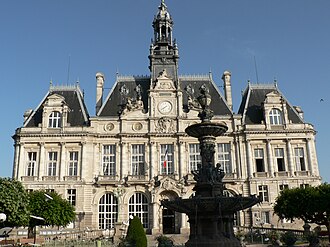
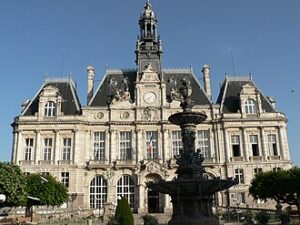
The Limoge Hotel de Ville before the 2026 destruction. Image: User:Aratar, CC BY-SA 3.0 <http://creativecommons.org/licenses/by-sa/3.0/>, via Wikimedia Commons - https://commons.wikimedia.org/wiki/File:Limoges_Mairie.jpg
The regional prefect, Maurice Barate, called the destruction a “catastrophe for heritage.” Mayor Guillaume Guérin alleged the attack was premeditated — that people were still inside the building when fire was set. Prime Minister Sébastien Lecornu pledged rebuilding.
But for the heritage fire-risk community, pledges of reconstruction do not answer the most urgent question: why did our risk frameworks not flag this building as being in danger?
Limoges is not a war zone. France is not a conflict state. And yet a listed 19th-century civic building that had survived two World Wars did not survive a Saturday afternoon of civil unrest in 2026. That is the problem this post sets out to examine.
A New Threat Typology: Civil Unrest as a Fire Vector for Heritage
Traditional heritage fire-risk literature has long distinguished between two broad threat environments: peacetime(accidental fires, technical failure, negligence, isolated criminality) and conflict (armed hostilities, deliberate destruction as a war tactic, looting under cover of chaos). The Limoges event belongs to neither cleanly — and that is precisely what makes it so significant.
What we witnessed on 17 October 2026 was a third threat typology: organised, politically motivated, incendiary violence against public buildings in a functioning democratic state during a period of civil unrest. This is not entirely without precedent — the Paris Commune of 1871, the burning of the Reichstag’s surroundings in 1933, the destruction of public property during the 2019 Chilean protests and the 2020 Minneapolis unrest all share elements of this pattern.
But the scale, speed, and the live-streamed totality of the Limoges destruction, in a stable Western European city, gives this event a categorically new weight in our field. Several characteristics define this emerging threat category:
- Symbolic targeting: Heritage civic buildings — town halls, courts, cultural institutions — are deliberately selected because they represent state authority. The building’s historic or protected status is not a deterrent; it may even heighten its symbolic value as a target.
- Speed of ignition and spread: Incendiary devices thrown into historic timber-framed interiors produce extremely rapid fire development. The Limoges spire collapsed in under four hours. Modern fire-response frameworks designed for peacetime incidents may not account for an active hostile crowd preventing or delaying suppression.
- Suppression interference: Fire crews at Limoges reportedly faced obstacles gaining access due to continuing unrest in the surrounding streets. This is a scenario conventionally reserved for active conflict zone protocols.
- No geographic or political prerequisite: This can happen in Limoges. It can happen in Lyon, in Bologna, in Stuttgart. The trigger is social tension, not geography or geopolitical status.
How This Changes Fire Risk Assessment: Beyond Armed Conflict Zones
For decades, the international heritage fire-risk assessment community has operated with a broadly implicit assumption: that the most severe intentional fire threats to heritage buildings occur in or near zones of armed conflict, and that stable, democratic, high-income countries face only conventional peacetime fire risks.
Frameworks such as the ICOMOS Guidance on Heritage Fire Risk Management, the Blue Shield protocols, and national-level risk registers have been designed accordingly.
Limoges forces a fundamental revision of this assumption. Here is what needs to change.
The Definition of Crisis Area Must Be Widened
Current fire risk assessment standards typically identify crisis areas by reference to armed conflict, political instability indicators, or post-disaster environments. None of these would have flagged Limoges, France — a mid-sized regional capital in one of the world’s wealthiest democracies — as a crisis zone on 16 October 2026.
The concept of crisis area must now encompass temporary social-unrest scenarios: large-scale protest movements with a documented history of property damage, cost-of-living crises generating sustained civic anger, and political polarisation reaching a threshold associated with crowd violence.
These are not permanent designations — they are dynamic, time-bounded risk elevations that require a new tier of contingent or alert-phase assessment.
Intentional Fire Must Become a Standard Scenario in All Urban Heritage Assessments
Conventionally, intentional fire in peacetime heritage risk assessments is treated as a low-probability edge case. Limoges suggests this probability assignment is dangerously underweighted for civic heritage buildings as a class.
Any heritage building that functions as a visible symbol of public authority, is located in an urban centre where large-scale demonstrations routinely take place, and has an interior construction type allowing for rapid fire development, must henceforth receive a specific intentional-fire scenario as part of its baseline risk assessment, regardless of its country’s current political stability rating.
Suppression Access Must Be Assessed Under Adversarial Conditions
Standard fire risk assessments evaluate firefighting access in terms of hydrant proximity, access road width, and appliance approach angles.
They do not typically model scenarios in which a hostile crowd prevents or seriously delays fire crew access while a fire takes hold in a timber-framed roof structure.
We now need to add an adversarial-access scenario to risk assessments of symbolically significant urban heritage buildings: what is the fire development trajectory if suppression is delayed by 30, 60, or 90 minutes due to external crowd conditions? For many historic civic buildings, the answer will be total or near-total loss — precisely as occurred in Limoges.
Monitoring and Early Warning Must Be Decoupled from Conflict Geography
Current early-warning systems informing heritage fire-risk posture are geographically anchored to regions of armed conflict or political fragility.
A mechanism is needed to trigger temporary elevated-risk protocols for heritage buildings in cities where large-scale demonstrations are planned or underway, even in countries with no general conflict classification.
This is not about restricting the right to protest. It is about recognising that the risk environment around a listed building changes, temporarily but dramatically, when that building is in the path of a protest route in a period of heightened social tension.
Practical Implications: What Assessors, Conservators and Institutions Should Do Now
The Limoges fire is not merely a conceptual challenge for risk frameworks — it demands immediate changes in practice. The following steps represent a minimum threshold response for institutions responsible for civic and public heritage buildings.
Conduct an emergency review of symbolic civic heritage in your portfolio. Any building that serves as a seat of local or regional government, that is visually prominent and publicly associated with state authority, and that sits in an urban area where social tensions are measurable, should be reviewed against the new threat typology described above.
This is not a leisurely next-cycle exercise — it should happen now.
Add a civil-unrest fire scenario to existing risk registers. For buildings that pass the symbolic-target threshold, insert a new scenario: incendiary attack by a crowd during a period of civil unrest, with suppression delayed by 45–90 minutes. Score it against your existing consequence matrix.
Many institutions will find this produces an unacceptably high residual risk score that current mitigation measures do not address.
Audit internal fire suppression and compartmentation. The single most effective mitigation for a delayed external response is robust internal suppression — automatic sprinkler systems, fire-resistant compartmentation, and self-closing fire doors that slow the spread long enough for crews to gain access. Many listed civic buildings lack these measures due to heritage protection constraints.
The Limoges case should now be used as a compelling argument with heritage consent authorities for accelerated approval of internal suppression retrofits.
Establish a liaison protocol with public order planning. Fire risk managers for civic heritage buildings should establish a standing relationship with local police and protest coordination units.
When a large demonstration is planned to pass near or through an area where a listed building sits, that should automatically trigger a pre-positioned fire response, a heightened internal monitoring posture, and documented emergency access routes agreed in advance with public-order commanders.
Pre-position documentation and digital twins. For buildings that cannot be adequately hardened against this threat type in the short term, ensure that high-resolution photogrammetric surveys, architectural drawings, and material inventories are up to date and stored offsite. Reconstruction is always possible in principle — but it is faster, cheaper, and more authentic when complete documentation exists. Limoges has the advantage of being a well-documented 19th-century building; many civic heritage sites are not.
Conclusion: The Crisis Area Is Everywhere
The destruction of the Hôtel de Ville of Limoges on 17 October 2026 is a watershed event for the heritage fire-risk field.
Not because fire and civil unrest have never intersected before — history is full of such moments — but because it happened in a context where virtually every conventional risk indicator said: this is a safe building, in a safe city, in a stable country.
The lesson is not that nowhere is safe. The lesson is that the category of crisis area — the geographic and political designation that triggers our most rigorous fire-risk thinking — is no longer bounded by conflict cartography.
Social stress, economic anger, and the visibility of civic buildings as symbols of contested authority can create, temporarily but severely, a crisis-area risk environment in any city, at any latitude, at almost any political moment.
This means that our frameworks, our training, our assessment standards, and our mitigation hierarchies must all evolve to account for a threat that was always latent but that Limoges has now made undeniable.
The building that survived two World Wars did not survive one Saturday afternoon of 2026. We owe it to every other listed civic building in Europe, and beyond, to understand why — and to act before the next one burns.