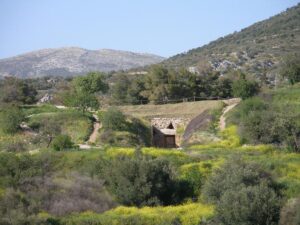
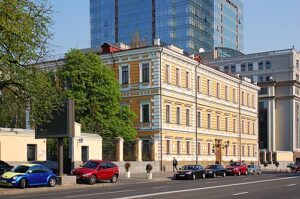
Israel Museum, Jerusalem – vegetation fire reaching the Youth Wing roof

The Israel Museum - אסף.צ at he.wikipedia, CC BY-SA 3.0 <http://creativecommons.org/licenses/by-sa/3.0/>, via Wikimedia Commons
On June, 2, 2024 in Jerusalem, a major vegetation fire in the Valley of the Cross forced the evacuation of the Israel Museum and resulted in damage to the roof of the museum’s Ruth Youth Wing for Art Education.
Strong winds and dry conditions pushed flames up from the valley towards the museum complex, where they ignited vegetation and parts of the exterior envelope of the youth wing building, affecting its roof structure and coverings.
Firefighters and aerial units brought the blaze under control, while museum staff evacuated visitors and personnel; officials reported no injuries and stated that no artworks were endangered or damaged inside the museum. Local reporting suggested that the vegetation fire may have started from multiple ignition points, with arson under investigation as a potential cause.
Fire dynamics and protection issues
Technically, this incident is a clear example of a wildland–urban interface (WUI) scenario impacting a cultural complex. The primary fire did not start within the museum but in surrounding vegetation, with flames, embers and hot gases attacking the building from the outside—especially at roof level.
The fact that damage was limited to the youth wing roof indicates that the main envelopes and internal compartments of the museum complex were able to resist ignition and smoke ingress long enough for firefighting and evacuation to succeed. Nonetheless, the event underlines vulnerabilities typical of heritage sites located near green belts: combustible roof coverings, limited defensible space, accumulation of dry fuels close to façades and roof edges, and external fire exposures that may not have been fully considered when fire strategies focused mainly on internal ignition scenarios.
For the Israel Museum and similar sites, WUI‑oriented fire modelling and pre‑incident planning become as important as conventional compartment fire simulations.
Heritage significance
The Israel Museum is the country’s leading museum for art and archaeology, housing internationally significant collections ranging from prehistoric artefacts and biblical archaeology to fine arts and Judaica, including the celebrated Shrine of the Book.
The Ruth Youth Wing plays a crucial role in education and outreach, hosting exhibitions and activities that introduce younger audiences to art and cultural heritage, making the wing’s building an essential part of the institution’s “living heritage” rather than a simple service annex.
Although no objects were harmed in this incident, damage to the roof of such an educational wing disrupts programming, reduces capacity to host school groups, and diverts resources from conservation projects to emergency repairs and resilience works.
In symbolic terms, a fire visibly reaching the museum’s structures reinforces public perception that even well‑known national institutions are vulnerable to environmental and intentional threats.
Lessons for heritage fire safety
For museums and heritage sites located near wooded slopes, ravines or parkland, the Jerusalem incident emphasises that landscape fire must be treated as a primary design scenario, not a remote possibility.
Priority actions include fuel‑management and vegetation control around buildings, creation of defensible space, and careful review of roof and façade materials to reduce susceptibility to ember attack and external flame impingement. Fire‑risk management should include joint exercises with local fire services focused explicitly on external ignition points, access routes around the perimeter, and strategies for defending vulnerable wings and roofs.
Integrating WUI exposure into heritage risk assessments may require interdisciplinary collaboration—combining conservation, structural engineering, landscape management and fire‑behaviour expertise—but the Israel Museum case shows that this effort can be the difference between limited roof damage and a potential multi‑building loss.