The Paradox of Strategic Function: The Case of Beaufort Castle and the Ineffectiveness of International Protection in Warfare
How the continued tactical utility of Beaufort Castle renders international protections, including UNESCO’s enhanced status, ineffective when a cultural asset is repurposed as a military outpost.
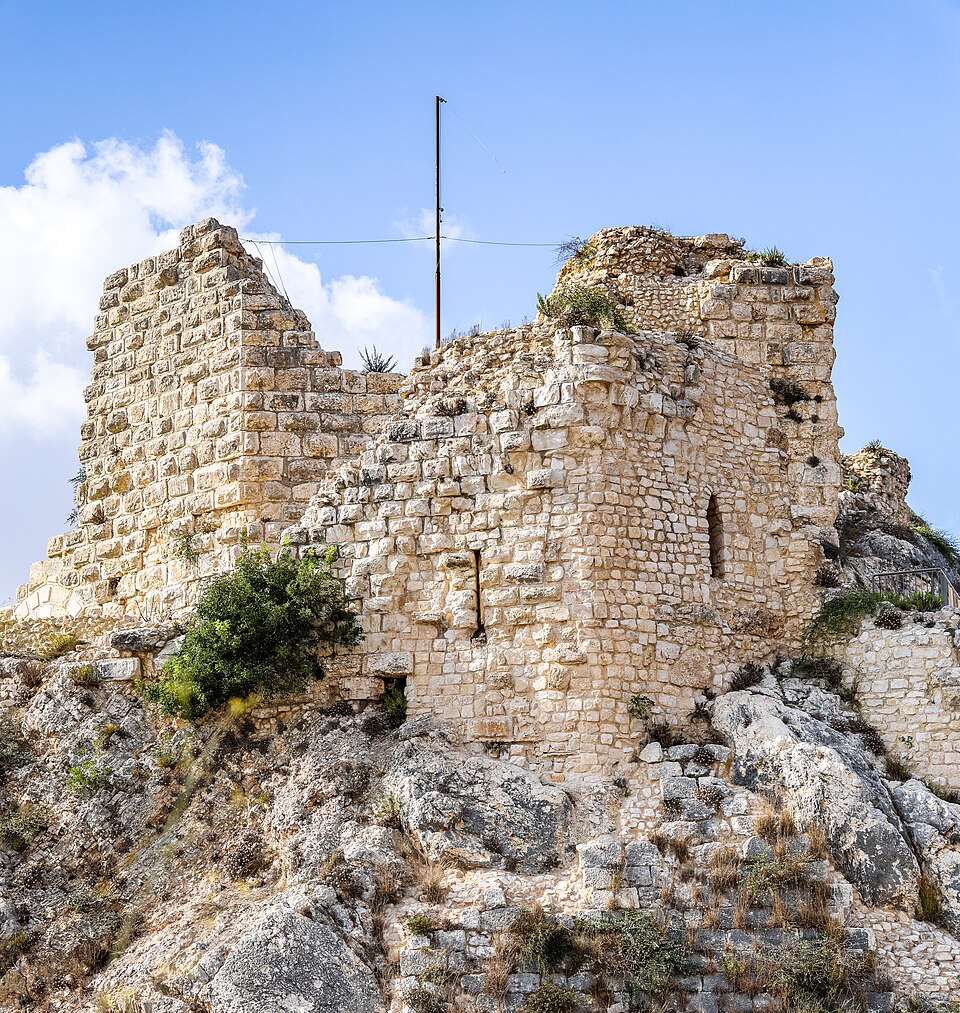
The Beaufort Castle in 2022 Image: ElysianEzryn, CC BY-SA 4.0 <https://creativecommons.org/licenses/by-sa/4.0>, via Wikimedia Commons
The recent worsening of the damage suffered by Beaufort Castle (Qal’at al-Shaqif), in southern Lebanon, raises a fundamental question for security archaeology and risk management for cultural heritage: the effectiveness of international protection measures when a site effectively maintains its strategic-military function.
An Architecture Born for War
Built in the 12th century by the Crusaders on a rocky ridge overlooking the Litani River, Beaufort Castle was designed to be impregnable. Its dominant position made it a key point for territorial control for nearly nine centuries. This same characteristic, which defines its exceptional architectural and historical value—recognized by UNESCO as one of the best-preserved examples of medieval fortifications in the Near East—is now its main vulnerability.
The Persistence of a Military Function
Unlike many historical sites that are turned into museums, Despite losing its tactical utility, Beaufort has remained militarily valuable even in the era of modern warfare. The panoramic view of the border with Israel transformed the building into a strategic outpost, used alternately by Israeli occupation forces (1982–2000) and Hezbollah fighters.
The site’s use for coordinating missile fire and as an operational command center inevitably exposed the structure to direct counterattacks, transforming a cultural property into a legitimate military target according to the logic of war, despite its protected status.
The Limits of UNESCO Protections
The Beaufort case is emblematic in highlighting a structural limitation of protection protocols. Despite the attribution of provisional advanced protection (the highest level of protection against military use and attack), recent damage demonstrates that international conventions are insufficient unless supported by effective demilitarization of the site.
When a military architecture continues to fulfill the function for which it was originally conceived—that is, Control of a disputed territory—it ceases to be perceived as a “monument” and returns to being a “fortress.” In this scenario, the World Heritage label does not act as a shield, but risks becoming a mere bureaucratic formalism.
Conclusions
Beaufort Castle reminds us that the safety of cultural heritage in conflict zones depends not only on legal classification or international recognition, but on the removal of the site’s strategic function. As long as the geographic and tactical configuration of a structure makes it attractive for military use, no amount of “paper” protection can prevent its physical degradation.
The progressive destruction of Beaufort—already marked by seismic events and past conflicts—represents a warning to the international community: the protection of cultural heritage requires, in wartime contexts, real operational neutralization, not just formality.
Other historic castles damaged in the area
| Castle | Country | Conflict Type | Damage Year | UNESCO Status |
| Crac des Chevaliers | Syria | Civil war, airstrikes, artillery | 2013–2015 | World Heritage in Danger (2013) |
| Fortress of Saladin | Syria | Civil war + earthquake | 2013 + 2023 | World Heritage in Danger (2013) |
| Citadel of Aleppo | Syria | Civil war + earthquake | 2013 + 2023 | World Heritage in Danger |