The Vulnerability of the “Open Door”: Managing Intentional Fires in Public Heritage Spaces
our monuments and collections: a rise in small-scale, localized intentional fires.

On July 31, 2026 the historic St. Andrew's Church in Leicester (UK) sustained severe damage from a fire of undetermined origin. Image: Mat Fascione / Wikimedia Commons 2015.
A concerning pattern has emerged in the protection of Cultural Heritage—the increase of opportunistic arson. Perhaps most telling is the high percentage of incidents categorized as “cause unknown.”
In many instances, these undetermined fires are not accidents, but stealthy acts of vandalism or impromptu arson that bypassed traditional security measures.
The Paradox of Accessibility
Public accessibility is the soul of cultural heritage; it ensures spiritual and cultural engagement. However, this openness introduces a specific vulnerability: the risk of opportunistic attacks during opening hours.
Unlike planned sabotage, these incidents are often spontaneous. They occur while the site is open to the public, utilizing simple tools like lighters or matches and relying on the anonymity provided by the crowd. In such scenarios, the margin between a “minor incident” and an “irreversible loss” is measured in seconds.
The Integrated Response Loop: A Strategy for Immediate Intervention
To protect our shared history, we propose a streamlined strategy focused on Immediate Intervention. The objective is to drastically close the gap between the ignition of the fire and the first discharge of an extinguisher. We define this through the Integrated Response Loop:
- Detect: leveraging existing CCTV infrastructure by adding video analytics. Traditional cameras only record the disaster; analytics transform them into active monitoring tools, triggering alarms the instant a flame or smoke is detected in large or not presided areas.
- Act: empowering the human element. A well-prepared staff member—ranging from security personnel to cleaning services—is the most effective firefighting tool available within the first 60 seconds of an incident. Targeted training is what turns a bystander into a first responder.
- Extinguish: optimizing suppression tools. It is not enough for extinguishers to be present; they must be correctly positioned for rapid access and, crucially, suitable for the specific environment.
The strength of this approach is its efficiency: it utilizes assets you likely already possess (cameras and extinguishers) and adds a layer of intelligence (analytics) and competence (training). It moves the site from a state of passive vulnerability to one of active readiness.
A Critical Caution: The Chemistry of Suppression
There is, however, a detail that is frequently overlooked: the chemistry of the extinguishing agent.
In a museum or a historic church, using the wrong agent can lead to severe chemical degradation of surfaces or permanent staining. In some cases, the “cure” can be more destructive than the fire itself.
Stay tuned for our next update, where we will analyze the specific video-analytics criteria to consider when selecting a system, identify which extinguishers are truly suitable for different heritage environments, and discuss how to effectively train personnel in their use.
Case Update: The Lucka Church Fire and the Cost of a Brief Security Gap
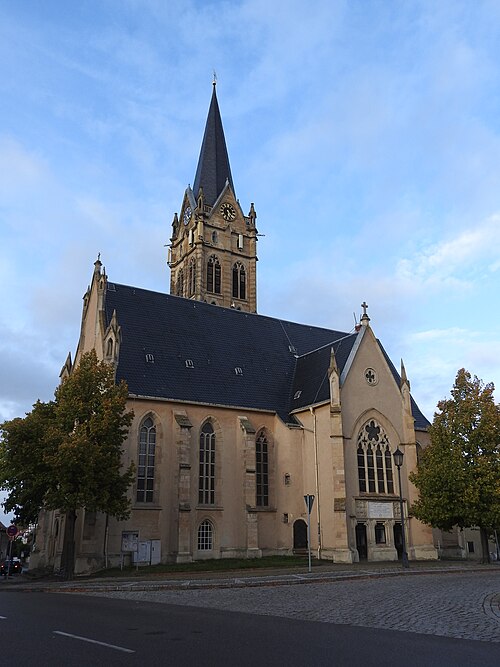
A recent incident in Lucka, Thuringia, Germany, illustrates how quickly an intentional fire in an open heritage space can become an irreversible loss. In the early hours of 11 September, an intruder allegedly entered the church and deliberately set fire to a historic crucifix dating from 1649. The crucifix was almost completely destroyed and, according to the first assessment reported by the church congregation, restoration is unlikely to be possible. Parts of the church furnishings and the altar were also damaged.
The incident is especially significant because the fire was reportedly noticed by neighbours, who helped prevent the flames from spreading further before the fire service arrived. Rapid intervention therefore appears to have limited the structural consequences, but it could not prevent the loss of the principal object targeted by the fire. The church remains closed, and the nave is reportedly heavily contaminated by soot; the building is expected to remain unusable for months.
A small fire can produce an irreversible loss
The Lucka case demonstrates an important distinction in heritage fire safety: The successful prevention of fire spread does not necessarily mean successful heritage protection.
From a conventional building-safety perspective, the incident may be considered relatively contained if the church structure was not destroyed. From a heritage perspective, however, the outcome is much more severe. A single object with historical, artistic and devotional significance was almost entirely lost, even though the wider building survived.
This is the characteristic asymmetry of cultural-heritage fire risk. The probability of ignition may be limited, and the fire may be extinguished quickly, yet the consequence can still be total if the target is unique and irreplaceable.
The loss of the 1649 crucifix was not merely the loss of a combustible object. It was the loss of a material witness to the history of the church and its community. The incident therefore confirms that heritage risk assessment must consider not only the probability of a major building fire, but also the possibility of a short, localised fire affecting a single high-value object.
The attacker does not need to destroy the building
The case also challenges a common assumption in security planning: that an intentional fire is successful only if it develops into a large-scale conflagration.
An offender may achieve a significant heritage loss by targeting:
- a historic sculpture or crucifix;
- an altar, pulpit or choir element;
- archival material;
- textiles or devotional objects;
- a display case or temporary exhibition;
- a vulnerable area that is difficult to monitor.
In these circumstances, the objective—or the practical outcome—may be the destruction of a single object rather than the burning of the building. The fire-safety strategy must therefore protect both the building and the objects within it.
The value of early detection
The reported sequence at Lucka reinforces the importance of the first minutes. Neighbours noticed the fire and helped prevent further spread, while the fire service then extinguished it.
This was a positive emergency outcome, but it also reveals a potential weakness: the decisive detection occurred outside the church. If nobody had been nearby, the fire might have remained undiscovered for longer, allowing smoke, heat and flames to affect additional parts of the building.
For churches and other public heritage spaces, an effective protection model should combine:
- intrusion detection outside opening hours;
- fire detection capable of identifying a rapidly developing localised fire;
- CCTV or video analytics in vulnerable areas;
- clear notification procedures;
- trained personnel or nearby responders;
- extinguishers positioned for immediate access;
- pre-established priorities for protecting or evacuating movable heritage.
Video surveillance is not a substitute for fire detection, but it can provide useful contextual information: whether a person is present, where the fire began, which object is involved and whether the incident is spreading.
Security and fire safety must be connected
The Lucka incident was reportedly associated with an unauthorised entry followed by intentional ignition. This shows why heritage protection cannot be divided into isolated disciplines.
Intrusion detection, access control, fire detection, emergency planning and collection management should be treated as parts of a single protection system. A delay in recognising an intrusion may become a delay in discovering the fire. A delay in locating the target may result in the loss of an object before responders can intervene.
The objective is not to turn every church into a fortress. It is to identify the places, objects and time periods in which a short intervention could prevent an irreversible loss.
A broader definition of success
The Lucka case suggests that the performance of a protection system should be measured through several outcomes:
- Was unauthorised entry detected?
- How long did it take to detect the fire?
- How quickly was the alarm transmitted?
- Could responders reach the fire before it affected adjacent objects?
- Was the extinguishing equipment suitable for the material involved?
- Was the historic object identified as a priority?
- Could the building be safely reopened after the incident?
- Were the object and the damage adequately documented?
The answers would reveal whether the system merely prevented structural collapse or actually protected the heritage value of the site.
Conclusion
The intentional fire at the church in Lucka demonstrates the vulnerability of the open-door model from another perspective. The danger is not only that an offender may ignite a fire capable of destroying the entire building. It is also that a short, targeted act may permanently destroy one object before the wider fire is brought under control.
The reported intervention prevented a larger spread, but the near-total loss of the 1649 crucifix shows that rapid response must be paired with targeted protection.
In heritage spaces, the relevant question is not simply: Can the fire service save the building?
It is also: Can the institution detect and protect the irreplaceable object before the fire has already achieved its most serious consequence?
Editorial note: This update (September, 2026) is based on the initial report published by LVZ. The investigation into the circumstances of the incident was still ongoing, and the final assessment of damage and responsibility may change.