The Vulnerability of the “Open Door”: Managing Intentional Fires in Public Heritage Spaces
our monuments and collections: a rise in small-scale, localized intentional fires.

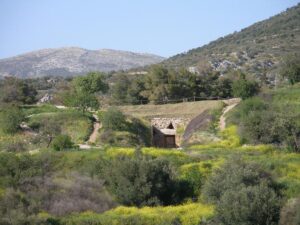
On July 31, 2026 the historic St. Andrew's Church in Leicester (UK) sustained severe damage from a fire of undetermined origin. Image: Mat Fascione / Wikimedia Commons 2015.
A concerning pattern has emerged in the protection of Cultural Heritage—the increase of opportunistic arson. Perhaps most telling is the high percentage of incidents categorized as “cause unknown.”
In many instances, these undetermined fires are not accidents, but stealthy acts of vandalism or impromptu arson that bypassed traditional security measures.
The Paradox of Accessibility
Public accessibility is the soul of cultural heritage; it ensures spiritual and cultural engagement. However, this openness introduces a specific vulnerability: the risk of opportunistic attacks during opening hours.
Unlike planned sabotage, these incidents are often spontaneous. They occur while the site is open to the public, utilizing simple tools like lighters or matches and relying on the anonymity provided by the crowd. In such scenarios, the margin between a “minor incident” and an “irreversible loss” is measured in seconds.
The Integrated Response Loop: A Strategy for Immediate Intervention
To protect our shared history, we propose a streamlined strategy focused on Immediate Intervention. The objective is to drastically close the gap between the ignition of the fire and the first discharge of an extinguisher. We define this through the Integrated Response Loop:
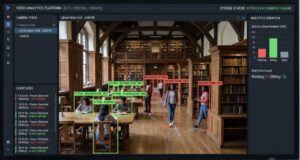
- Detect: leveraging existing CCTV infrastructure by adding video analytics. Traditional cameras only record the disaster; analytics transform them into active monitoring tools, triggering alarms the instant a flame or smoke is detected in large or not presided areas.
- Act: empowering the human element. A well-prepared staff member—ranging from security personnel to cleaning services—is the most effective firefighting tool available within the first 60 seconds of an incident. Targeted training is what turns a bystander into a first responder.
- Extinguish: optimizing suppression tools. It is not enough for extinguishers to be present; they must be correctly positioned for rapid access and, crucially, suitable for the specific environment.
The strength of this approach is its efficiency: it utilizes assets you likely already possess (cameras and extinguishers) and adds a layer of intelligence (analytics) and competence (training). It moves the site from a state of passive vulnerability to one of active readiness.
A Critical Caution: The Chemistry of Suppression
There is, however, a detail that is frequently overlooked: the chemistry of the extinguishing agent.
In a museum or a historic church, using the wrong agent can lead to severe chemical degradation of surfaces or permanent staining. In some cases, the “cure” can be more destructive than the fire itself.
Stay tuned for our next update, where we will analyze the specific video-analytics criteria to consider when selecting a system, identify which extinguishers are truly suitable for different heritage environments, and discuss how to effectively train personnel in their use.